 Retro Replay Retro Gaming History, Reviews & Emulation


Retro Replay Review
Gameplay
Asemblance begins by making you feel unsteady in exactly the right way. You wake in a chamber built to simulate memory, receive direction from an AI that immediately feels questionable, and start walking through scenes without a comfortable explanation of who you are or why you are there. That uncertainty is the hook. You are not simply solving a series of detached puzzles. You are trying to learn how each place, prompt, and object fits into a larger personal mystery.
The practical loop is straightforward first-person exploration: move through memory spaces, inspect points of interest, zoom in on details, and use the information you uncover to push your understanding forward. Asemblance gets its best mileage from making ordinary-looking details feel potentially important. It asks you to pay attention rather than rush, and the moments when a clue changes your reading of a previous scene are satisfying.
Its biggest hurdle is also its defining trait. The game is designed as a puzzle meant to be solved collectively, with ARG-minded layers around its mystery, so the path can feel less like a neatly guided adventure and more like being handed pieces from several different boxes. If you enjoy comparing notes, chasing implications, and sitting with uncertainty, that can be exciting. If you want clear puzzle logic and steady confirmation that you are on the right track, the deliberate vagueness can turn from intriguing into frustrating.

Graphics
The contrast between locations does a lot for the atmosphere. The opening chamber is almost swallowed by blackness and red alarm light, with small cyan-lit screens cutting through the dark. It has the cold, contained look you want from a questionable machine that claims to know your mind.
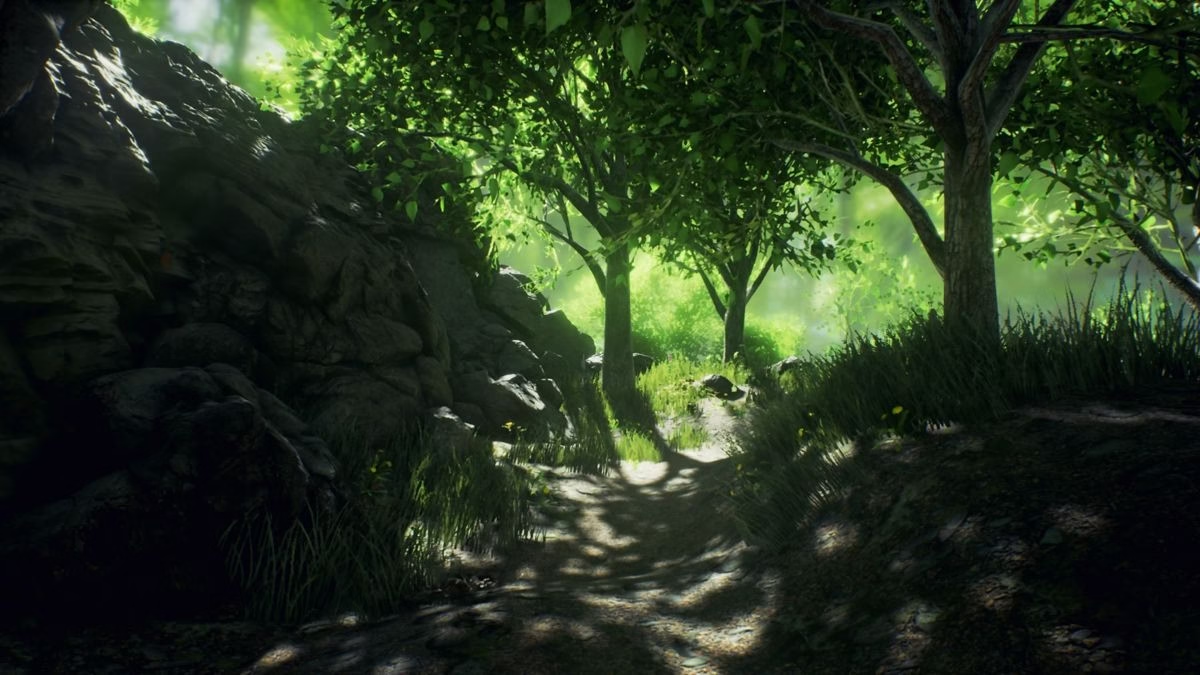
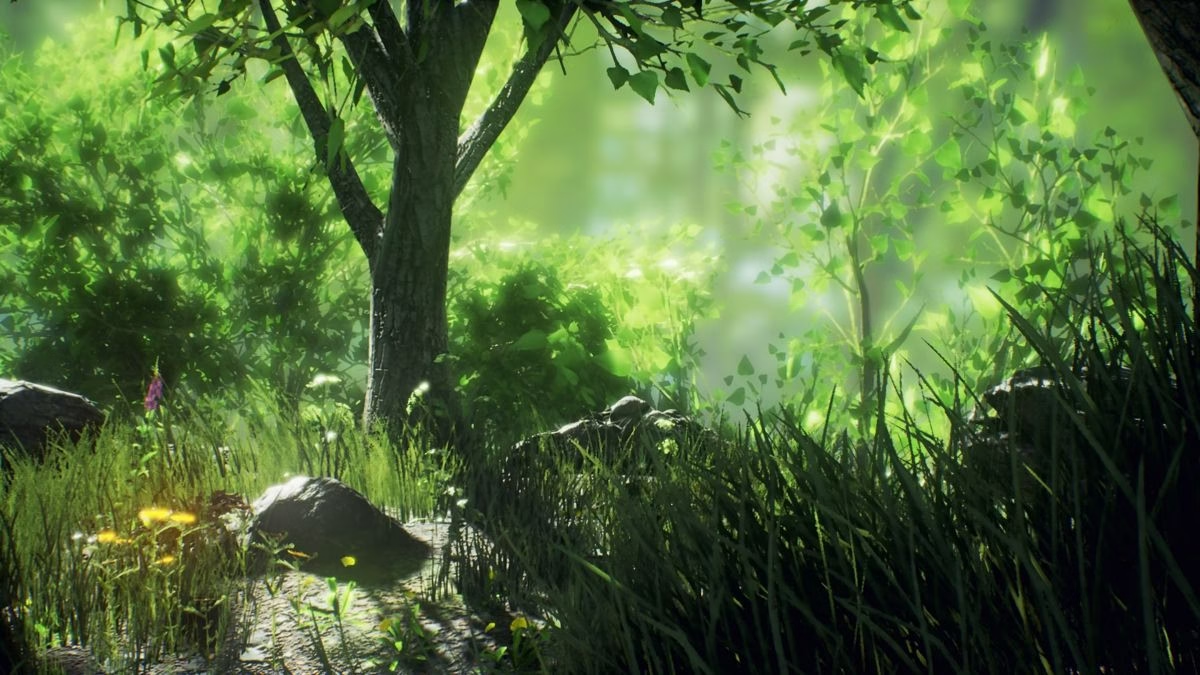
Woodland Ridge is far more inviting at first glance: thick green foliage, grass, rocks, and bright sunlight filtering through trees give the simulated memory a lush, almost overly idyllic quality. The first-person view lets you linger on small natural details, and that calm outdoor imagery plays well against the ominous machine-room framing.
Story
The story earns attention because it refuses to hand you a clean identity or a reliable narrator at the door. You are working backward through memories to understand what they mean to the protagonist and how this person arrived in the chamber. That setup has obvious echoes of television anthology sci-fi, and Asemblance wisely leans into suspicion, fractured context, and the unnerving possibility that the system guiding you has its own agenda.
There is a useful tension in how personal the mystery feels. A phrase on a monitor or a seemingly simple survey question can carry more weight because you are already primed to wonder whether the simulation is revealing a truth, shaping one, or both. The game makes curiosity do much of the narrative work, which is more effective than dumping exposition would have been.
Still, the same restraint that gives Asemblance its eerie edge can make its storytelling feel emotionally distant. You are asked to build meaning from fragments, and not every gamer will find that trade satisfying. This is less a story you passively receive than one you keep worrying at, sometimes productively and sometimes without enough immediate reward.
Overall Experience
Asemblance is a solid choice for a quiet evening when you want a mystery that distrusts easy answers. Its strongest asset is the way its memory-simulation premise turns close observation into a source of unease. A peaceful path through the woods does not feel like a safe place once the game has taught you to question the frame around it.
At the same time, this is not a broadly crowd-pleasing adventure. The collective-puzzle angle and intentionally obscure structure mean your enjoyment depends heavily on whether ambiguity energizes you. Some gamers will appreciate being treated like a participant in the mystery. Others will feel like they are being asked to supply too much of the connective tissue themselves.
For the right audience, the payoff is a focused sci-fi riddle with a memorable premise and a nicely unsettling contrast between clinical technology and reconstructed memory. Go in ready to inspect closely, entertain competing theories, and accept that uncertainty is not a temporary inconvenience here. It is the point.


Reviews
There are no reviews yet.