 Retro Replay Retro Replay gaming reviews, news, emulation, geek stuff and more!




Retro Replay Review
Gameplay
Galerians delivers a tense survival horror experience anchored by its unique psychic-based combat system. Rather than relying on conventional firearms or melee weapons, the protagonist Rion must channel a repertoire of telekinetic and telepathic abilities to fend off the grotesque, bio-engineered enemies roaming the corridors. This focus on psychic powers adds a fresh layer of strategy, as each ability consumes a limited psychic energy bar that must be replenished by administering specialized drugs found throughout the hospital complex.
(HEY YOU!! We hope you enjoy! We try not to run ads. So basically, this is a very expensive hobby running this site. Please consider joining us for updates, forums, and more. Network w/ us to make some cash or friends while retro gaming, and you can win some free retro games for posting. Okay, carry on 👍)
The game’s control scheme closely resembles that of classic titles like Alone in the Dark, with Rion moving in fixed-camera environments and navigating via tank-like controls. While this can feel somewhat dated by modern standards, it enhances the game’s oppressive atmosphere by forcing players to carefully plan each turn and anticipate enemy placements. Puzzles play a critical role: you’ll need to scour rooms for keycards, medicine, and documents that unlock new sections of the facility, all while conserving precious healing items and psychic stimulants.
One of Galerians’ most compelling mechanics is Rion’s RAGE meter, which gradually fills as he sustains damage. Once it peaks, Rion enters an uncontrollable berserk state that can both amplify psychic attacks and leave him vulnerable to overexertion. Balancing normal gameplay with the risk of RAGE-induced chaos introduces a thrilling tension that keeps every encounter unpredictable. Resource management, judicious use of powers, and clever puzzle-solving combine to create a gripping and memorable gameplay loop.
Graphics
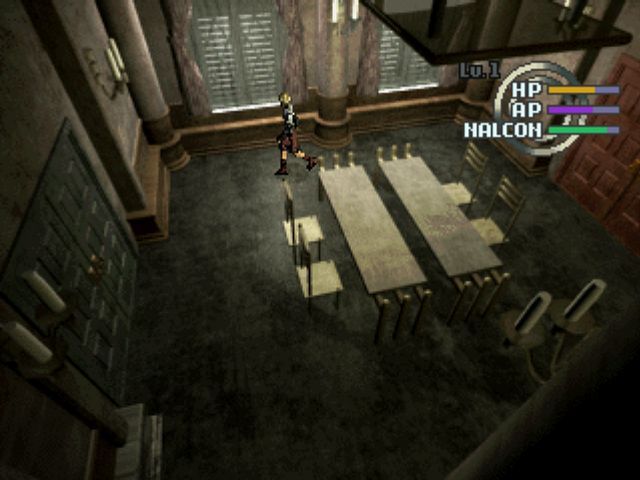
Graphically, Galerians employs beautifully detailed pre-rendered backgrounds that bring the derelict hospital and secret research facilities to life. The environments are richly textured, from the flickering fluorescent lights in sterile hallways to the grimy water stains on the floors, creating a palpable sense of unease around every corner. The static camera angles are thoughtfully chosen to maximize suspense, often obscuring what’s just out of sight.
Character models, while polygon-limited by late-1990s hardware, possess a distinct anime-inspired aesthetic that sets the game apart from its Western horror contemporaries. Rion’s design, with his bandaged limbs and haunted expression, effectively communicates his vulnerability and emerging powers. Enemy creatures—twisted test subjects of the G Project—are grotesque yet compelling in their design, each encounter feeling like a descent into a new layer of the facility’s moral decay.
Cutscenes are presented in a manga-style slideshow format, complemented by voice-acted dialogue that, although occasionally stiff, helps convey key story beats without interrupting the game’s flow. The transition between gameplay and narrative moments is seamless, preserving immersion. While the graphics may show their age compared to modern 3D engines, the art direction and environmental detail remain impressive and continue to serve the horror atmosphere effectively.
Story
The narrative of Galerians centers on Rion, a young man awakening in a hospital with no memory of his past. Haunted by a telepathic plea from a mysterious girl begging for rescue, Rion’s primary motivation is to uncover his identity and save her before it’s too late. This amnesiac premise sets up a compelling journey of self-discovery fraught with moral dilemmas and unexpected twists.
As Rion delves deeper into the secrets of the facility, he uncovers the chilling G Project—a clandestine experiment intended to unlock the hidden psychic potential of humanity. The story unfolds through found documents, intercepted communications, and tense encounters with the project’s deranged architects. These narrative devices build a web of conspiracy and tragedy, raising questions about scientific hubris and the cost of playing god.
Supporting characters, including the enigmatic voice in Rion’s mind and scattered survivors, enrich the plot by offering fragmented clues and emotional stakes. While some dialogue can feel expository, the overall pacing ensures that revelations land with impact. The climax ties together the strands of memory loss, psychic evolution, and moral accountability in a finale that resonates long after the credits roll.
Overall Experience
Galerians stands out in the survival horror genre by replacing conventional weapons with an array of psychic powers, turning each confrontation into a strategic dance of energy management and spatial awareness. The game’s deliberate pacing and emphasis on puzzle-solving reward patience and careful exploration, making each unlocked door and discovered secret feel like a hard-won victory.
Although its control scheme and graphics are rooted in the late 1990s, the title’s strong art direction and atmospheric environments hold up remarkably well. The fusion of anime-inspired character designs with Western horror tropes creates a distinctive aesthetic that still feels fresh. Coupled with a haunting soundtrack and moody sound design, the game succeeds in sustaining a pervasive sense of dread throughout its runtime.
For fans of narrative-driven horror with a sci-fi twist, Galerians offers a memorable journey into the dark potentials of the human mind. Its blend of challenging puzzles, resource scarcity, and moral ambiguity ensures that players remain engaged from the hospital’s first locked cell to the final, mind-bending reveal. While not without its dated elements, the game’s ingenuity and immersive world-building make it a must-play for anyone seeking a unique and thought-provoking horror adventure.


Reviews
There are no reviews yet.