 Retro Replay Retro Gaming History, Reviews & Emulation
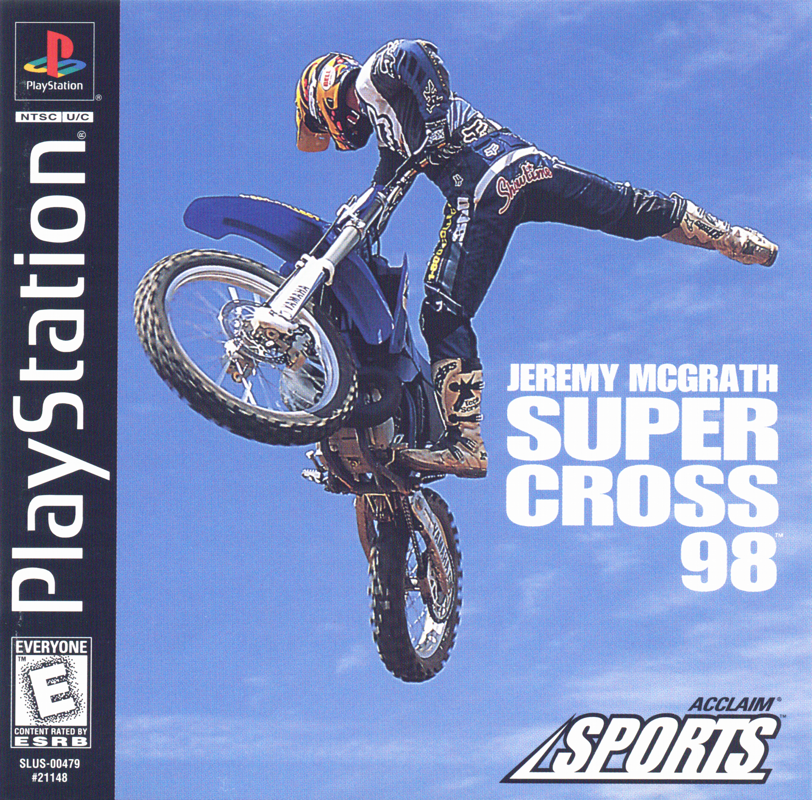
Retro Replay Review
Gameplay
The first hour is about learning to treat the season as more than a string of isolated races. You are up against five rivals, and the points structure gives second or third place real value: first earns five points, then four for second, and so on. That makes a disappointing race sting without necessarily wrecking your whole run, which is a much better fit for a championship mode than an all-or-nothing approach.
Progression has a clear, old-school edge. You need to hit the required points totals to advance into tougher competition, and the eventual chance to challenge Jeremy McGrath gives the campaign a proper destination. Unlocking additional bikes along the way is welcome, especially because their engine power, tire grip, and handling stats differ. Picking a machine is not just cosmetic; it is one of the few tangible ways to tailor how you want to tackle the next event.
The race options do useful work around that core. Single Race supports solo runs, computer opponents, or another human player, while the seven tracks can be raced in reverse to stretch the selection further. Ghost Racing is the mode to use when you want to shave time from a lap rather than deal with a full field. The choice between automatic and manual transmission also lets you decide how much shifting you want to manage.
The track editor is the standout extra. Being able to lay out jumps, hairpins, and other course pieces, then race what you built, gives the game an inventive streak that the standard event list alone would not have supplied. It will not replace the satisfaction of a hard-fought season, but it is exactly the sort of feature that can turn an old racer into something you revisit with a friend.
Graphics
The action uses a behind-the-bike view, keeping your rider, motorcycle, and the next stretch of track in front of you. Indoor and outdoor courses at least break up the surroundings, while the reversed layouts make familiar routes approach from a different direction.
Story
There is no elaborate narrative to carry the races. The game frames its campaign around a straightforward competitive climb: score points, move into stronger competition, unlock bikes, and work toward a championship challenge against its namesake.
That thin framing suits the subject. Supercross does not need a forced drama when the standings already provide momentum; a bad finish means more pressure at the next round, while a strong run gets you closer to the next tier.
Jeremy McGrath’s presence gives that final goal some weight for fans of the era, but the season’s real story is the one you make out of results. Are you steadily accumulating enough points, or digging yourself out after an off race? The game is strongest when that question keeps you entering one more event.
Overall Experience
Jeremy McGrath Supercross 98 is a respectable, focused Supercross game with a campaign structure that asks you to care about the whole standings table. It is not merely about grabbing one win; it rewards getting reliable results over a series, then raises the stakes with tougher opposition.
Frustration can set in if you want quick access to everything, because advancement depends on earning the points needed to proceed. But that gate is also what gives the season its bite. You have to put together finishes rather than simply sample the next event whenever you feel like it.
The extras make the payoff more worthwhile. Ghost challenges suit repeat laps, reverse tracks add variety, and the editor offers a reason to experiment once the official courses grow familiar. If you enjoy late-’90s motorcycle racers that build their replay value from championships, score chasing, and making your own courses, this is worth a look. If you only want a large track roster or a story-led racing game, its narrower focus will wear thin sooner.


Reviews
There are no reviews yet.