 Retro Replay Retro Replay gaming reviews, news, emulation, geek stuff and more!

Retro Replay Review
Gameplay
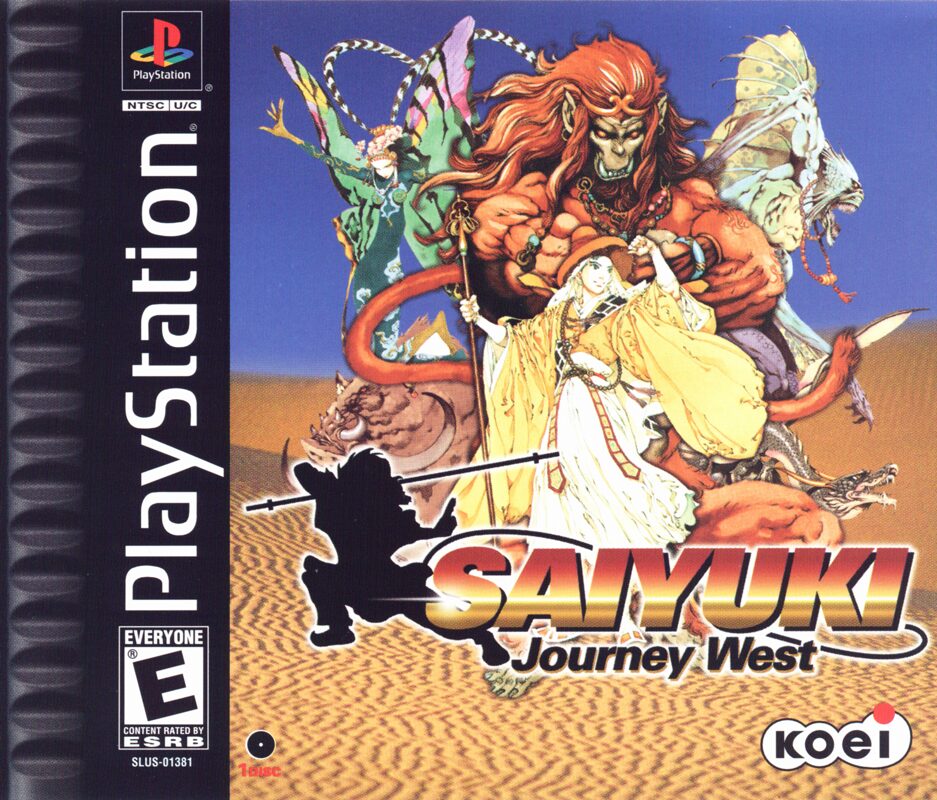
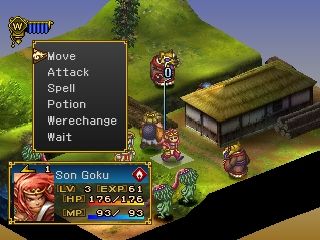
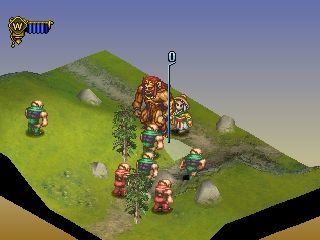
Saiyuki: Journey West shines as a tactical RPG by placing deep strategic challenges front and center. Each battle unfolds on a grid-based map where careful unit placement and synergy between characters decide victory or defeat. The core loop involves moving Xuanzang (or Sanzo) and his monster companions into position, then unleashing powerful abilities that take full advantage of each unit’s elemental affinity.
(HEY YOU!! We hope you enjoy! We try not to run ads. So basically, this is a very expensive hobby running this site. Please consider joining us for updates, forums, and more. Network w/ us to make some cash or friends while retro gaming, and you can win some free retro games for posting. Okay, carry on 👍)
The game lets you customize Xuanzang’s gender at the start, which not only affects dialogue but also offers subtle aesthetic variations in character interactions. Beyond the monk, your four monster allies—most notably the iconic Sun Wukong—can transform into potent “were-” forms mid-battle. These transformations are earned through combat and help turn the tide in tougher encounters, adding an extra layer of tactical depth to timing and resource management.
Progression hinges on unlocking and upgrading skill trees for each character. As you level up, you’ll decide whether to focus on offense, defense, or support roles. Coupled with elemental strengths and weaknesses—fire, water, earth, wind, and lightning—you’re encouraged to scout enemy lineups and adapt your party composition accordingly. This fosters a satisfying sense of mastery as you learn which elemental matchups work best and when to deploy aoe spells versus single-target bursts.
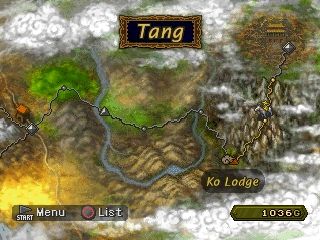
Outside of battle, the game offers light exploration and town interactions, but the primary draw remains its combat system. Random encounters on winding paths let you farm experience, while fixed boss battles challenge you to refine strategies. Even though the non-combat sections are somewhat sparse, they serve their purpose by providing shops for gear and brief story beats that keep you invested in the journey.
Graphics
The visual presentation in Saiyuki: Journey West blends traditional East-Asian art motifs with modern 3D character models. Backgrounds feature lush bamboo forests, rolling deserts, and vibrant riverbanks inspired by ancient Chinese landscapes. These environments are colorful without feeling overly saturated, capturing the spirit of the source material while maintaining clarity during hectic battles.
Character designs stand out thanks to expressive animations and distinct color palettes for each elemental affinity. When Sun Wukong shifts into his “were-monkey” form, swirling fire effects and dynamic camera angles elevate the moment into a striking set piece. Similarly, water-based spells glimmer with translucent waves, and wind attacks whip up dust storms on the battlefield, reinforcing the tactical importance of elements through visual flair.
While the game generally runs smoothly, occasional frame drops occur during the most particle-heavy special attacks, especially on older hardware. However, load times remain reasonable, and an intuitive camera system allows you to zoom and rotate the battlefield for better planning. Menus and HUD elements strike a balance between thematic ornamentation and functional design, ensuring you always know whose turn it is and how many action points remain.
Cutscenes are fully voiced in Japanese with subtitles, and although the animation quality varies between the pre-rendered sequences and in-engine cut-ins, both formats deliver key story moments effectively. Facial expressions during dialogue can feel a bit stiff, but well-timed zooms and dramatic lighting help sell emotional beats when they matter most.
Story
Drawing inspiration from Wu Cheng’en’s Journey to the West, the game’s narrative follows Xuanzang (Sanzo) as he undertakes the perilous trek to India in search of sacred sutras. While the main plot arc is familiar—protect the monk, overcome demons, and learn virtue—the game takes creative liberties that surprise even fans of the original. Gender-swapping Xuanzang introduces fresh dialogue branches and minor quest variations, giving replay value to the narrative.
Each monster companion comes with a personal side quest that explores their backstory and elemental ties. For instance, Wukong’s arc deals with arrogance and redemption, while the river ogre delves into themes of loyalty and sacrifice. Though some side stories feel formulaic, they’re generally well-paced and written in engaging prose. The balanced mix of humor, philosophical reflection, and action keeps the pacing brisk across dozens of hours.
Dialogue is generally well-localized, capturing the flavor of a fantastical medieval world without leaning too heavily on archaic phrasing. NPCs in towns and campsites often dish out lighthearted banter, which offsets the more somber moments when your party confronts moral dilemmas or formidable foes. Overall, the story earns its place as the glue that binds gameplay and setting together.
Despite its faithfulness to the original epic’s themes—enlightenment, perseverance, and camaraderie—the narrative occasionally stumbles with pacing in its midsection, where exploration segments outnumber major plot revelations. However, late-game twists and a climactic showdown restore momentum, rewarding players who push through any lulls in the middle chapters.
Overall Experience
Saiyuki: Journey West delivers a robust tactical RPG experience enriched by a classic legend, modern design twists, and satisfying strategic combat. Its greatest strengths lie in well-crafted battle mechanics, elemental interplay, and the ability to shape your version of Xuanzang. While non-combat content can feel lightweight, it never detracts significantly from the core gameplay loop.
Graphically, the game strikes a pleasing balance between artistic flair and clarity, though it may tax mid-range systems during large spell animations. The soundtrack, featuring traditional instrumentation combined with dynamic percussion, heightens both quiet narrative moments and bombastic boss fights. Voice acting and cutscene presentation, while not flawless, contribute positively to the overall immersion.
Fans of tactical RPGs and those intrigued by Eastern mythology will find plenty to love here. Newcomers may need an adjustment period to master elemental counters and action-point economy, but tutorials and early battles ease that learning curve. With multiple endings based on story choices and character relationships, there’s ample incentive to replay and experiment with different party setups.
In sum, Saiyuki: Journey West offers an engaging journey across mythic landscapes, guided by memorable characters and anchored by thoughtful tactical design. While not without minor technical hitches or pacing dips, it stands out as a worthy adaptation of a timeless epic and a must-play for strategy fans seeking both challenge and narrative depth.


Reviews
There are no reviews yet.