 Retro Replay Retro Replay gaming reviews, news, emulation, geek stuff and more!
Retro Replay Review
Gameplay
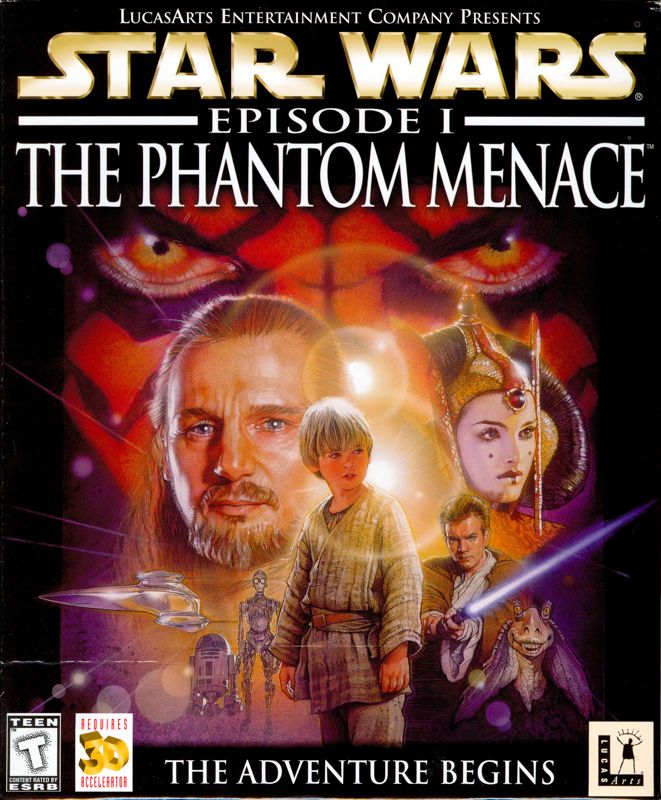
Star Wars: Episode I – The Phantom Menace places you directly in the thick of the Trade Federation’s invasion, alternating control between Jedi masters and iconic characters as you progress through each level. You’ll wield Qui-Gon Jinn’s serene mastery of the Force one moment, then pivot to Obi-Wan Kenobi’s agile lightsaber techniques in the next. The diversity of playable characters keeps encounters fresh, as each brings unique Force abilities, combat combos, and movement options that shape how you approach puzzles and enemy engagements.
(HEY YOU!! We hope you enjoy! We try not to run ads. So basically, this is a very expensive hobby running this site. Please consider joining us for updates, forums, and more. Network w/ us to make some cash or friends while retro gaming, and you can win some free retro games for posting. Okay, carry on 👍)
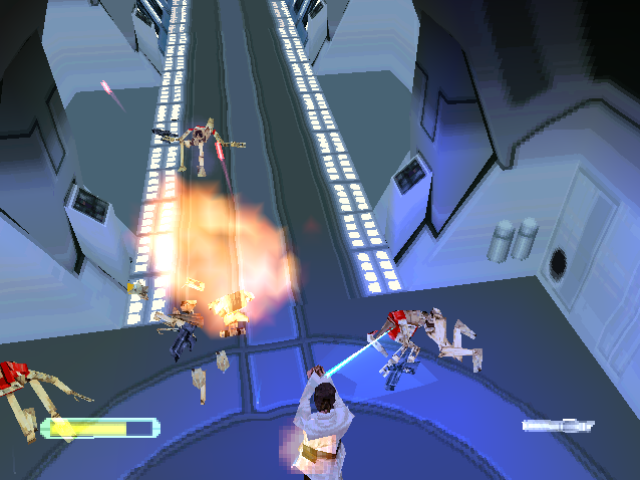
Combat balances traditional hack-and-slash with strategic Force usage. Lightsaber duels feel weighty and responsive, rewarding well-timed deflections and counterattacks. As you unlock higher Force powers—be it a powerful push or a healing aura—you gain new tactics to handle groups of battle droids or sentry gun emplacements. Side quests, such as clearing mines on Naboo or sneaking past Federation patrols, introduce stealth elements alongside straightforward skirmishes, breaking up the pacing in engaging ways.
Puzzle design centers on environmental interaction: rerouting power couplings, aligning security switches, and navigating Coruscant’s Senate corridors by decoding access panels. While some puzzles hit a sweet spot of challenge, others can feel repetitive, especially when the switch-throwing mechanic resurfaces across multiple worlds. Still, the necessity to think critically about Force usage—sometimes to levitate obstacles, other times to disarm turrets—adds a welcome layer of depth beyond button-mashing.
The addition of vehicle segments, including a thrilling podrace chase and starfighter dogfights above Naboo, injects variety and spectacle. Although these sections occasionally suffer from clunky camera angles, they evoke the film’s grand set pieces. Overall, fans of action-adventure titles will appreciate the balance of lightsaber action, Force puzzles, and occasional vehicular thrills that encapsulate the spirit of The Phantom Menace.
Graphics
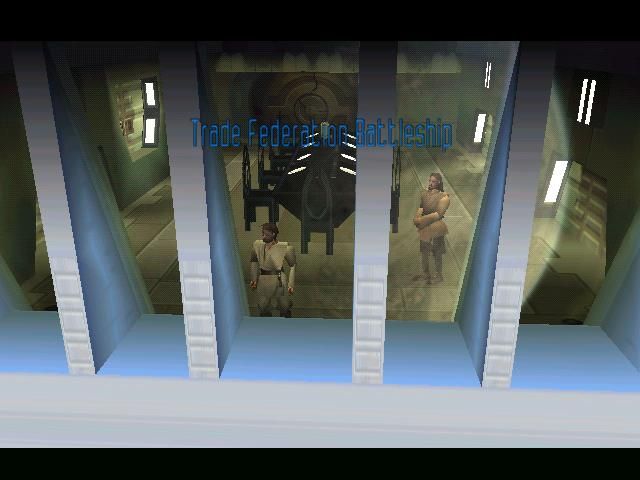
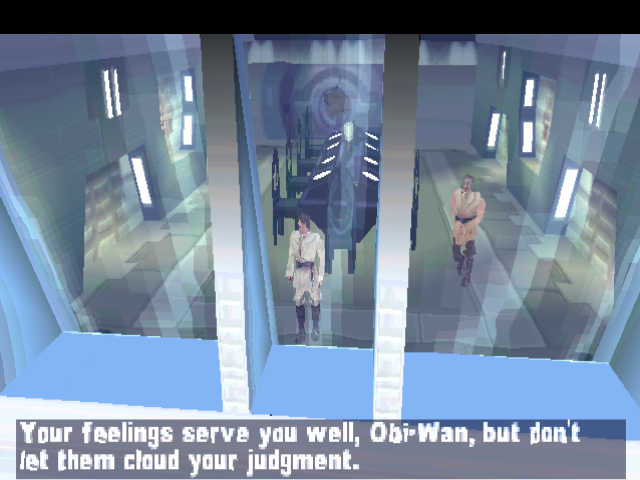
For its original release, The Phantom Menace pushed consoles of its era with detailed character models and richly textured environments. The lush jungles of Naboo, the sterile corridors of the Trade Federation flagship, and the opulent halls of the Galactic Senate all strive to replicate the movie’s visual grandeur. Character likenesses, especially of main figures like Queen Amidala, capture signature costumes and regal bearing, though polygon counts and texture resolutions reflect the late ’90s hardware limitations.
Lighting and special effects play critical roles in conveying the mystique of the Force. Saber blades glow convincingly against dimly lit corridors, and sparks fly authentically during high-speed clashes. Explosion effects from blaster bolts and droid detonations punctuate the action, occasionally overwhelming lower-end systems with particle overload. Despite these minor hiccups, the game’s atmosphere remains immersive, touching upon the cinematic palette that Star Wars fans expect.
Remastered editions have improved draw distances and enhanced texture filtering, ironing out some of the original’s pop-in issues and muddy surfaces. Colors appear richer, with deeper blacks in shadowed areas—vital when navigating the industrial underbelly of the Federation cruiser. While nostalgic players may note a few rough edges in facial animations, the overall visual package holds up admirably and continues to transport newcomers into a fully realized galactic conflict.
Environmental variety—from swamplands to palace chambers—ensures visual freshness across missions. Subtle details, like the ornate crests on Naboo architecture or the humming engine lights of droid factories, reward observant players. Even with occasional texture warping or clipping, the graphical design consistently captures the scale and drama of The Phantom Menace era.
Story
The game faithfully adapts the film’s narrative: political intrigue within the Galactic Republic, the siege of Naboo, and the emergence of Anakin Skywalker. By playing as Qui-Gon and Obi-Wan, you experience key moments from both Jedi perspectives, from negotiating with Trade Federation Viceroys to fending off droidekas in underground corridors. The core story progression mirrors the cinematic beats but benefits from additional missions that delve into lesser-seen facets of the conflict.
Original side content expands the lore beyond the silver screen. A standout level has Queen Amidala and Captain Panaka racing through Coruscant’s neon-lit streets toward the Senate building, offering fresh insights into Amidala’s resourcefulness and Panaka’s dedication. These narrative extensions enrich character motivations and provide context that, while non-canon in later materials, feel authentically woven into the Star Wars tapestry.
Dialogue is punctuated with cinematic cutscenes that feature recorded performances from the movie’s actors. Voice work by Liam Neeson and Ewan McGregor anchors the game’s emotional stakes, and original musical cues by John Williams heighten suspense during key revelations. These multimedia elements create an atmosphere that’s especially appealing for fans eager to immerse themselves deeper into Episode I’s political machinations and the Jedi’s internal dilemmas.
While the pacing occasionally drags—particularly during fetch-quest stretches—the narrative remains compelling overall. The gradual unveiling of a Sith master plot underlines the galaxy’s fragile balance, and the game succeeds in making even familiar scenes feel interactive and dynamic. For Star Wars enthusiasts, this fusion of film fidelity and creative expansion offers a satisfying way to relive and extend The Phantom Menace saga.
Overall Experience
Star Wars: Episode I – The Phantom Menace stands as a robust action-adventure title that captures the essence of late ’90s licensed games. Its strengths lie in varied character playstyles, memorable set pieces, and a story that both honors and enlarges the movie’s narrative. Whether deflecting blaster fire as Obi-Wan or guiding Queen Amidala through political peril, players will find a balance of combat, exploration, and puzzle-solving that keeps the experience engaging throughout.
Certain design elements—repetitive puzzles, occasional camera quirks in vehicle segments, and dated texture work—remind us of the game’s vintage origins. However, remastered enhancements and the sheer joy of lightsaber combat help smooth over those rough spots. The game’s moderate difficulty curve and accessible controls make it a friendly entry point for younger fans, while nostalgic adults will appreciate the nods to classic Star Wars lore.
Lengthwise, a standard playthrough spans roughly 10 to 12 hours, depending on side-quest completion and exploration thoroughness. Replay value increases if you aim to unlock all secret collectibles, master Force abilities, or tackle extended boss encounters for a greater challenge. The title also shines as a single-player narrative adventure, free from multiplayer distractions and firmly focused on cinematic immersion.
Ultimately, The Phantom Menace game remains a worthwhile purchase for Star Wars aficionados and action-adventure fans alike. Its blend of faithful storytelling, engaging gameplay mechanics, and visual nods to the prequel era delivers an experience that, despite some dated aspects, still resonates with the thrill of becoming a Jedi Knight in a galaxy teetering on the brink of darkness.


Reviews
There are no reviews yet.