 Retro Replay Retro Replay gaming reviews, news, emulation, geek stuff and more!




Retro Replay Review
Gameplay
After Armageddon Gaiden: Majū Tōshōden Eclipse delivers a familiar yet refined turn-based RPG experience, closely echoing the mechanics of Last Armageddon and early Final Fantasy entries. You command a squad of diverse demons in a post-apocalyptic wasteland, issuing commands each turn for attacks, magic, blocking or item use. The standout feature is the blocking system: when a demon blocks, it negates all incoming damage for that turn, adding a tactical layer to every encounter.
(HEY YOU!! We hope you enjoy! We try not to run ads. So basically, this is a very expensive hobby running this site. Please consider joining us for updates, forums, and more. Network w/ us to make some cash or friends while retro gaming, and you can win some free retro games for posting. Okay, carry on 👍)
Combat revolves around party composition and skill synergy. Every demon brings unique abilities—offensive spells, healing chants, elemental resistances—so assembling a balanced team is crucial. Enemy encounters remain mostly random on the overworld, but boss fights demand precise use of blocking and status-inflicting techniques to survive. While experience curves can feel steep, the progression system rewards careful planning over brute-force grinding.
Outside of battles, exploration unfolds across ruined cities, subterranean labs and alien installations. Navigation uses a simplified world map with pre-set routes, punctuated by discrete dungeon screens. Environmental puzzles and hidden side areas encourage replay, and occasional NPC interactions deepen the sense of a world in flux. Although movement options are somewhat linear, the variety of locales and secret pathways keeps the journey engaging.
Graphics
Leveraging the Sega Saturn’s 2D strengths, Majū Tōshōden Eclipse features richly detailed sprite work and hand-painted backgrounds. Demon designs range from grotesque tentacled horrors to sleek biomechanical warriors, each animated with convincing attack and magic sequences. The muted color palette underscores the game’s bleak, post-nuclear setting without ever feeling drab.
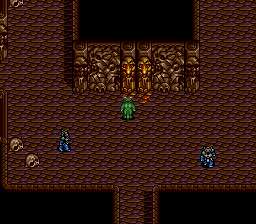
Dungeon and overworld tiles boast intricate texturing—cracked concrete floors, ruined highway bridges, irradiated wastelands—while alien strongholds glow with neon circuitry. Transition effects, such as screen shakes during powerful spells or flickering lights in subterranean corridors, heighten immersion. Though no 3D models are used, layered parallax scrolling in key areas gives a subtle sense of depth.
The user interface strikes a balance between clarity and style. Menus feature sharp Japanese typography against semi-transparent backdrops, keeping battle information readable without obscuring character sprites. Health and magic gauges are color-coded and animated, providing instant feedback during hectic turn-by-turn exchanges. For an import-only Saturn release, the graphical presentation is impressively polished.
Story
Set centuries after humanity’s annihilation in a cataclysmic nuclear war, the game’s narrative finds demons—as the planet’s new apex species—locked in a brutal struggle for dominance. Their reign is threatened by an otherworldly invasion of alien-robot hybrids, forcing rival demon clans to choose between cooperation and conflict. This backdrop offers a fresh spin on the “post-Apocalypse” trope by placing monsters, not humans, at the story’s heart.
The plot unfolds through in-game dialogue, brief cutscenes and strategic map events. You follow a core ensemble of demons—each with their own motivations and tragic histories—as they navigate shifting alliances and uncover the origin of the robotic invaders. Character development is subtle but effective: moments of introspection pop up between battles, revealing personal stakes that rise beyond simple “fight to survive” fare.
While a full English localization was never official, the original Japanese script conveys a surprisingly mature tone. Themes of power vacuums, predation and existential survival weave through every chapter, giving the narrative more weight than many contemporary RPGs. Players willing to wrestle with untranslated text (or rely on community translations) will find a compelling saga that rewards close reading and curiosity.
Overall Experience
After Armageddon Gaiden: Majū Tōshōden Eclipse stands as a hidden gem in the Sega Saturn library. Its classical turn-based combat, demon-centric party building and arresting post-nuclear aesthetic create a distinct flavor that differs from both its parent title, Last Armageddon, and Western RPG norms. Though the pacing can feel deliberate at times, each dungeon crawl and boss confrontation offers meaningful decisions.
Importing the game requires some dedication—Japanese fluency or a fan translation patch is recommended—but the payoff is substantial for enthusiasts of retro JRPGs. The balance of challenging gameplay, evocative art direction and weighty storytelling marks this title as a must-try for collectors and strategy RPG fans alike. Its refusal to pander to console RPG clichés makes it a memorable detour into darker, more monstrous territory.
In sum, Majū Tōshōden Eclipse delivers a cohesive, atmospheric package for those seeking a turn-based adventure off the beaten path. Its longevity comes from strategic depth and narrative nuance rather than flashy mechanics, making it an ideal pick for players who appreciate methodical combat and world-building. If you’re ready to master demon armies and confront alien oppressors in a ruined world, this Saturn exclusive deserves a spot in your import collection.


Reviews
There are no reviews yet.