 Retro Replay Retro Replay gaming reviews, news, emulation, geek stuff and more!



Retro Replay Review
Gameplay
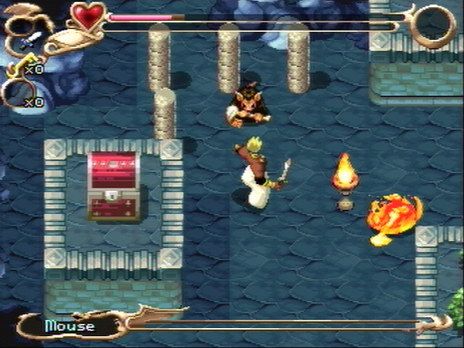
The Legend of Oasis builds on the tight, action-oriented combat of its predecessor, delivering an experience that feels both familiar and refreshed. Players control Leon with fluid responsiveness, chaining together melee strikes with the sword or switching on the fly to the bow for ranged assaults. Each Spirit summoned through the Golden Armlet brings a unique dynamic—whether it’s Efreet’s fire blasts for crowd control or Shade’s shadows for stealthy takedowns—encouraging strategic play as you venture deeper into each dungeon.
(HEY YOU!! We hope you enjoy! We try not to run ads. So basically, this is a very expensive hobby running this site. Please consider joining us for updates, forums, and more. Network w/ us to make some cash or friends while retro gaming, and you can win some free retro games for posting. Okay, carry on 👍)
Exploration remains a core pillar of the gameplay loop. The six Spirit dungeons are thoughtfully designed, blending platforming sections, environmental puzzles, and hidden rewards. While the layouts sometimes veer into “backtrack territory,” the satisfaction of uncovering secret passages or unlocking a new Spirit power keeps the momentum alive. Throw in occasional mini-boss maps and treasure rooms, and you have a rhythm that balances challenge with reward.
Rather than a traditional XP bar, The Legend of Oasis uses a rank system to track Leon’s growth. Every time you fully restore his health, his rank increases, granting higher hit points and better resilience in battle. This health-based progression ties healing items and health fountains directly into character advancement, making resource management more critical than ever. The system feels intuitive, giving players a tangible incentive to explore thoroughly and conserve health packs.
Graphics
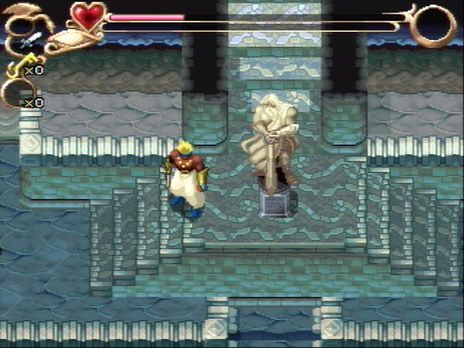
Visually, The Legend of Oasis stands out on the Sega Saturn with richly detailed sprites and vibrant backdrops. The 2D environments are layered to create a sense of depth, from sun-dappled forests to the moss-covered ruins of Spirit shrines. Character animations are smooth, with Leon’s fluid acrobatics and each Spirit’s special moves rendered in crisp, colorful frames.
Special effects, such as the swirling winds of Zora or the crackling flames of Efreet, pop off the screen without overwhelming the playfield. Boss fights in particular shine, featuring large, animated foes that feel appropriately imposing thanks to detailed sprite work and clever camera framing. Even on older hardware, the game maintains a steady frame rate, ensuring your rapid sword swings never skip a beat.
Small touches, like the glow of Leon’s armlet or the shifting shadows in darker areas, contribute to an immersive atmosphere. While the art style leans toward cartoonish fantasy, it never undermines the stakes of the narrative. In short, The Legend of Oasis remains a showcase for what 2D action-RPGs could achieve in the mid-’90s, and it still holds its own against modern pixel-art releases.
Story
Set years before Beyond Oasis, the tale opens with the epic conflict between Reharl, King of Spirits, and the dreaded destroyer Agito. This prologue sets the stage for Leon’s journey as the new Spirit King, hand-picked by his mentor Ordan to wield the Golden Armlet. The narrative strikes a balance between grand myth and personal growth, allowing players to connect with Leon’s evolution from apprentice to savior.
As Leon descends into each Spirit’s dungeon, the lore unfolds in bite-sized chunks. Brief dialogue exchanges and environmental storytelling hint at the world’s larger history—tales of ancient battles, lost civilizations, and the lingering threat of the Silver Armlet. Although the script never bogs down the action, it provides enough context to make each dungeon feel significant, reinforcing why Leon’s quest matters both personally and cosmically.
Supporting characters, like the stoic Ordan and the mischievous Sprites, add personality without demanding hours of exposition. Cutscenes are sparse but effective, punctuating gameplay with moments of tension and triumph. The climax, featuring a final confrontation with Agito, delivers a satisfying payoff that ties together the themes of responsibility, courage, and the bonds between humans and Spirits.
Overall Experience
The Legend of Oasis offers a well-balanced blend of fast-paced combat, rewarding exploration, and a charming world steeped in myth. Its rank-based progression system provides a refreshing alternative to standard leveling, while the Spirit summons add strategic depth not often found in pure action titles. Every dungeon feels handcrafted, with memorable set pieces that keep you invested throughout the roughly 10–12 hour campaign.
While some players may find the absence of an experience bar unusual at first, the health-based rank mechanic quickly becomes second nature. Occasional spikes in difficulty, especially in later boss battles, can be daunting, but smart use of Spirit abilities and careful resource management often turn the tide. The game’s save system is forgiving, with ample heal points ensuring that failure rarely feels punishing.
For anyone who enjoyed Beyond Oasis—or fans of action-RPG hybrids like Secret of Mana—The Legend of Oasis remains a must-play classic. Its blend of crisp controls, vivid graphics, and engaging story holds up remarkably well more than two decades later. Whether you’re revisiting an old favorite or discovering Leon’s adventure for the first time, the game delivers a timeless journey through a world where heroism and spirit magic collide.


Reviews
There are no reviews yet.