 Retro Replay Retro Replay gaming reviews, news, emulation, geek stuff and more!

Retro Replay Review
Gameplay
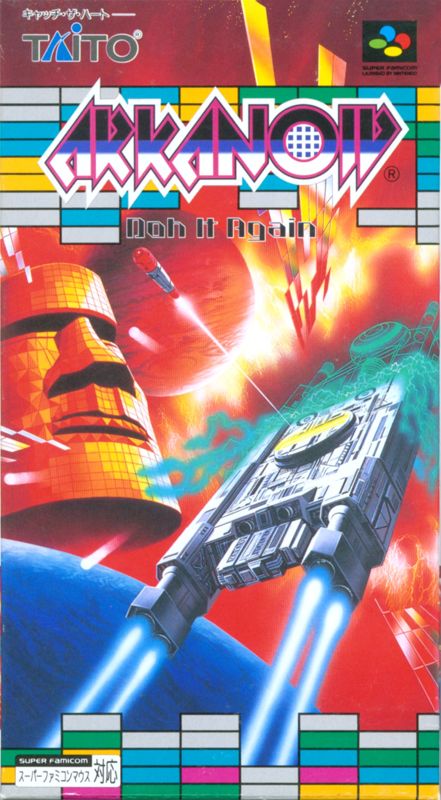
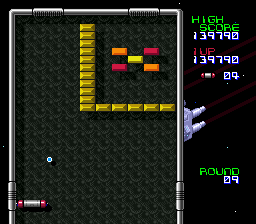
Arkanoid: Doh It Again refines the classic brick-breaking action fans know and love, putting you in control of the VAUS paddle as you channel a relentless stream of balls into walls of colorful bricks. Each stage presents a unique arrangement of blocks, forcing you to adapt your timing and angle of attack on the fly. While the core mechanic remains steadfast—reflect the ball, clear all the bricks, and advance—the sequel spices things up with new power-ups and stage gimmicks that keep each level from feeling too familiar.
(HEY YOU!! We hope you enjoy! We try not to run ads. So basically, this is a very expensive hobby running this site. Please consider joining us for updates, forums, and more. Network w/ us to make some cash or friends while retro gaming, and you can win some free retro games for posting. Okay, carry on 👍)
Power-ups such as lasers, multi-ball, and paddle-elongation capsules drop unpredictably from shattered bricks, injecting moments of fast-paced mayhem into an otherwise methodical experience. Success often hinges on juggling multiple active power-ups: snap up the laser to blast through stubborn blocks, then quickly switch focus to keeping the ball in play as the paddle lengthens or fractures under pressure. This dynamic elevates the tension, rewarding skilled play while offering a cushion for casual gamers.
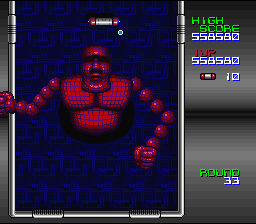
Perhaps the most notable departure from the arcade original is the inclusion of boss encounters that punctuate the stage progression. Rather than simply clearing bricks level after level, you must also contend with massive mechanical adversaries that attack your paddle and regenerate barriers in real time. These battles force you to balance offense and defense, mastering rapid directional shots to exploit an enemy’s weak points while avoiding projectiles and shifting platforms.
Graphics
On the Super Nintendo Entertainment System, Arkanoid: Doh It Again showcases vibrant pixel art that brings each level’s backdrop to life. The brick formations are distinct in color and design, making it easy to pick out special blocks that yield power-ups versus those that are virtually indestructible. Subtle parallax effects in some stages add depth, creating the illusion of distant galaxies, mechanical hangars, or alien landscapes beyond the playfield.
The game’s animations are smooth and responsive, a crucial factor for a title where split-second paddle movements make or break your performance. Laser beams, ball trails, and explosion effects pop off the screen with satisfying flair, providing immediate visual feedback each time you collect a power-up or destroy a boss’s weak spot. Even during hectic multi-ball sequences, the frame rate remains steady, ensuring that gameplay never stutters when the action ramps up.
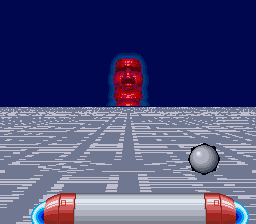
Boss designs stand out as especially inventive. Each mechanical foe features its own palette and set of animations, from pulsating cores that flash before unleashing a volley of projectiles to rotating barrier arrays that force you to time your shots precisely. Though limited by the hardware’s color palette, the developers have maximized contrast and detail to ensure these clashes feel both grand and readable on the small screen.
Story
Unlike its arcade predecessor, Arkanoid: Doh It Again introduces a light narrative to frame its brick-bashing action. You reprise your role as the commander of the VAUS spacecraft, dispatched to rescue the Arkanoid homeworld from the nefarious DOH Army. While the storyline never ventures into deep character development, it provides context for each boss fight and power-up upgrade, giving players a sense of progression beyond mere level completion.
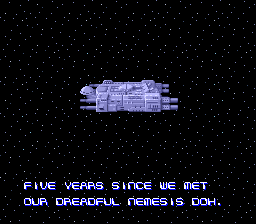
Between stages, brief cutscenes depict DOH’s minions constructing increasingly elaborate defenses, heightening the stakes as you work your way through a constellation of zones. These episodes are short and sweet, delivering exposition at a pace that won’t slow the gameplay flow. The end goal—to confront DOH itself in a climactic showdown—gives players a continual carrot to chase, lending purpose to every destroyed brick.
Though the narrative doesn’t aim to win awards for storytelling, it integrates smoothly with the action. Boss encounters feel like organic extensions of the plot, each new mechanical adversary embodying a strategic escalation in DOH’s campaign. By the time you breach the final barriers, the lighthearted sci-fi premise helps make your victory feel all the more rewarding.
Overall Experience
Arkanoid: Doh It Again strikes an effective balance between classic arcade simplicity and modernized twists. Its addictive “one more level” appeal remains intact, while boss battles and a loose storyline provide fresh objectives that drive you forward. Whether you’re a veteran seeking to revisit the brick-busting formula or a newcomer eager for quick, toss-and-catch thrills, the game’s varied stage designs and power-up combinations ensure a satisfying time.
Compared to the original Arkanoid, this sequel feels more complete and ambitious. The SNES hardware is put to good use, delivering crisp visuals and seamless performance even when multiple balls and lasers fill the screen. The addition of boss stages introduces memorable set pieces that break up the standard progression loop and make the experience feel less repetitive.
Ultimately, Arkanoid: Doh It Again is a must-consider for anyone with a love for precision-based arcade action. Its straightforward ruleset hides a surprising amount of depth in level layouts, power-up strategies, and boss mechanics. Whether you’re gearing up for short bursts of play or long sessions as you chase a high score, this sequel delivers reliable fun with just enough innovation to stand out in the brick-breaking genre.


Reviews
There are no reviews yet.