 Retro Replay Retro Replay gaming reviews, news, emulation, geek stuff and more!

Retro Replay Review
Gameplay
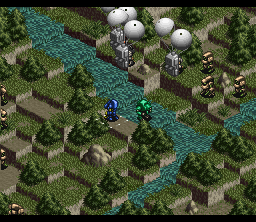
Front Mission offers a robust turn-based strategy experience through its isometric battlefield perspective. Each mission tasks players with deploying and maneuvering Wanzers—large customizable mech units—across grid-based maps. The familiar ebb and flow of movement points, firing ranges, and terrain advantages creates an engaging chess-like dynamic that rewards careful positioning and foresight.
(HEY YOU!! We hope you enjoy! We try not to run ads. So basically, this is a very expensive hobby running this site. Please consider joining us for updates, forums, and more. Network w/ us to make some cash or friends while retro gaming, and you can win some free retro games for posting. Okay, carry on 👍)
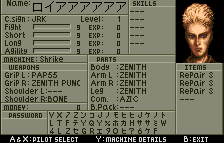
Customization lies at the heart of the gameplay loop. Players can swap out arms, legs, bodies, and cores to optimize Wanzers for specific roles, whether it’s a long-range artillery support unit or a close-quarters brawler. This deep level of personalization means no two missions play out the same way, and experimenting with loadouts becomes as satisfying as winning a hard-fought battle.
Outside the heat of combat, Front Mission balances its strategic battles with downtime in towns and bases. Here, you can visit bars to gather intel, browse shops for new weapons and armor parts, or seek out side conversations that add flavor to both the world and your crew’s backstories. This interlude between missions not only provides a break from the front lines but also reinforces the RPG elements that give weight to every choice on and off the battlefield.
Graphics
Originally released in 1995, Front Mission’s visual style leans on detailed 2D sprites and richly colored tile maps. Wanzers are rendered with crisp pixel art, showcasing unique silhouettes and component designs that stand out even in the midst of large-scale engagements. Despite the era’s hardware limitations, each environment—from military outposts to dense urban centers—feels distinct and alive.
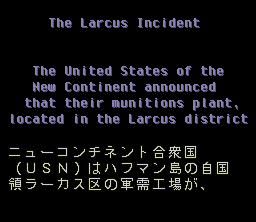
The game’s cutscenes, though simple by modern standards, use hand-drawn art panels to illustrate key story moments. This technique lends an animated comic-book quality to the narrative, emphasizing emotional beats like the Larcus Incident and personal losses such as Karen’s tragic fate. While there’s no voice acting, carefully crafted visual storytelling effectively carries the drama.
Combat animations maintain a satisfying punch, with Wanzers swinging melee weapons or unleashing missile salvos in quick, impactful sequences. Effects like explosions and sparks are used sparingly but purposefully, ensuring that critical attacks stand out without cluttering the battlefield. For players willing to look past pixel-charm and dated frame rates, Front Mission’s graphics hold up as a testament to practical design and clarity.
Story
Front Mission opens with the fallout of the Larcus Incident, where a covert OCU recon team led by Roid clashes with USN forces, resulting in the death of his fiancée, Karen. This incident ignites the simmering political tensions on Huffman Island and sets the stage for the broader conflict known as the Second Huffman War. From the outset, players find themselves immersed in a narrative of betrayal, national pride, and personal vengeance.
One year later, Roid earns a living as a Wanzer gladiator until Colonel Olson recruits him to lead “Carrion Crow,” an elite OCU mercenary unit. What follows is a twisting plot that pits Roid against old nemesis Commander Driscoll and forces him to confront the murky ethics of wartime maneuvering. Character interactions are well-paced, weaving in subplots that explore loyalty, sacrifice, and the human cost of mechanized warfare.
The broad geopolitical framework—OCU versus USN—provides an epic backdrop for individual stories. Side missions and optional dialogues help flesh out supporting characters, giving players a sense of camaraderie with their squadmates. While some plot beats lean on familiar war drama tropes, the game’s careful pacing and focus on Roid’s personal journey ensure that the stakes always feel meaningful.
Overall Experience
Front Mission stands as a classic example of tactical RPG design, blending deep mech customization with a compelling war-torn narrative. Each mission offers a puzzle of limited resources and strategic positioning, while the towns and bars scattered across the map add a welcome layer of role-playing depth. The learning curve can be steep for newcomers to the genre, but the payoff is a satisfying sense of mastery as your Carrion Crow unit grows in power.
While its graphics and interface show their age, the core gameplay loop remains both engaging and addictive. The turn-based combat is complemented by a storyline that balances large-scale political intrigue with personal vendettas, ensuring that every mech pilot under your command feels like more than just another unit on the battlefield. Replaying missions with different Wanzer builds or pursuing optional side quests also gives the title considerable replay value.
For fans of strategic mech combat and military sci-fi, Front Mission delivers a rich, rewarding experience that laid the groundwork for many modern tactical titles. Its blend of role-playing elements, customizable mechs, and a war-driven narrative still resonates today. Whether you’re discovering it for the first time or revisiting this seminal title, Front Mission offers a timeless campaign that challenges both your tactical mind and your sense of empathy on the battlefield.


Reviews
There are no reviews yet.