 Retro Replay Retro Gaming History, Reviews & Emulation
Retro Replay Review
Gameplay
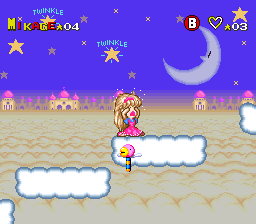
The first few minutes establish Miracle Girls as a platformer with a sweeter sense of mischief than its candy theme initially suggests. Tomomi and Mikage can jump and throw candy at enemies, but the throw is not merely an attack. An affected enemy stops being a threat for a few seconds while it eats, and you can use it as a platform. That turns routine enemy encounters into little positioning puzzles: do you clear a route, or leave a foe in place because it helps you reach something?
That candy system is the game’s best idea, and it is what gives the stages their pull. You are not just jumping over trouble; you are briefly changing the shape of a room and making risky use of whatever is in front of you. The timing sounds simple, but the temporary nature of the effect means hesitation can quickly become the problem. When it clicks, it makes the basic platforming feel more playful and less automatic.
There is also enough scattered reward to encourage poking around. Hidden bombs flood the screen with candy and turn onscreen enemies into heart rings, while fruit restores health. Doors can send you to a celestial slot machine for extra lives, which adds a welcome burst of chance between stretches of action. None of this replaces strong stage design, but it does give exploration a purpose beyond merely reaching the exit.
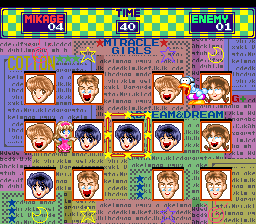
The choice to begin as Tomomi or Mikage is less meaningful than it first appears, since both share the same moves. Pick the character you prefer rather than expecting a different route through the adventure. More successfully, the game avoids making every level end the same way: boss challenges include a top-down squirt-gun fight and a card-matching game. That variation is a smart antidote to platforming fatigue, even if you may find the abrupt genre shifts either charming or distracting.
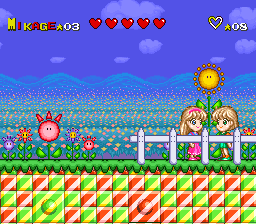
Graphics
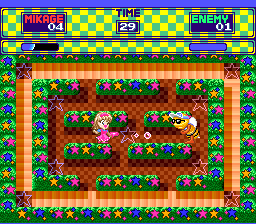
The game shifts its camera for at least one boss challenge, moving from platforming to a top-down squirt-gun fight. That change gives its encounters a different look from the regular stages and helps the boss material feel distinct rather than like a larger version of an ordinary enemy.
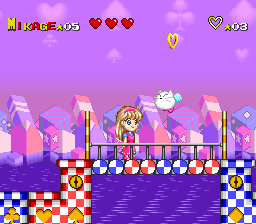
Story
The story is straightforward: Tomomi, Mikage, and their friends are warped without warning into a strange fantasy land, and the goal is to find the missing friends and return home. It is a clean excuse for an adventure, and it gets you into the action quickly.
Being based on the Miracle Girls manga and anime gives the journey an immediate home for anyone already fond of Tomomi and Mikage. You can choose either lead at the start, which is a pleasant bit of fan service, even though that choice does not alter their abilities.
Do not come here expecting the plot to carry every hour on its own. The strength is its clear momentum: friends are missing, the world is unfamiliar, and every stage is another step toward getting everybody back. That light framework suits a compact action game, especially one that keeps interrupting its platforming with strange challenges.
Overall Experience
Miracle Girls earns attention because its central enemy interaction is more interesting than the average licensed platformer’s attack button. Turning a danger into a temporary foothold creates moments where you have to think one jump ahead, and that is the sort of small mechanical twist that can keep an older game from feeling anonymous.
Its biggest potential frustration is also part of its personality. A platformer that suddenly asks for a card-matching game or sends you into a top-down squirt-gun battle is not chasing a single, perfectly consistent rhythm. If you want every stage to refine the same skill set, the detours may feel like interruptions. If you enjoy retro games that keep throwing one more odd idea at you, they are a genuine draw.
Give this one a chance if you have affection for the series or if the enemy-as-platform concept sounds like your kind of puzzle-platforming wrinkle. The payoff is not a dramatic reinvention of the genre; it is a cheerful, slightly eccentric adventure that understands how much more memorable a simple candy projectile becomes when it changes how you move through a level.


Reviews
There are no reviews yet.