 Retro Replay Retro Replay gaming reviews, news, emulation, geek stuff and more!

Retro Replay Review
Gameplay
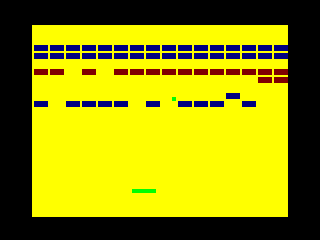
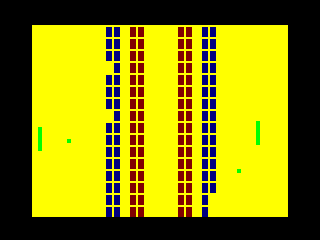
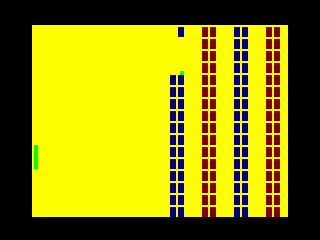
The heart of Bustout lies in its refined Breakout-inspired mechanics, where precision and timing are key. Unlike the traditional top-down layout, Bustout positions the colorful brick formations to the right of the player’s paddle, offering a fresh spatial challenge that keeps every volley feeling new. By shifting the action sideways, the game forces you to rethink your angles and approaches—what might have been a simple rebound in other games now becomes a calculated shot across the screen.
(HEY YOU!! We hope you enjoy! We try not to run ads. So basically, this is a very expensive hobby running this site. Please consider joining us for updates, forums, and more. Network w/ us to make some cash or friends while retro gaming, and you can win some free retro games for posting. Okay, carry on 👍)
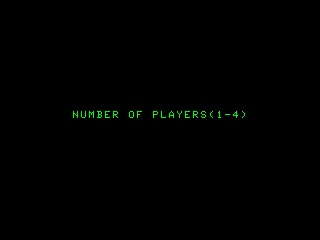
Bustout shines when it comes to multiplayer fun. Up to four players can take turns in local play, turning each break into a social competition. Whether you’re passing the controller after every life or staging a friendly tournament, the ebb and flow of victories and near-misses makes for a lively living room atmosphere. The built-in options for adjusting ball count (from 1 to 20) introduce a customizable challenge: novices can start with fewer balls, while seasoned hitters can unleash volleys of chaos.
One of the most intriguing mechanics is Gravity Mode. When enabled, you must impart upward momentum to your paddle strikes if you want the ball to arc toward higher bricks. This adds a layer of physicality, as you’re no longer just waiting for the perfect bounce—you’re actively shaping the ball’s trajectory. It rewards careful timing and develops a satisfying learning curve: master the paddle lift, and you’ll break through even the toughest clusters.
Graphics
Bustout presents a clean, neon-infused aesthetic that pays homage to its arcade roots while introducing modern flair. The bricks glow in vivid color bands—reds, greens, blues, and yellows—against a sleek dark backdrop, making each section pop as you clear rows. This high-contrast palette ensures visibility even during the most hectic volleys, allowing you to track the ball’s path without losing sight of your paddle.
Though minimalist, the user interface strikes a fine balance between function and style. Simple indicators display remaining balls, current player turn, and active modes without cluttering the playfield. Animated particle effects accompany every brick shatter, adding a punchy tactile feel that reinforces the impact of each successful hit and keeps your eyes glued to the screen.
Screen transitions between turns are accompanied by brief but satisfying visual flourishes—pulsing colored panels and subtle camera shifts—that maintain momentum. These touches elevate what could have been a stale pause into a moment of anticipation for the next player. While Bustout doesn’t aspire to photorealism, its cohesive visual design ensures that every session looks polished and purposeful.
Story
As a brick-breaker at heart, Bustout isn’t driven by an elaborate narrative, but it does weave a subtle framework that guides players through escalating challenge tiers. Each stage is presented as a new “challenge board,” with its own color schemes and brick formations, suggesting a sense of progression akin to unlocking levels in a classic arcade progression.
Between matches, you’ll find short, tongue-in-cheek blurbs that hint at fictional sponsors or challenge names—“Neon Nexus,” “Gravity Gauntlet,” and others—that add a sprinkle of personality. These morsels of context don’t bog down the action; rather, they give each match a light-hearted backdrop, encouraging players to aim for the next themed board.
While there’s no cutscene drama or branching plot, Bustout’s subtle framing works in service of its core appeal: high-score chases and competitive camaraderie. If you crave a deep storyline, this might feel sparse, but if your focus is on honing skills and outpacing friends, the minimalist framing keeps you in the game without interruption.
Overall Experience
Bustout offers a deceptively deep twist on the Breakout formula, combining accessible controls with thoughtful gameplay variations. Whether you’re slugging through single‐player marathons or organizing 4‐player showdowns, the balance between straightforward rules and advanced tweaks (like gravity settings) ensures that both casual and hardcore gamers find a challenge.
The pacing strikes a comfortable groove: matches are short enough to keep everyone engaged but long enough to reward mastery. As you refine your paddle flicks and learn the nuances of brick layouts, each victory delivers a gratifying sense of progression. Even if you lose a round, the quick respawn of balls and immediate readiness for the next turn keeps frustration at bay.
For fans of retro-style arcades or anyone looking for a pick-up-and-play party title, Bustout hits the mark. Its polished presentation, tight mechanics, and variety of customization options make it a standout among brick-breaker clones. Bustout doesn’t just replicate a classic—it expands on it, proving that a few well-designed twists are enough to breathe new life into an old favorite.



Reviews
There are no reviews yet.