 Retro Replay Retro Replay gaming reviews, news, emulation, geek stuff and more!
Retro Replay Review
Gameplay
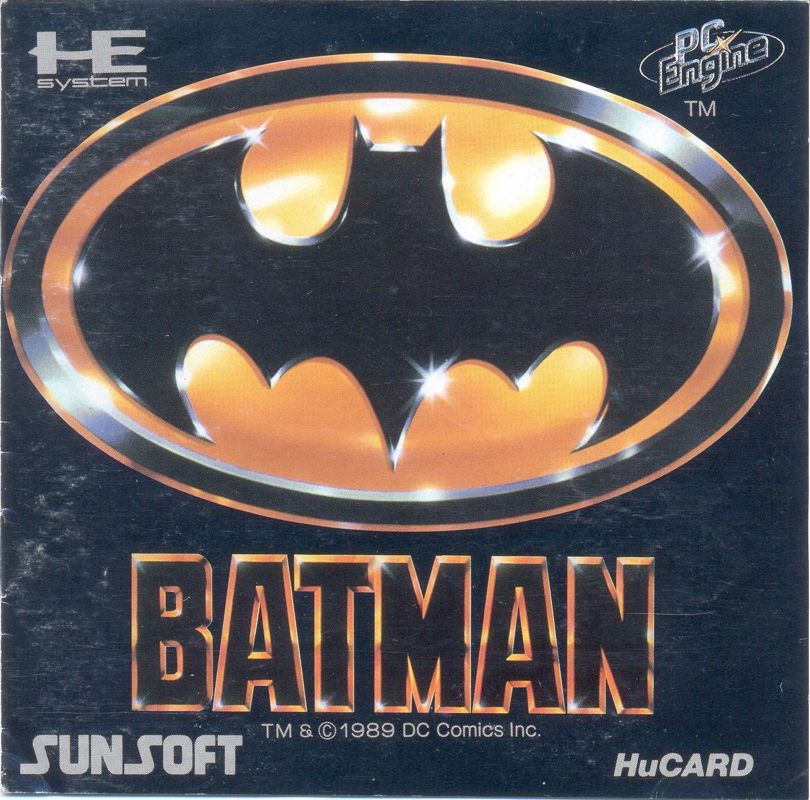
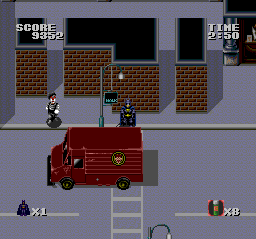
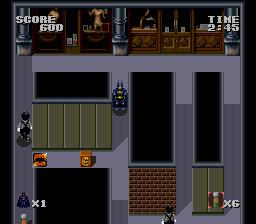
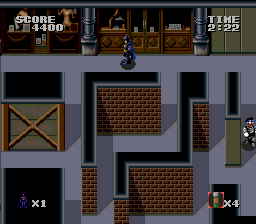
Batman: The Video Game on TurboGrafx-16 takes the Caped Crusader into a top-down maze environment that feels immediately familiar to fans of classic arcade titles like Pac-Man and Bomberman. Each level is built around a labyrinthine series of corridors where exploration is paramount. Instead of simply navigating empty pathways, you’ll be tasked with locating specific objects—smilex components, museum paintings in need of cleaning, bombs to plant, or ropes to sever on Joker’s parade balloons—before you can advance.
(HEY YOU!! We hope you enjoy! We try not to run ads. So basically, this is a very expensive hobby running this site. Please consider joining us for updates, forums, and more. Network w/ us to make some cash or friends while retro gaming, and you can win some free retro games for posting. Okay, carry on 👍)
The game is broken down into five major stages, each inspired by set pieces from the 1989 Batman film: the Streets of Gotham, the Flugelheim Museum, the AXIS Chemical Factory, the grand Parade, and finally the looming Cathedral. The first four stages each contain 12 sub-stages, ensuring a steady progression of challenge and a sense of accomplishment as you clear each maze. Objectives change with every main level, keeping the gameplay loop fresh and giving players real incentives to master the layout of each sub-maze.
Combat revolves around Batman’s trusty Batarang. Initially limited in range and number of shots, you’ll discover upgrade items hidden within the mazes that increase your speed, extend your Batarang’s reach, and even allow multiple projectiles on screen at once. The controls are responsive, and learning to weave between foes while timing your throws becomes a gratifying rhythm. Add to that occasional mini-cutscenes between stages, and you’ve got a gameplay package that balances action, exploration, and cinematic flair.
Graphics
For a TurboGrafx-16 title, Batman: The Video Game does an admirable job of capturing the gritty yet colorful world of Gotham City. The top-down perspective is given vibrant life through a palette of dark grays, moody purples, and splashes of bright red and yellow whenever the Joker or his traps appear. Each stage features distinct tile sets that keep environments from blending together, from the grimy brick walls of the streets to the sterile walkways of the chemical factory.
Sprite work on Batman and his adversaries is surprisingly detailed given the hardware constraints. Batman’s cape billows slightly as he moves, and his Batarang throw animation is swift and satisfying. Enemies—from simple street thugs to themed boss characters—have enough visual variety to feel distinct, and their movement patterns are telegraphed clearly. Subtle touches like flickering torches in the Cathedral or the museum’s classical motifs add atmosphere without sacrificing clarity in the maze layouts.
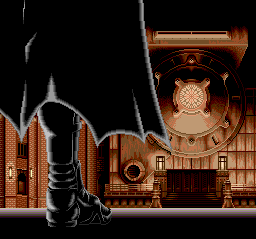
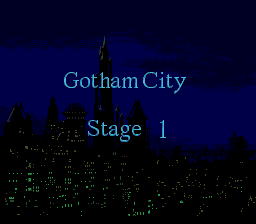
Between each major stage, the game shows cutscenes lifted directly from the film. While these aren’t full-motion videos, they do combine still frames with text overlays to set the scene. The quality isn’t on par with contemporary CD-based systems, but they still serve to remind you of the movie’s stakes and provide a small reward for completing a challenging segment. All told, the graphics strike a good balance between functional maze design and cinematic flavor.
Story
Though the core of Batman: The Video Game is maze-based action, the storyline remains rooted in Tim Burton’s 1989 blockbuster. You start out patrolling the dark alleyways of Gotham where Joker’s goons are running amok with stolen smilex, and you follow his trail through museum halls, chemical vats, and parade floats until the final showdown in the Cathedral. This narrative structure gives each level a clear motivation tied directly to the film’s plot.
The cutscenes before each stage employ still images from the movie, accompanied by brief captions that remind you of Gotham’s peril and the Joker’s escalating plans. While it’s not a fully voiced or animated retelling, the presentation adds a layer of immersion you wouldn’t get from a generic maze game. It’s easy to imagine you’re stepping into Michael Keaton’s boots, cleaning up the Joker’s mess one maze at a time.
As you progress, the sense of urgency heightens—smilex components are time-sensitive threats, paintings in the museum hold hidden value, and the chemical vats nearly overflow with toxic waste. The story may be simple, but its adaptation into game objectives feels coherent. By the time you reach the Cathedral and finally face the Joker, you’re invested enough that that final confrontation carries weight beyond just another boss fight.
Overall Experience
Batman: The Video Game on TurboGrafx-16 delivers a unique blend of arcade-style maze gameplay and movie-based storytelling. Its level design is cleverly tied to the film’s iconic locations, and the gradual introduction of new objectives and Batarang upgrades keeps the challenge engaging. For players who appreciate methodical, strategic action over hack-and-slash or platforming routines, this title stands out as a well-crafted maze adventure.
The difficulty curve is fair but can spike in later sub-stages, especially if you’re hunting down every hidden item for maximum upgrades. Replay value comes from mastering each maze, optimizing Batarang loadouts, and seeking faster completion times. While purists looking for a side-scrolling beat ’em up might be disappointed, fans of puzzle-action hybrids will find plenty to love here.
In sum, Batman: The Video Game captures the atmosphere of the 1989 movie while delivering a solid, maze-based gameplay loop that rewards exploration and precision. Its graphical presentation and story integration add cinematic flair without getting in the way of core mechanics. If you own a TurboGrafx-16 and enjoy deep, methodical action games with a superhero twist, this title is definitely worth adding to your collection.


Reviews
There are no reviews yet.