 Retro Replay Retro Replay gaming reviews, news, emulation, geek stuff and more!
Retro Replay Review
Gameplay
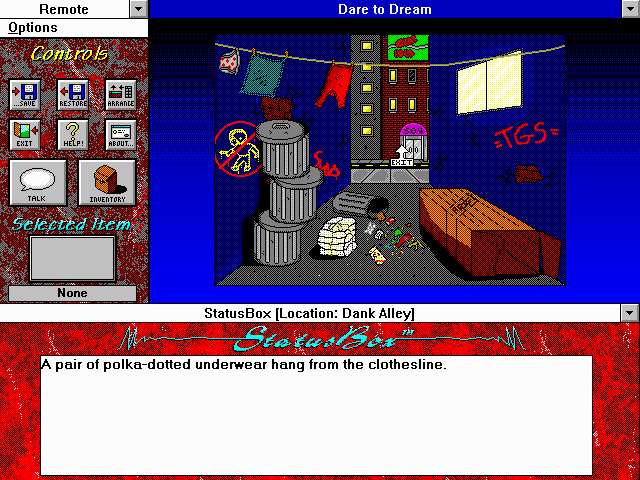
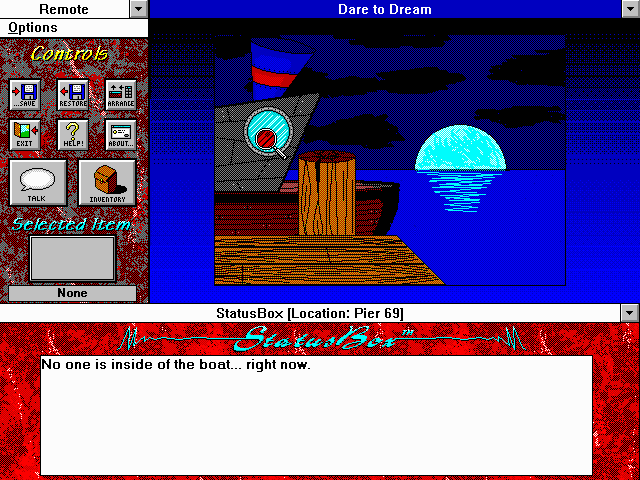
Dare to Dream Part One: In a Darkened Room places you squarely in the shoes of ten-year-old Tyler E. Norris, navigating a fragmented dreamscape through classic first-person point-and-click controls. Every scene unfolds as a static, richly detailed tableau, inviting you to explore by clicking on hotspots and collecting items. The dual-pane interface—an image of your surroundings on top and a descriptive status box below—ensures you never lose sight of important clues or puzzle objectives.
(HEY YOU!! We hope you enjoy! We try not to run ads. So basically, this is a very expensive hobby running this site. Please consider joining us for updates, forums, and more. Network w/ us to make some cash or friends while retro gaming, and you can win some free retro games for posting. Okay, carry on 👍)
The core gameplay revolves around “use-item-on-location” puzzles that range from straightforward object combinations to multi-step sequences demanding careful observation and inventory management. As you traverse Tyler’s dream city, you’ll pick up seemingly innocuous trinkets—an old coin, a broken toy, a peculiar key—and you’ll need to figure out where and when to deploy them. Hints are woven into the narrative descriptions, meaning you’ll want to read every line in that bottom panel to avoid missing vital context.
What truly distinguishes Dare to Dream is its surreal, dream-logic puzzle design. Solutions rarely adhere to real-world reasoning, instead leaning into the subconscious blending of memories and imaginings. This can produce “aha!” moments that feel surprisingly poetic, though it also means the game occasionally demands a willingness to embrace non-linear thinking. For fans of traditional adventure challenges with a twist, the unpredictable nature of these puzzles is a refreshing departure from rote inventory chaining.
Navigating the environment is intuitive once you’ve learned the interface, but newcomers may need a brief adjustment period. The cursor changes shape to hint at possible actions—examine, take, talk—and Tyler’s inner monologue in the status box provides both flavor and functional feedback on your interactions. Combined with a generous auto-save system, this ensures you can experiment freely, backtracking without fear of losing progress.
Graphics
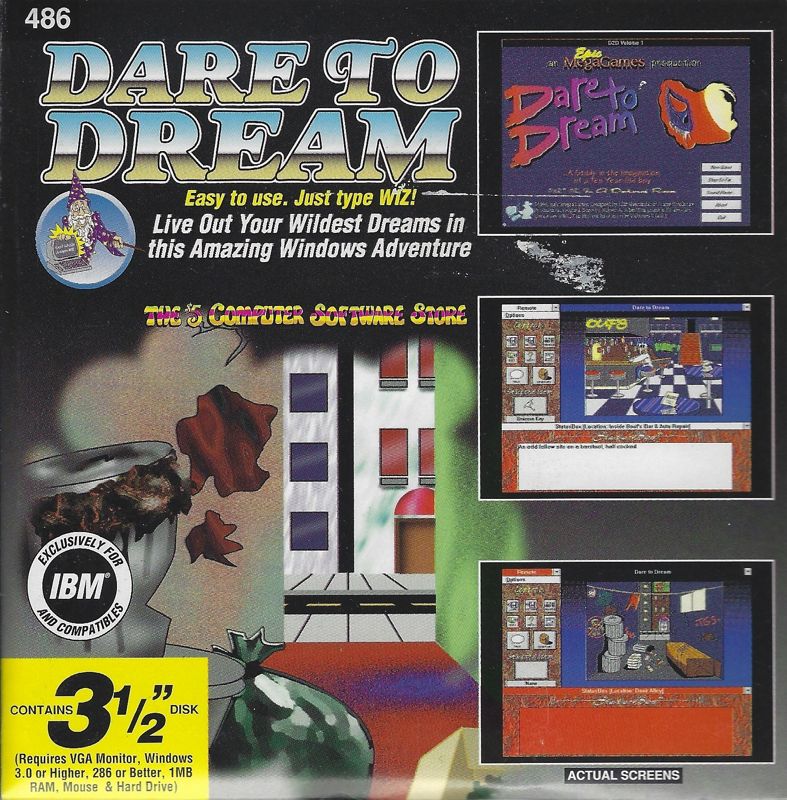
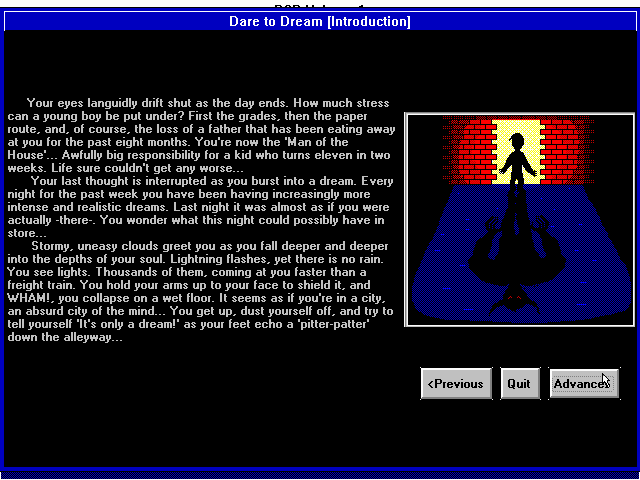
Dare to Dream Part One employs richly painted pre-rendered backgrounds that capture the uncanny ambiance of a child’s dream world. Architectural elements twist and warp, colors bleed into one another, and subtle animations—flickering lights, drifting fog—infuse each scene with an otherworldly glow. Though the resolution harks back to late-90s adventure titles, the art direction remains timeless, evoking both wonder and unease.
The character portraits and NPC sprites are equally arresting. Each inhabitant of Tyler’s dream city exhibits exaggerated features—a wide grin that stretches too far, eyes that glow from within—reinforcing the notion that nothing is quite as it seems. Dialogue boxes appear in the bottom status pane, with portrait thumbnails that change expression based on Tyler’s tone, lending narrative weight to even the briefest encounters.
Lighting plays a pivotal role in building atmosphere. Darkened alleys are lit by single lanterns casting long shadows, while cavernous interiors are bathed in sickly green or violet hues. These choices do more than look striking; they guide your attention toward interactive elements or hidden exits. Even years after its release, the game’s visual style remains a standout example of how carefully crafted art can compensate for technical constraints.
For players accustomed to high-definition graphics, the lower pixel count may feel dated at first. However, the dreamlike imagery is so meticulously composed that you quickly overlook any jagged edges. The game’s aesthetic is a deliberate homage to Surrealist painting, and its commitment to mood over realism gives it a singular identity in the crowded field of adventure titles.
Story
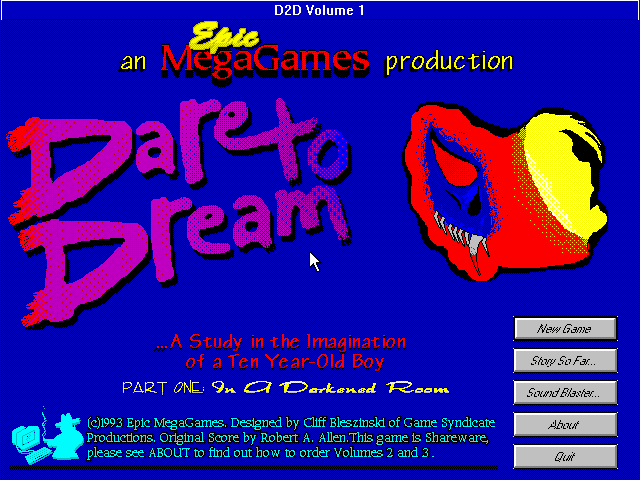
At its heart, Dare to Dream Part One is a story about the fragile boundary between childhood innocence and lurking fears. Tyler E. Norris, a ten-year-old boy, finds himself ensnared in his own dreams—places where happy memories collide with twisted manifestations of his anxieties. The narrative unfolds organically as you explore, with each puzzle solved revealing a fragment of Tyler’s psyche.
Though the primary setting—a bizarre dream city—feels alien, the underlying themes are universal. Strands of nostalgia pop up in the form of half-remembered toys, playground echoes, and ghostly lullabies. Yet beneath these comforting motifs lies an ever-present undercurrent of menace: a darkness that grows more oppressive as Tyler ventures deeper. This tension between warmth and dread keeps the story compelling, striking a balance between playful curiosity and creeping horror.
The game’s episodic structure teases greater revelations in subsequent installments. While Part One doesn’t answer every question—who or what is the darkness? Why is Tyler trapped?—it does an admirable job of setting the stage. The sharp dialogue, occasional moments of levity, and poignant flashes of childhood wonder all combine to make you eager for Part Two, even as you puzzle over the unanswered mysteries.
Character development is subtle but effective. Tyler’s inner monologue is both charmingly innocent and eerily prescient, hinting at fears he may not fully understand. Side characters—strange merchants, phantom children, masked guides—offer cryptic advice, sometimes aiding your progress and sometimes leading you astray. Their motivations are shrouded in ambiguity, reinforcing the dream logic that defines the game’s narrative rhythm.
Overall Experience
Dare to Dream Part One: In a Darkened Room delivers a memorable adventure that blends classic point-and-click mechanics with a surreal, emotionally resonant story. It’s a game that asks you to set aside strict logic and immerse yourself in the shifting landscape of a child’s imagination. For genre enthusiasts seeking a fresh spin on tried-and-true puzzle formulas, it offers both challenge and reward in equal measure.
The runtime for the first episode sits comfortably around four to six hours, depending on your puzzle-solving speed and willingness to explore every nook. Replay value is moderate: once you’ve uncovered the solution to each puzzle, the surprise factor diminishes, but the haunting visuals and evocative narrative still warrant a second playthrough for newcomers to soak up the details.
Sound design and musical score play supporting roles, with a minimalist piano theme and sparse ambient effects that enhance the dreamlike quality without ever becoming intrusive. Voices are used sparingly, amplifying the sense that this is Tyler’s solitary journey through an inward realm. The result is an experience that feels personal—almost like stepping into a lucid dream where you’re both observer and participant.
While Dare to Dream Part One stands strong on its own merits, it also serves as a compelling prologue to a larger saga. Those intrigued by Tyler’s plight will eagerly anticipate the next episode, and the game’s narrative hooks ensure you’ll be invested in seeing where the story leads. If you’re drawn to atmospheric puzzles and unconventional storytelling, Dare to Dream delivers an adventure you won’t soon forget.



Reviews
There are no reviews yet.