 Retro Replay Retro Replay gaming reviews, news, emulation, geek stuff and more!

Retro Replay Review
Gameplay
High Command puts you in direct control of a grid-based war theater, where every square can turn the tide of battle. Much like Minesweeper’s checkerboard layout, each tile on the field is either neutral, yours, or held by an enemy. Your mission is deceptively simple: seize as many points as you can by capturing neutral and hostile squares, with cities offering especially high point values.
(HEY YOU!! We hope you enjoy! We try not to run ads. So basically, this is a very expensive hobby running this site. Please consider joining us for updates, forums, and more. Network w/ us to make some cash or friends while retro gaming, and you can win some free retro games for posting. Okay, carry on 👍)
The combat mechanics borrow from classic Risk-style troop movements but add an intriguing twist. When you move soldiers from one square to the next, not only do the troop counts in the two squares matter, but the forces in all adjacent tiles also influence the battle’s outcome. This forces you to think several moves ahead, balancing offense and defense while denying the enemy key reinforcements.
High Command offers three distinct AI personalities—aggressive, defensive, and balanced—so battles stay fresh. You can face up to three AI opponents or mix in human players for up to four total combatants. An in-game editor lets you craft your own scenarios or generate random battlefields, boosting replayability. In the shareware version, you’re limited to a single scenario and lose the ability to save, but even that one map illustrates the depth of the core rules.
Graphics
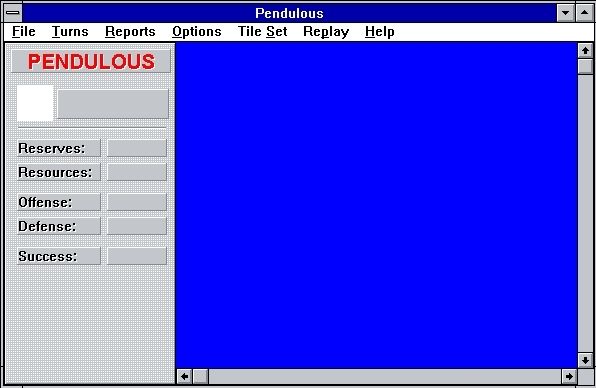
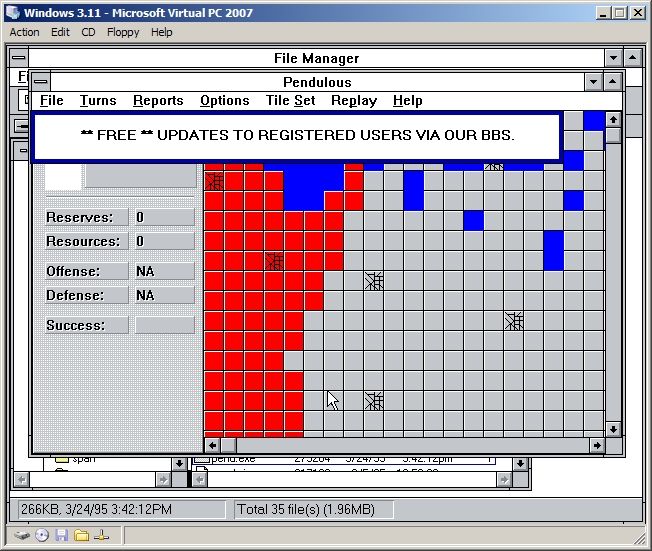
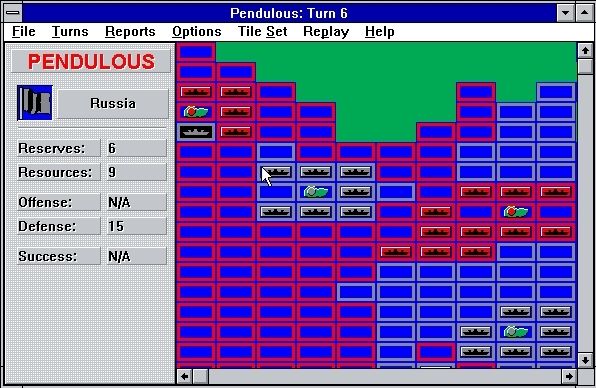
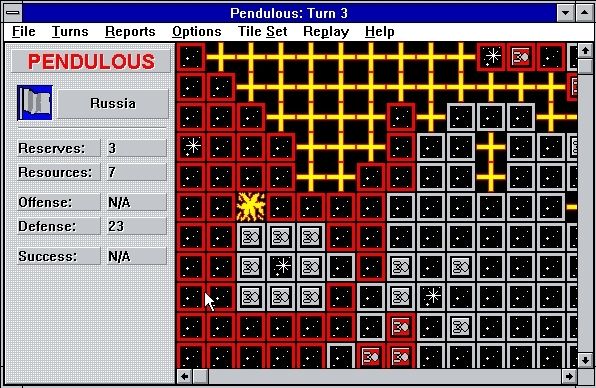
Graphically, High Command opts for clarity over flash. The tile-based battlefield is rendered in clean, contrasting colors, ensuring you always know which squares are contested, which are neutral, and which you already control. City tiles are marked with distinct icons and point values, making strategic targets immediately obvious.
While there are no 3D animations or dynamic camera angles, each move is accompanied by simple yet satisfying visual cues—troop counters shift, borders light up, and takeover animations clearly show a tile changing hands. This straightforward presentation helps you focus on strategy rather than spectacle.
The user interface is utilitarian but effective. Menus and icons are logically arranged, and mouse-driven controls allow for quick planning and execution. Even on modest hardware, High Command runs smoothly, with negligible load times between turns and minimal impact on system resources.
Story
High Command does not offer a linear, character-driven narrative. Instead, it delivers its “story” through varied historical and fictional scenarios. Each map comes with a brief setup—ranging from feudal skirmishes in medieval Europe to imaginary conflicts on distant planets—providing context and flavor for your conquests.
The lack of a continuous campaign is offset by scenario design. Five built-in maps range from large border wars to tight, city-heavy confrontations. Each scenario challenges you to adapt your tactics: do you rush for high-value cities, or spread your forces evenly to guard against flanking maneuvers? The scenario descriptions hint at backstory without bogging you down in exposition.
For players who crave narrative hooks, the map editor lets you write your own scenario descriptions and set victory conditions. You can create chains of linked battles, turning individual skirmishes into a bespoke campaign. This modular approach to storytelling keeps the game feeling fresh, even without a packaged storyline.
Overall Experience
High Command shines as a pure strategy workout. Its deceptively simple rules set the stage for surprisingly deep tactical decisions, and the interplay of troop counts across adjacent squares adds a layer of complexity that seasoned strategists will appreciate. Whether you’re contesting a small neutral patch or launching an all-out assault on an enemy capital, every move matters.
The available AIs cover a broad difficulty spectrum, making High Command accessible to newcomers while still challenging veterans. The scenario editor and multiplayer support further extend replay value, turning what might seem like a one-trick tile game into a long-term hobby for strategy enthusiasts.
While graphical and narrative elements remain minimalist, they serve the core gameplay perfectly. High Command is not about cinematic flair—it’s about mastering the board, predicting your opponent’s moves, and outmaneuvering them on every square. For fans of Risk, Minesweeper puzzles, or tactical wargames, this title offers hours of thoughtful engagement.


Reviews
There are no reviews yet.