 Retro Replay Retro Replay gaming reviews, news, emulation, geek stuff and more!
Retro Replay Review
Gameplay
Microsoft Windows 3.1’s bundled games—Minesweeper, Solitaire, and Hearts—have become timeless classics thanks to their intuitive rules and pick-up-and-play design. Each offers a unique challenge: Minesweeper demands logic and careful deduction, Solitaire tests your patience and planning, and Hearts relies on strategic card play and risk assessment against three AI opponents. While simple on the surface, these titles reward repeat play and mastery, making them perfect for quick breaks or extended sessions.
(HEY YOU!! We hope you enjoy! We try not to run ads. So basically, this is a very expensive hobby running this site. Please consider joining us for updates, forums, and more. Network w/ us to make some cash or friends while retro gaming, and you can win some free retro games for posting. Okay, carry on 👍)
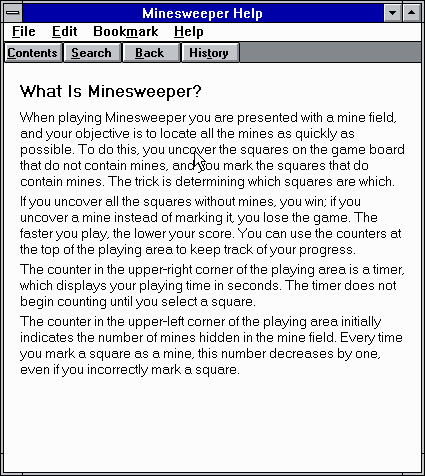
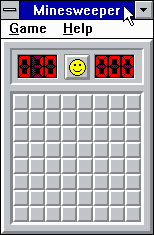
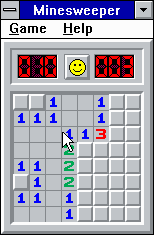
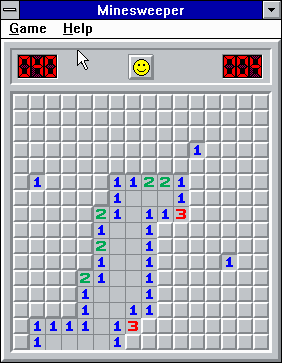
Minesweeper presents a grid full of hidden mines, and with each click you uncover numbers indicating adjacent hazards. The satisfaction of clearing a row of zeroes in one move, or narrowly flagging the last mine, is surprisingly addictive. Three difficulty settings—Beginner, Intermediate, and Expert—scale the grid size from 9×9 to 30×16 and ramp up the mine count accordingly, ensuring newcomers and veterans alike remain engaged.
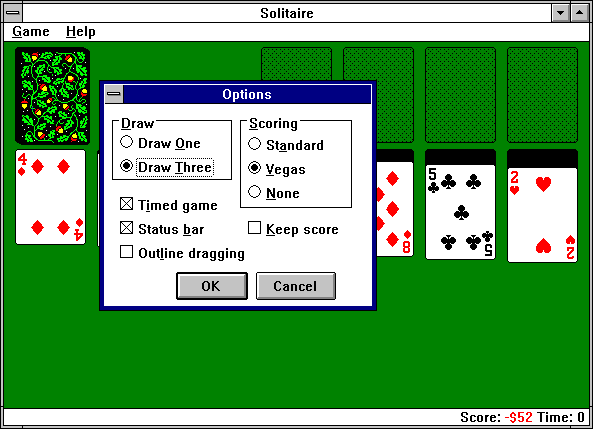
Solitaire’s familiar Klondike variant turns a standard deck of 52 cards into a puzzle of cascades and foundations. Whether you opt to draw one or three cards from the stock, each pass reshapes available moves. Its simple rule set allows you to strategize sequences, balance immediate gains against future prospects, and savor the moment you triumphantly place the final King onto an empty tableau slot.
Hearts introduces multiplayer tension, even when facing off against computer foes on your local machine. Avoiding hearts and the Queen of Spades while maneuvering to “shoot the moon” creates high-stakes decisions each trick. The AI plays reasonably well for its era, simulating human-like tactics as it leads suits, dumps points, or seizes an opportunity to turn the tide in its favor. LAN support further extends replayability by inviting real opponents to the table.
The seamless integration of these games into the Windows 3.1 desktop means you never leave the same environment: launch them from the Program Manager, toggle between windows, and rely on your mouse expertise to click tiles, drag cards, or select hearts. This smooth, consistent interface underpins each game’s appeal and makes them accessible to casual and seasoned players alike.
Graphics
Visually, Windows 3.1’s mini-games are defined by their crisp, minimalist 16-color palette and simple icons. Minesweeper’s grid lines are clearly delineated, with numerals rendered in bright primary colors to convey adjacent mine counts at a glance. Flags and mine icons are distinct and easily recognizable, ensuring clarity even on lower-resolution displays.
Solitaire adopts a clean, green felt–inspired background that contrasts with the card faces. Suits and numbers are drawn with pixel-perfect precision, and cards move fluidly as you drag them across the tableau. While the artwork lacks modern embellishments, its clarity and functional design make every decision legible, from spotting an available move to identifying the card in the stock pile.
Hearts features a simple playing surface with each suit clearly marked by bold symbols. Cards are large enough to read easily, and the interface highlights the lead suit to guide your choices. Animations are minimal—cards snap into place without elaborate effects—but this straightforward presentation keeps the focus on strategy rather than spectacle.
Across all three titles, the user interface follows Windows 3.1’s windowed design: title bars, menu options, and scroll bars feel consistent with the operating system’s look and feel. This uniformity supports quick navigation and reduces the learning curve for anyone already familiar with the desktop environment.
Though not as flashy as later Windows releases, these graphics capture the nostalgia and charm of early ’90s computing. They evoke memories of monochrome monitors giving way to VGA color, reminding modern players of a time when gameplay reigned supreme over graphical horsepower.
Story
While Solitaire, Minesweeper, and Hearts lack traditional narratives, their “stories” unfold in the player’s mind through patterns, strategies, and personal achievements. Solitaire’s journey is one of methodical order, turning chaos into neatly sorted suits. Each shuffle writes a fresh puzzle, and every victory feels like taming randomness into structure.
Minesweeper weaves a silent thriller: each click raises the stakes, building tension as you hover over potential danger. The grid itself becomes a landscape of hidden threats, with every revealed zero or flagged mine telling a small tale of triumph or defeat. The absence of sound effects beyond simple system chimes allows your imagination to fill in the gaps, making each loss sting and each win soar.
Hearts carries the social intrigue of a card game table. Even against AI, you imagine alliances forming, betrayals unfolding, and a final daring play to steal the Queen of Spades. The goal of avoiding points or daringly collecting them all (“shooting the moon”) injects drama into every round, creating an emergent storyline shaped by your choices and luck of the draw.
Beyond individual games, the overarching narrative is one of democratizing entertainment on the PC. By bundling these titles with Windows 3.1, Microsoft transformed the operating system into a leisure destination, giving millions their first taste of gaming. This strategy laid groundwork for later Windows releases that would expand the concept into full-fledged entertainment hubs.
Thus, the “story” of Windows 3.1’s embedded games is as much about technological evolution and desktop culture as it is about solitary card play or mine avoidance. It’s a snapshot of a pivotal era when casual gaming found its way into homes and offices around the world.
Overall Experience
Microsoft Windows 3.1’s compilation of Minesweeper, Solitaire, and Hearts remains a shining example of early casual gaming. The seamless installation, near-instantaneous launch times, and low system requirements mean these titles run flawlessly even on vintage hardware or emulators. There’s no waiting for patches or downloads—just click and play.
For modern audiences, they serve as both a nostalgic trip and a testament to gameplay purity. Without flashy graphics or elaborate storylines, the focus rests squarely on mechanics and user engagement. Whether you have five minutes between tasks or a lazy afternoon to kill, these games offer bite-sized challenges that can stretch into hours of strategic fun.
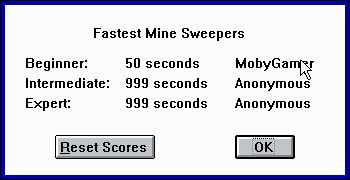
Their accessibility is another major plus: minimal controls, clear instructions, and self-explanatory rules let new players dive in immediately. At the same time, high-score chasing in Minesweeper, streak-building in Solitaire, and tactical bidding in Hearts ensure plenty of depth for those seeking to hone their skills.
While modern gaming ecosystems offer online leaderboards, achievements, and social integration, Windows 3.1’s trio reminds us how compelling well-crafted simplicity can be. They paved the way for countless casual titles that followed, and their influence is still felt in mobile and desktop “time sink” apps today.
In short, as a bundled offering with Windows 3.1, these games deliver enduring value. They won’t dazzle with cutting-edge effects, but their addictive gameplay loops, approachable design, and historical significance make them a worthwhile experience for both collectors and newcomers exploring the roots of PC gaming.


Reviews
There are no reviews yet.