 Retro Replay Retro Replay gaming reviews, news, emulation, geek stuff and more!
Retro Replay Review
Gameplay
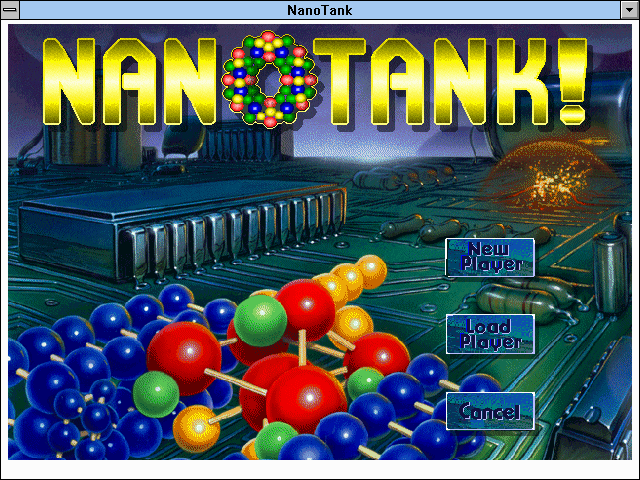
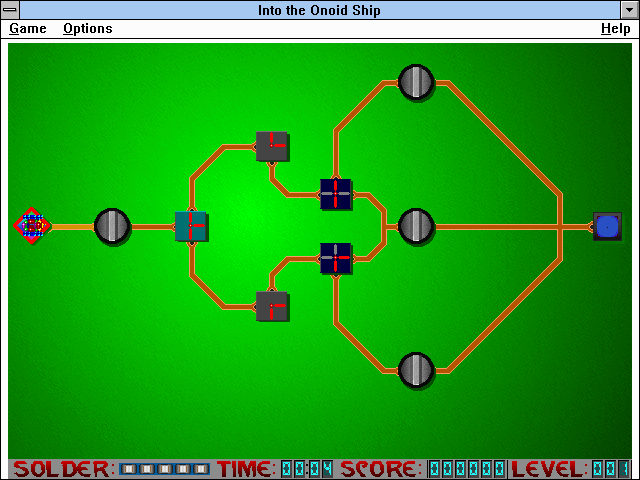
Nanotank places you in control of a tiny, heavily armored vehicle navigating the intricate pathways of a malfunctioning computer’s circuitry. Each level represents a different circuit board segment, and your primary objective is to repair broken nodes by activating switches, realigning connections, and guiding electrical currents safely through the maze of traces. The puzzles unfold at a deliberate pace, encouraging careful observation and thoughtful planning rather than frantic button-mashing.
(HEY YOU!! We hope you enjoy! We try not to run ads. So basically, this is a very expensive hobby running this site. Please consider joining us for updates, forums, and more. Network w/ us to make some cash or friends while retro gaming, and you can win some free retro games for posting. Okay, carry on 👍)
The game introduces new mechanics gradually: some boards feature moving platforms or timed gates, while others have hazardous zones that drain your energy unless you reroute power through alternate paths. As you progress, you’ll encounter pressure-sensitive panels and color-coded locks that demand precise sequencing. This steady ramp-up keeps the brainteasers fresh, ensuring that each level offers a distinct challenge even though the core concept remains consistent.
Despite its straightforward premise, Nanotank rewards experimentation. Many puzzles have multiple solutions, allowing you to find shortcuts or more elegant fixes once you’ve mastered the basics. The limited fuel gauge and occasional time-based objectives add a mild layer of urgency, but overall the game maintains a puzzle-focused rhythm that both beginners and seasoned logic enthusiasts can appreciate.
Graphics
Built for Windows 3.1 before Microsoft introduced WinG, Nanotank’s visuals are a snapshot of early ’90s PC gaming. The art style relies on simple, tile-based graphics with bold, high-contrast colors that help you quickly distinguish walls, switch panels, and energy conduits. While the resolution is low by modern standards, the crisp icons and clearly defined board layouts make it easy to parse each puzzle at a glance.
The miniature nanotank itself is represented with just a few pixels, yet the designers imbued it with surprising character—watch how its turret rotates to face your cursor and how it flashes when boosting across a gap. Environmental details like blinking LEDs, sparking nodes, and animated circuit currents lend a modest sense of life to otherwise static boards. These small touches remind you that you’re inside a living, breathing machine.
Performance on period hardware is rock-solid. Because the game was optimized for Windows 3.1’s limited graphics API, it runs smoothly even on older machines or in virtualized Windows environments. If you’re looking for a blast from the past or a lightweight title that will run on virtually anything, Nanotank’s no-frills presentation is both functional and nostalgically charming.
Story
Nanotank doesn’t lean heavily on narrative cutscenes or voiced dialogue; instead, it frames its world through environmental storytelling. You learn that a critical system failure has left a series of circuit boards corrupted, and you—piloting the lone nanotank unit—must traverse each board to restore order. The premise is simple but effective: you are the repair agent sent into digital chaos.
Each level’s design hints at the computer’s broader malfunction. Burnt-out segments, flickering data streams, and partially rewritten code fragments convey a sense of urgency and impending system collapse. Though there’s no traditional character development, the mounting tension arises organically from the escalating puzzle difficulty and the ever-present threat of a total blackout if you fail too many times.
From a historical perspective, Nanotank stands out as the sole commercially released title from Twin Dolphin Games. The studio’s ambition to build a high-visual-quality animated wargame for Windows 3.1 was abandoned, but much of that technical expertise found its way into Nanotank’s slick interface and polished gameplay. This backstory adds a layer of intrigue: you’re playing the distilled essence of a studio’s earliest experiments in Windows gaming.
Overall Experience
Nanotank offers a brisk, brain-teasing journey through the inner workings of a computer world. Its tight puzzle design, gradual difficulty curve, and responsive controls make it a satisfying experience for anyone who loves logic challenges. Although the game is relatively short—reflecting its quick development cycle—it packs enough content to keep you engaged for several focused sessions.
The retro aesthetic and straightforward mechanics have aged gracefully. If you’ve ever wondered what early PC puzzle games looked like before DirectX and advanced 3D engines, Nanotank is a compelling time capsule. Modern players may find the lack of audiovisual spectacle a drawback, but those who value clear design and mind-bending riddles will appreciate the game’s deliberate simplicity.
As a piece of gaming history, Nanotank holds a unique place: a Windows 3.1 title born from the ashes of a shelved wargame project and the only product shipped by a now-defunct studio. Whether you’re a collector of vintage PC software or simply seeking clever puzzles wrapped in nostalgic packaging, Nanotank delivers an engaging, bite-sized adventure that remains surprisingly accessible today.


Reviews
There are no reviews yet.