 Retro Replay Retro Replay gaming reviews, news, emulation, geek stuff and more!
Retro Replay Review
Gameplay
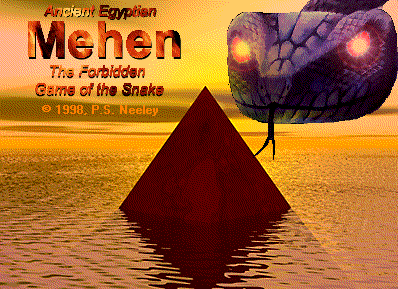
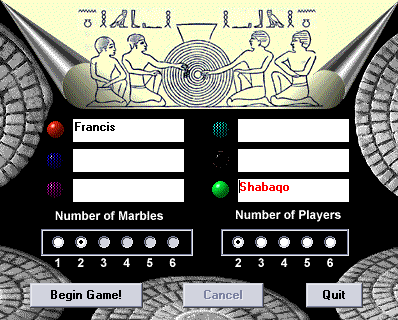
Ancient Egyptian Mehen: The Forbidden Game of the Snake brings to life a nearly 5,000-year-old board game with surprisingly deep mechanics. Players choose between two and six marbles each and throw casting sticks—an Old Egyptian substitute for dice—to determine movement. Unlike modern race games, you must accumulate your throws until a “2” appears, introducing strategic decision points: do you bank your accumulated total or push your luck for a bigger leap?
(HEY YOU!! We hope you enjoy! We try not to run ads. So basically, this is a very expensive hobby running this site. Please consider joining us for updates, forums, and more. Network w/ us to make some cash or friends while retro gaming, and you can win some free retro games for posting. Okay, carry on 👍)
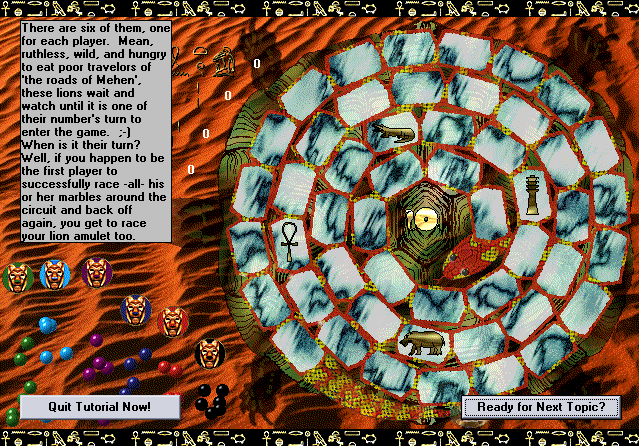
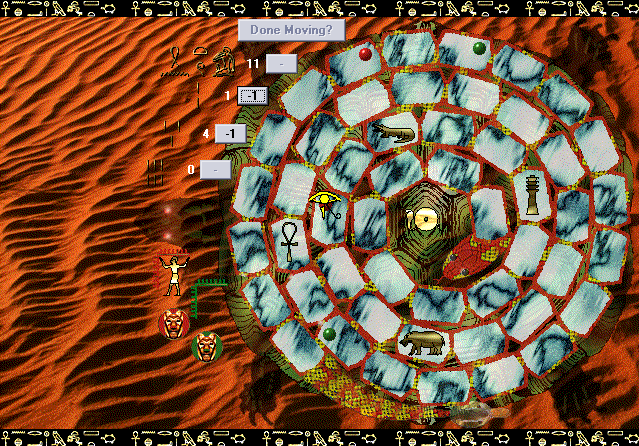
The game board is a spiral leading to the center square representing Ra, the Sun God, and back out again. Landing on an opponent’s marble sends it back to the mover’s previous spot, creating tense moments of territorial contest. The special “Shinyat” roll (a “1”) is reserved for entering and exiting the board and maneuvering in the central chamber, giving each turn a thrilling potential for sudden reversals.
Once a player ferries all marbles through the spiral and back, they unleash the lion—moving at double speed with a single marble avatar. Any marble caught in the lion’s path is devoured, extending the race and reshuffling the standings. This second phase adds a unique twist, extending the life of the match and ensuring that the first victory is not the final one.
The included tutorial eases newcomers into the archaic rules, and periodic “Mummy Facts” about Old Egypt pepper the learning curve with historical tidbits. Whether you’re mastering bumping tactics or timing your Shinyat throws, the gameplay loop remains engaging and surprisingly accessible, inviting repeated playthroughs.
Graphics
Visually, Mehen opts for a clean, minimalist board design reminiscent of early shareware titles. The spiral path is rendered in warm sandy tones, accented by hieroglyphic motifs that reinforce the ancient setting. Marble tokens and the lion avatar stand out in jewel-like colors, making it easy to track each player’s progress.
Character animations are modest but charming: marbles slide smoothly between spaces, casting sticks flip with an appealing flourish, and the lion’s devouring animation adds a touch of playful menace. While not pushing modern 3D capabilities, the graphics strike a perfect balance between clarity and atmosphere.
An atmospheric MIDI soundtrack plays softly in the background, blending percussion that echoes temple drums with ethereal wind instruments. The music loops seamlessly and heightens immersion, transporting players back to Old Egyptian ceremony halls. Occasional chime effects accompany special rolls, reinforcing the mystical flavor of Shinyat throws.
Overall, the graphics serve the game’s educational and entertainment goals admirably. They never distract from the strategic depth but instead enhance the ancient mystique, making each match feel like a ritual dance with the gods.
Story
Although Mehen is fundamentally a race-and-bump board game, its lore is woven through pop-up “Mummy Facts” that appear between sessions. These brief historical notes delve into the game’s religious significance, its possible banning by ancient authorities, and the role of Ra in Egyptian cosmology.
The narrative frame implies that players are participants in a sacred ceremony, chasing marbles toward the sun god’s shrine and back. This isn’t merely a pastime—it’s an enactment of cosmic cycles of life, death, and rebirth. The belated lion phase can be read as a mythic force of divine judgment, adding weight to the final stretch.
While there is no traditional storyline or character development, the historical context compensates by turning each match into a miniature reenactment of millennia-old rites. If you’ve ever wondered what it feels like to step into the sandals of an Old Egyptian worshipper, Mehen’s ambient storytelling will satisfy that curiosity.
For history enthusiasts, the tidbits about religious ceremonies, Nubian nomads who preserved the rules, and the game’s possible censorship by pharaohs provide ample food for thought. The result is more than a board game—it’s an interactive museum exhibit hosted on your desktop.
Overall Experience
Ancient Egyptian Mehen: The Forbidden Game of the Snake is a niche gem. Its blend of straightforward mechanics and surprising tactical layers makes it accessible to casual players, yet rich enough to attract strategy aficionados. The lion phase ensures that no victory feels final, keeping tension high until the very end.
The minimalist graphics and MIDI soundtrack might feel retro, but they perfectly suit the game’s archaeological theme. They support the atmosphere without overwhelming the core strategy. The occasional “Mummy Facts” interludes add educational value and a sense of living history.
On the downside, the lack of AI opponents of varying difficulty can make single-player sessions feel repetitive once you master the basic tactics. However, with local multiplayer support (hotseat style), this title shines as a party game or classroom curiosity. Teaching friends the ancient rules becomes part of the fun.
In conclusion, Mehen offers a rare chance to try a near-pristine recreation of one of humanity’s earliest known games. It’s an engaging experience for anyone intrigued by history, board games, or unique strategic challenges. If you appreciate cultural authenticity and are looking for a fresh take on the race-and-bump genre, this forbidden serpent crawl is well worth exploring.


Reviews
There are no reviews yet.