 Retro Replay Retro Replay gaming reviews, news, emulation, geek stuff and more!




Retro Replay Review
Gameplay
Aurora: The Secret Within embraces the classic point-and-click formula, allowing players to navigate environments and interact with objects by simply clicking on hotspots and inventory items. The first-person perspective immerses you directly into the dusty corridors of military bases and windswept desert plains, bringing a tactile sense of exploration that modern titles sometimes miss. Puzzles are logical but challenging, inviting you to experiment with combining items, deciphering codes, and probing the environment for subtle clues.
(HEY YOU!! We hope you enjoy! We try not to run ads. So basically, this is a very expensive hobby running this site. Please consider joining us for updates, forums, and more. Network w/ us to make some cash or friends while retro gaming, and you can win some free retro games for posting. Okay, carry on 👍)
The game’s pacing is deliberate, giving you time to savor each discovery rather than rushing you from one location to the next. Dialogue choices occasionally influence the information you gather, though the narrative path remains mostly linear. This balance between freedom and structured progression ensures that you never feel entirely lost, yet you must still pay attention to the smallest detail—whether it’s a cryptic note pinned to a bulletin board or a faint hum emanating from a locked lab door.
Inventory management is straightforward, with an icon-based system that displays collected objects in a sidebar. Rather than overwhelming you with dozens of items, Aurora keeps its puzzle components lean and meaningful. Combining tools, documents, and evidence to unlock new paths feels satisfying, and the game’s moderate difficulty curve ensures that you’re neither stuck for hours nor breezing through without a challenge.
Graphics
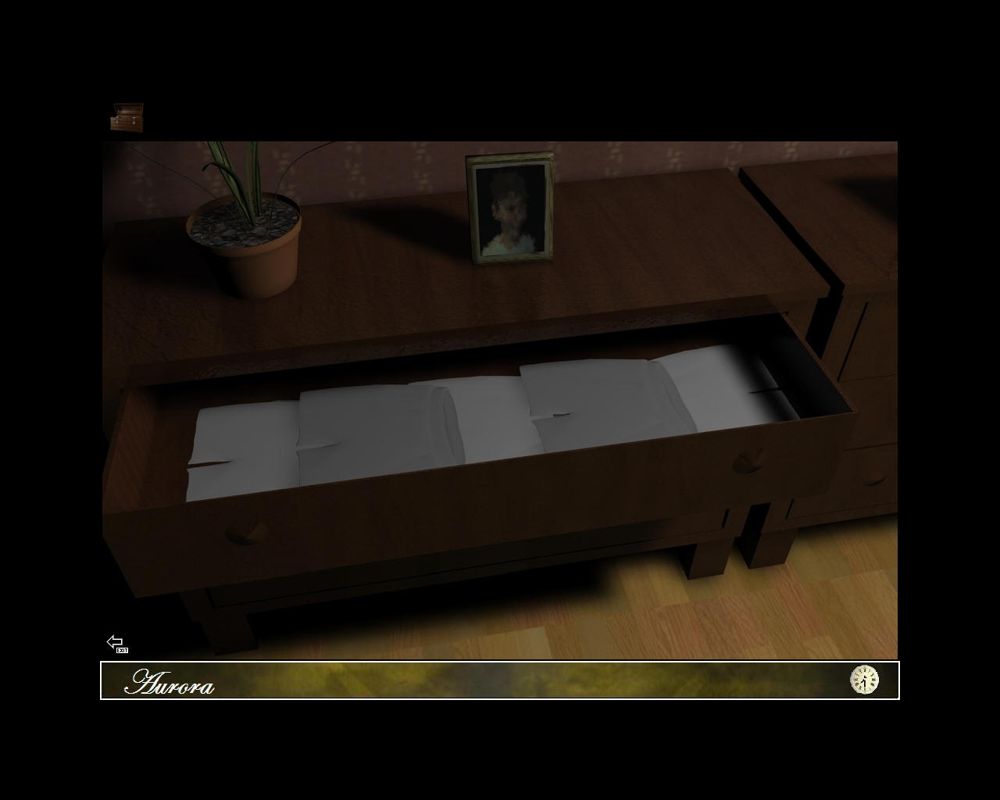
Despite its late-1990s release, Aurora: The Secret Within presents a surprisingly atmospheric 3D environment. The textures may appear dated by today’s standards, but they effectively evoke the barren expanses of New Mexico desert, the sterile corridors of underground facilities, and the rustic charm of 1950s Americana. Lighting plays a crucial role—shadows stretch across sandy terrain, and flickering fluorescent bulbs hum in secret labs, heightening the sense of mystery.
Character models and facial animations are admittedly simplistic, yet they possess a certain charm that fits the era’s technological constraints. Lead character Detective Pileggi stands out with a distinctive trench coat and fedora, while secondary characters—from anxious townsfolk to stern military officers—convey emotion through voice acting and expressive gestures. Cutscenes weave pre-rendered backgrounds with in-engine character animations, creating a cinematic feel that underscores key plot revelations.
The user interface is uncluttered, with minimal HUD elements to maintain immersion. Inventory icons are clearly labeled and easy to distinguish, while the cursor changes shape to signal interactive objects or exits. Though you won’t find high-definition textures or advanced particle effects, Aurora’s graphical presentation remains coherent and purposeful, reinforcing the game’s suspenseful atmosphere without unnecessary distractions.
Story
Set in the height of 1950s paranoia, the narrative of Aurora: The Secret Within opens with the U.S. Army’s bombshell announcement: a flying saucer has crashed near Roswell. You assume the role of hard-boiled Detective Pileggi, dispatched to investigate the disappearance of a local farmer. As you dig deeper, it becomes clear that the incident is far more complex than a simple missing-person case.
Plot twists abound as you uncover evidence of an enigmatic project dubbed “Aurora.” Government scientists, under strict military supervision, are conducting experiments that blur the line between advanced aeronautics and extraterrestrial technology. Through diary entries, classified memos, and tense conversations with whistleblowers, the game steadily peels back layers of secrecy, building toward a climactic confrontation that reveals the true scope of the operation.
The storytelling is atmospheric and methodical—each new discovery raises the stakes. While some plot beats adhere to genre conventions (secret laboratories, coded transmissions, shadowy figures in the night), Aurora distinguishes itself with well-written dialogue and memorable set pieces. Dialogue trees allow Pileggi to press suspects for more detail or adopt a more empathetic tone, subtly shaping the information you collect without derailing the main storyline.
Overall Experience
Aurora: The Secret Within delivers a satisfying blend of investigation, puzzle-solving, and atmospheric world-building. Its deliberate pace encourages players to examine every corner of the Roswell outskirts and Area 51 complexes, rewarding patience with moments of genuine intrigue. The point-and-click controls feel responsive, and the inventory system strikes a balance between simplicity and depth.
While the graphics and voice acting reflect the technological limitations of its time, they contribute to the game’s nostalgic charm. The 1950s setting is lovingly realized, from the creaking floorboards of rural homesteads to the sterile glow of underground test chambers. Sound design, including ambient wind whistles and the distant rumble of military vehicles, reinforces the isolated, secretive mood that propels the narrative forward.
For fans of classic adventure games, Aurora: The Secret Within is a hidden gem that stands up to repeated playthroughs. Its combination of compelling story, thoughtful puzzles, and evocative environments makes it an engaging experience for both veteran point-and-click enthusiasts and newcomers seeking a slower, more reflective gaming journey. If you’re intrigued by Roswell lore and government conspiracies, Aurora offers an adventure you won’t want to miss.


Reviews
There are no reviews yet.