 Retro Replay Retro Gaming History, Reviews & Emulation

Retro Replay Review
Gameplay
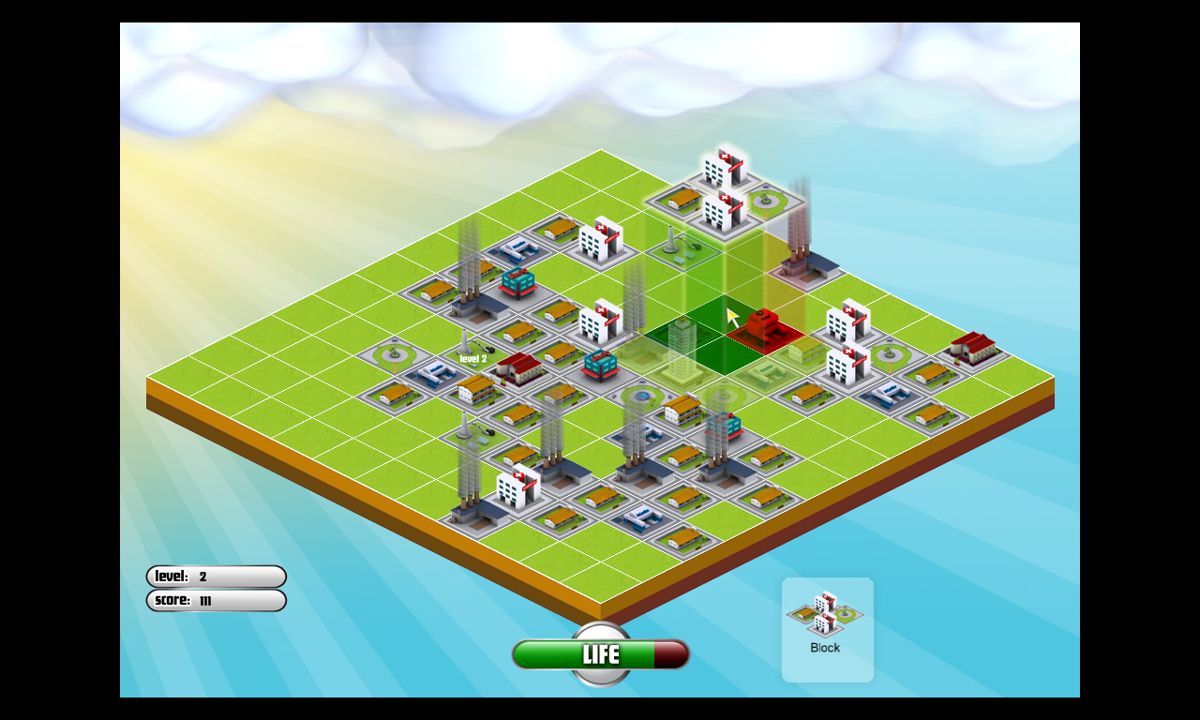
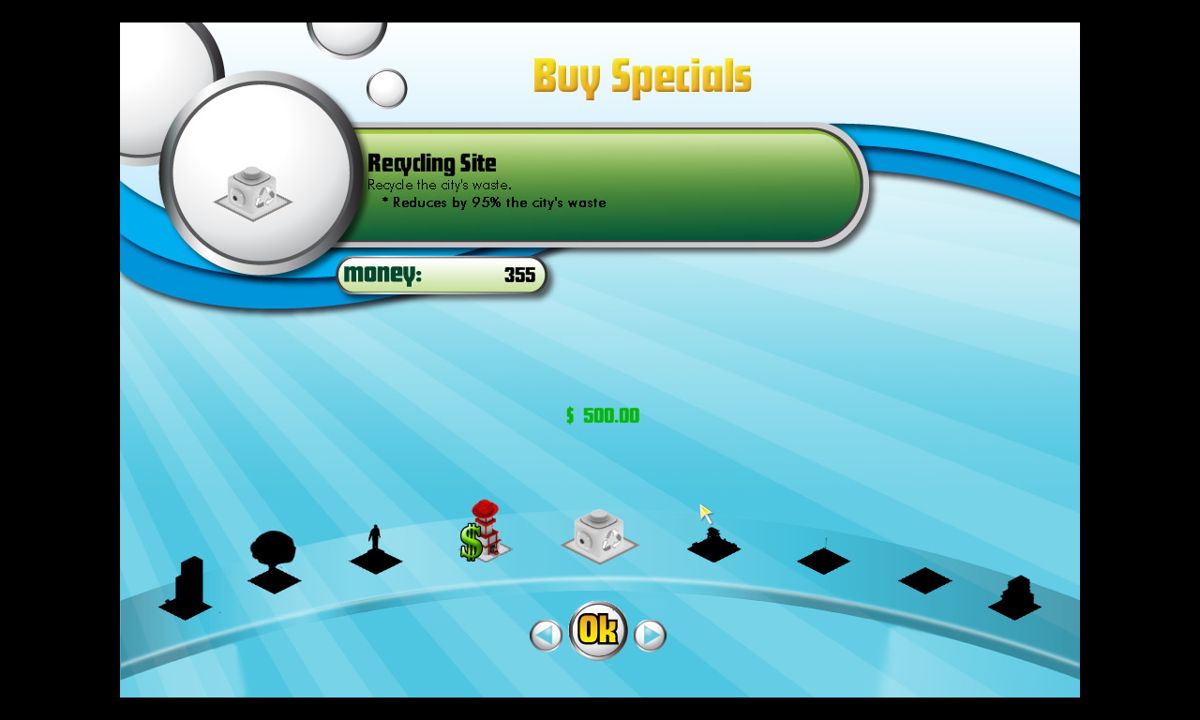
City Rain starts with a pleasingly simple question: where can this next building do the most good before the clock runs down? You rotate a falling block to choose a structure, place it on the isometric board, and try to meet a level’s demands before the available rounds disappear. The first hour has the approachable feel of a stripped-down city builder, but the time pressure quickly stops you from treating every decision like a leisurely zoning meeting.
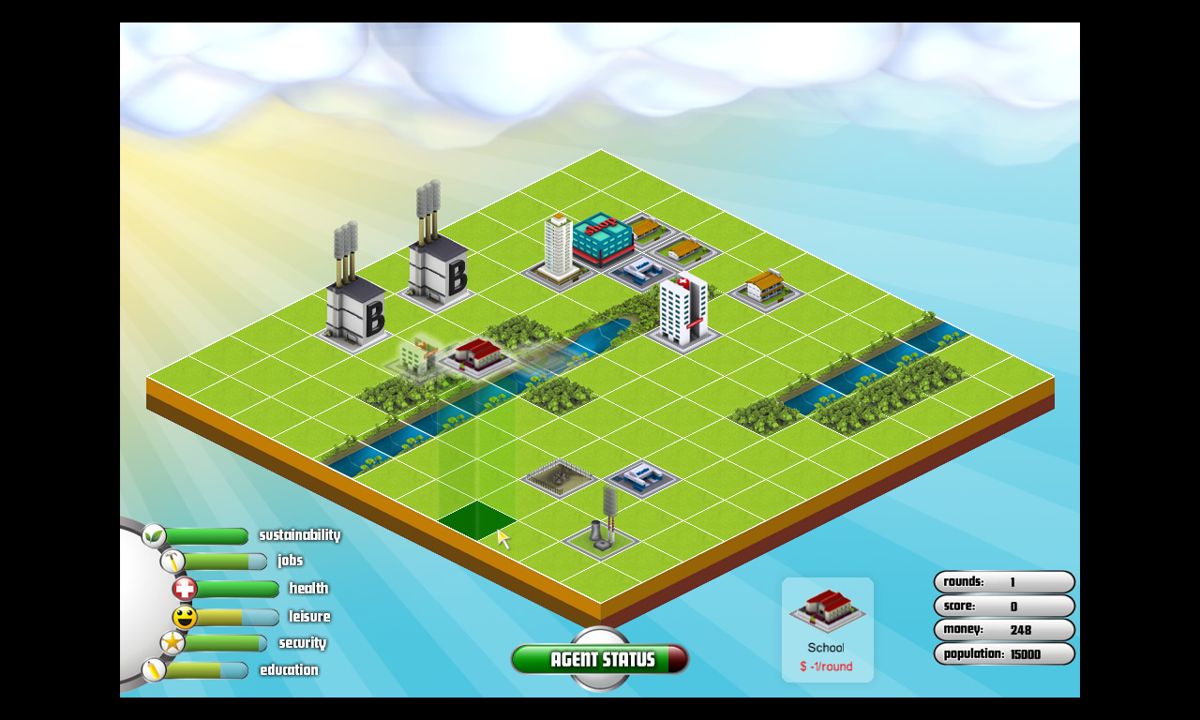
What makes the planning interesting is that every placement touches six concerns: sustainability, jobs, health, leisure, security, and education. Factories can bring in money but hurt the ecological side of the ledger, while residences and schools cost money each round. You are constantly trading immediate progress against a city that can actually survive the next objective. Stacking compatible buildings for upgrades adds a satisfying reason to think about shape and position instead of merely filling empty tiles.
The forced four-building patterns are where the game can turn from clever to aggravating. A fixed drop pattern and a short placement window can make a carefully arranged board feel suddenly cramped, especially when several needs are competing at once. Still, that pressure is central to City Rain rather than a random interruption: success comes from leaving yourself options and accepting that a neat-looking layout is not always the strongest one.
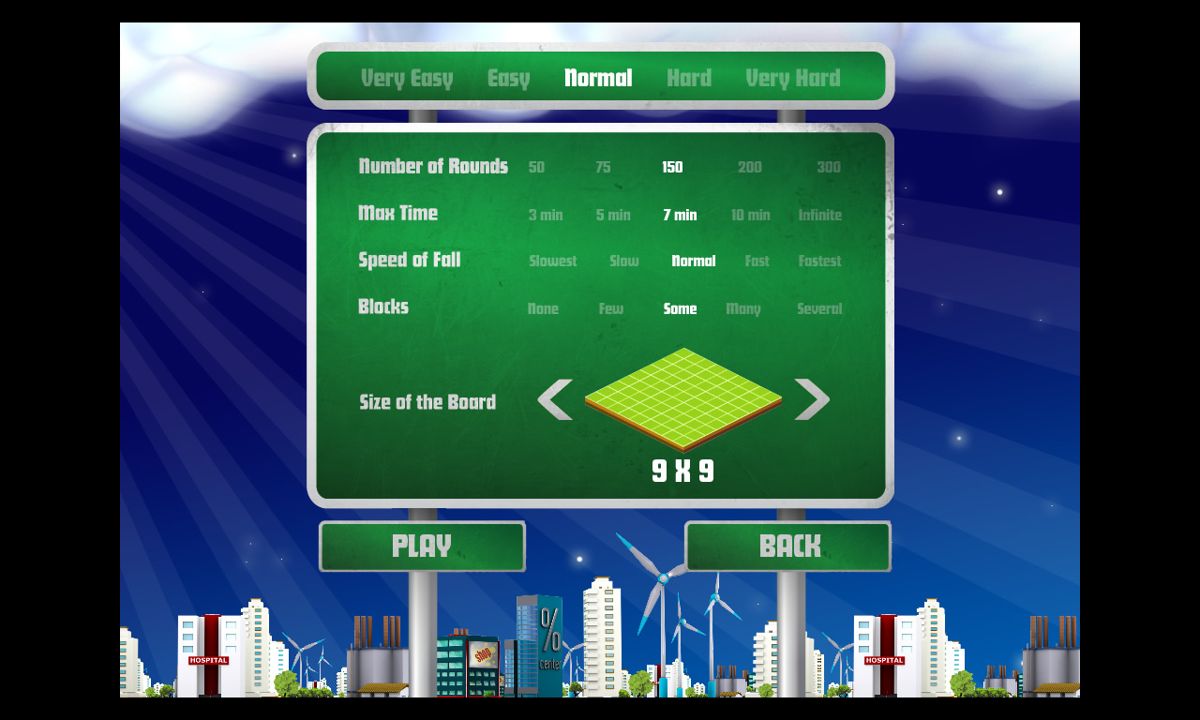
The campaign is built from discrete challenges—construct certain buildings, clean waste, raise research money—and generally wipes the board clean between levels. That makes it more puzzle-focused than a traditional city simulation, for better and worse. Quick play is a useful way to set your own starting conditions, while Blockmania strips away missions entirely and leans hardest into quick placement, upgrades, and avoiding destructive overlaps. If you want a sprawling city to nurture for hours, the resets will disappoint; if you want compact planning problems, they keep the pace brisk.
Graphics
The action plays out on an isometric tile board, with buildings dropping in from above before you place them. That viewpoint suits the game well: you can judge open space, stacks, and incoming shapes without fighting the camera, which matters when a timed decision is looming.
Story
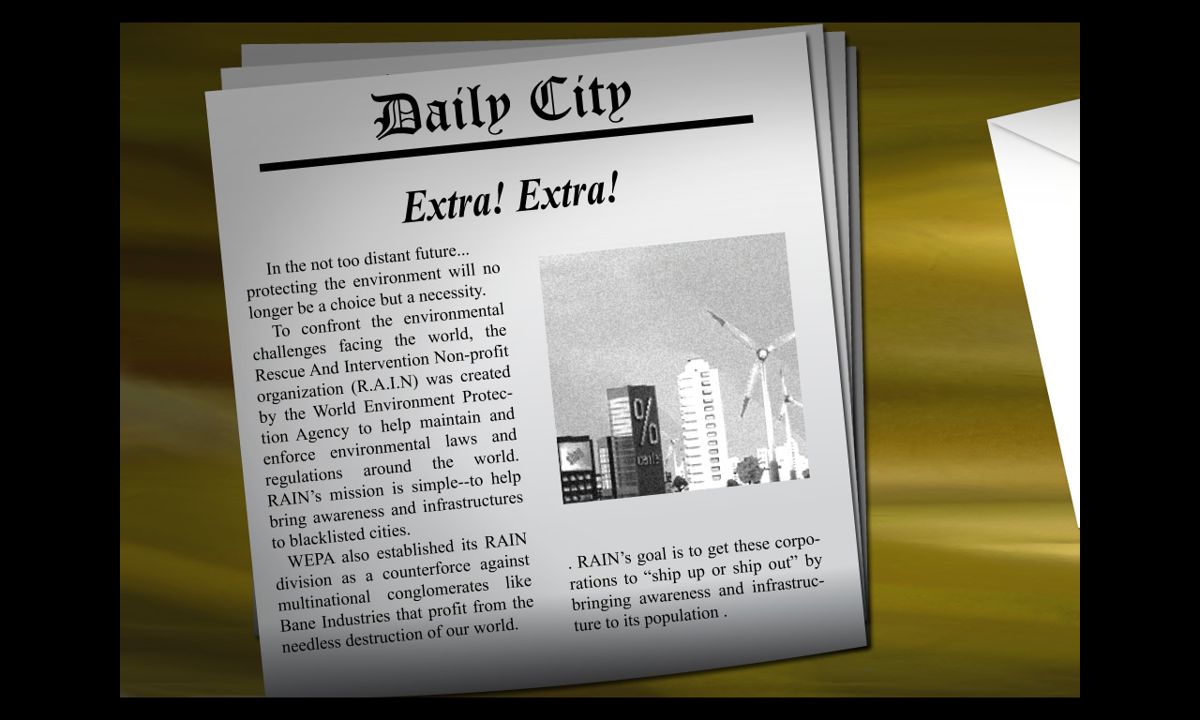
You enter City Rain as a new employee of R.A.I.N., a Rescue and Intervention Non-profit formed in a future shaped by environmental crisis. Its mandate—to uphold environmental laws and confront multinational conglomerates—gives the planning missions a more pointed frame than the usual anonymous mayoral job.
Catherine, your partner, introduces challenges and provides hints as the campaign grows tougher. Her role is practical: she helps ease you into a game whose economy and environmental trade-offs can otherwise feel a little abrupt at the start.
The story is a framing device for the puzzles rather than the main reason to continue. It does, however, make the recurring tension between profitable development and ecological responsibility feel intentional. Building another factory is not just a numerical shortcut when the campaign has already established why that shortcut carries a cost.
Overall Experience
City Rain is at its best when you are one placement away from meeting an objective, staring at a falling piece, and realizing that a hospital, school, or factory solves a completely different problem. It turns city planning into a series of short, pressured judgments, and that is a stronger idea than its modest scale might suggest.
The compromise is that it never offers the relaxed ownership of a long-running city builder. Limited rounds, stage-specific goals, and frequent resets mean you are solving the city in front of you rather than building a lasting metropolis. Some of the frustration comes from exactly that design, particularly when a required pattern squeezes a plan you thought was working.
For puzzle-minded strategy fans, though, the payoff is real. City Rain asks you to juggle money, civic needs, and environmental damage at speed, then gives you focused modes for either mission play or pure score chasing. It is an easy recommendation to anyone who likes their management games compact, demanding, and a little stressful in the right way; patience is required if you prefer a sandbox with room to breathe.


Reviews
There are no reviews yet.