 Retro Replay Retro Replay gaming reviews, news, emulation, geek stuff and more!



Retro Replay Review
Gameplay
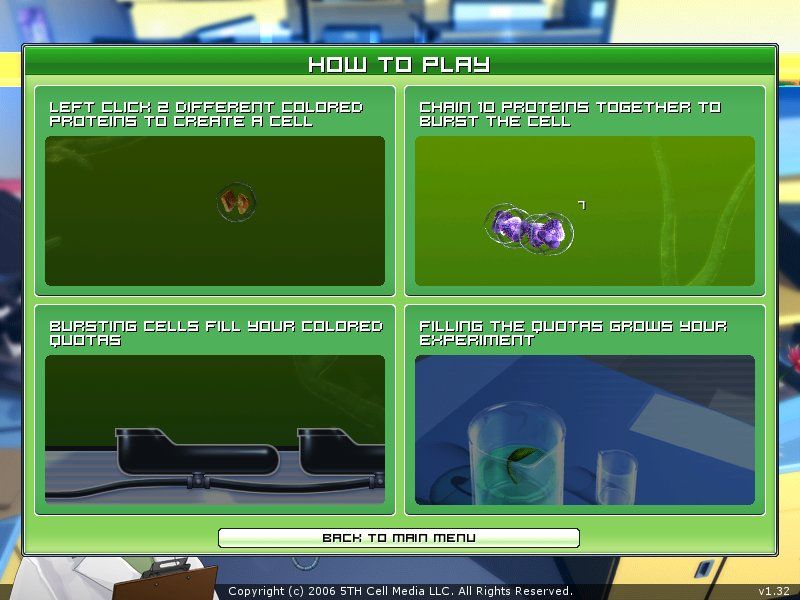
D.N.A. delivers a fresh twist on puzzle mechanics by turning a microscope plate into a vibrant battleground of proteins, cells, and viruses. You begin by clicking on individual proteins—each represented by one of the three primary colors: blue, red, and yellow. Once selected, a subtle circle appears around your protein, highlighting its range and potential partners for chromatic alchemy.
(HEY YOU!! We hope you enjoy! We try not to run ads. So basically, this is a very expensive hobby running this site. Please consider joining us for updates, forums, and more. Network w/ us to make some cash or friends while retro gaming, and you can win some free retro games for posting. Okay, carry on 👍)
Hovering over proteins within that range reveals possible chains of matching colors. This intuitive feedback system allows you to plan your next move with confidence: a click on a neighboring protein triggers a chain reaction, combining them into new cells. The simple color wheel principle—mix blue and red for purple cells, red and yellow for orange, yellow and blue for green—feels endlessly satisfying as you watch clusters blossom into vibrant cells.
Each mode offers a distinct challenge. In Action Mode, you race against a ticking clock to meet cell quotas, balancing speed and strategy as you fend off creeping viruses. Puzzle Mode shifts the pressure toward careful planning, tasking you with clearing the microscopic field of every protein. Endless Mode strips away timers and story hooks, inviting you to hone your combo skills at a leisurely pace.
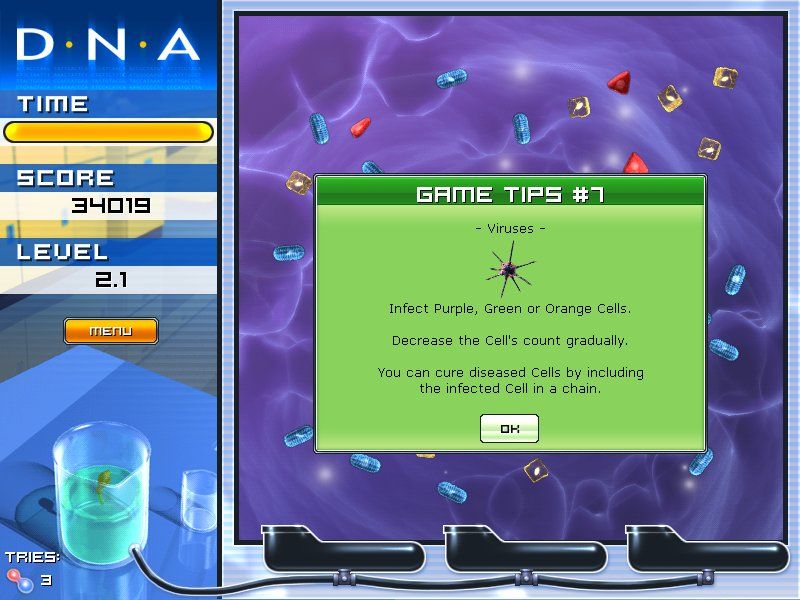
The occasional virus incursion raises the stakes: these pathogens latch onto cells, removing them from play unless you incorporate infected cells into your synthesis chains. This mechanic adds an extra layer of risk-reward, forcing you to choose between quick color matches or tactical rescues. Overall, D.N.A.’s gameplay loop is easy to pick up but rich enough to keep puzzlers engaged for hours.
Graphics
Visually, D.N.A. strikes a perfect balance between clarity and scientific charm. The microscope plate backdrop is rendered with subtle gradients and soft lighting, giving a polished laboratory feel. Proteins float with gentle motion, each hue rendered in crisp, saturated tones that pop against the muted background.
Chain reactions unfold in a flurry of particle effects: glowing orbs and sparkles swirl around connecting proteins, then coalesce into brightly colored cells. These transitions are smooth and satisfying, offering clear visual feedback that your strategy is working. Even when the plate grows crowded, each element remains distinct, ensuring you can plan combos without squinting.
Viruses—darker, spikier shapes—stand out ominously among the cheerful proteins and cells. Their arrival is underscored by a subtle shake of the viewport and a low hum, heightening tension without overwhelming the tranquil aesthetic. Whether you’re clearing space in Puzzle Mode or racing the countdown in Action Mode, the visuals never lose their charm or clarity.
Story
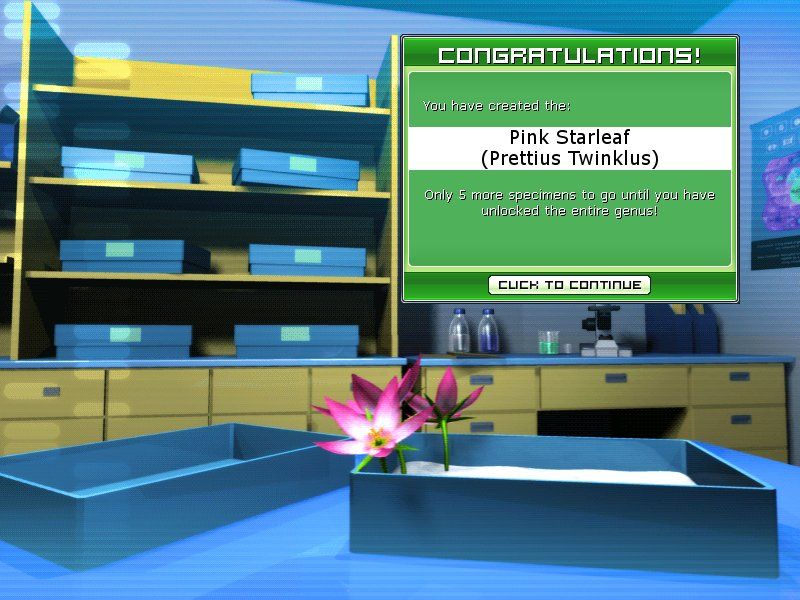
While D.N.A. doesn’t weave a sprawling narrative, it offers enough scientific context to keep the mood immersive. The premise of synthesizing cells from primary-color proteins evokes a playful take on real-world biology. Brief in-game text and loading-screen tips hint at a larger research project, but the focus remains firmly on the puzzle action.
This light narrative approach works in the game’s favor: it provides just enough motivation to push through levels without bogging you down in exposition. Each mode can be framed as a different experiment—timed trials, methodical clearing, or open-ended lab work—reinforcing the laboratory theme and giving players clear goals to pursue.
For those seeking deeper lore or character-driven storytelling, D.N.A. may feel sparse. But as a casual or competitive puzzle title, it delivers a thematic backdrop that enhances rather than distracts from its core mechanics. The minimal story elements function as seasoning, allowing the gameplay’s color-combination chemistry to remain center stage.
Overall Experience
D.N.A. stands out in the puzzle genre by marrying straightforward color theory with engaging chain-reaction mechanics. Whether you’re chasing high scores in Action Mode or perfecting your strategy in Puzzle Mode, the game consistently rewards careful planning and quick decision-making. Endless Mode serves as a stress-free playground where you can refine your combos at your own pace.
The learning curve is gentle, making D.N.A. accessible to newcomers, but the depth of chain-link strategies and virus-management tactics gives seasoned puzzlers plenty to master. The satisfying visual and audio feedback of successful combinations creates an addictive loop that keeps you coming back for just one more experiment.
Overall, D.N.A. offers a polished, thematically coherent package that combines scientific charm with solid puzzle design. If you’re in the market for a brain-teasing title that balances speed, strategy, and visual flair, this colorful cell-synthesis game is well worth a look.


Reviews
There are no reviews yet.