 Retro Replay Retro Replay gaming reviews, news, emulation, geek stuff and more!


Retro Replay Review
Gameplay
Everybody Dies delivers a fresh take on narrative-driven gameplay by weaving time travel and multiple perspectives into its core mechanics. Players primarily control Lisa, the time-traveling protagonist, but also gain limited agency over Graham and Ranni—two employees who meet untimely ends. This structure encourages experimentation, as each decision can ripple across timelines and alter the fates of characters both living and deceased.
(HEY YOU!! We hope you enjoy! We try not to run ads. So basically, this is a very expensive hobby running this site. Please consider joining us for updates, forums, and more. Network w/ us to make some cash or friends while retro gaming, and you can win some free retro games for posting. Okay, carry on 👍)
The episodic chapter design breaks the story into concise segments, allowing you to focus on key moments of tension and discovery. Each episode tasks you with solving environmental puzzles or making dialogue choices that can unlock new paths. While Lisa’s interventions often feel urgent, controlling Graham or Ranni after their deaths introduces a haunting layer of ghostly exploration: you can’t directly change events, but your spectral presence can shift subtle narrative threads.
Combat is minimal to nonexistent, placing the emphasis squarely on problem-solving and emotional beats. The challenge arises from managing timelines—saving Graham before he falls, protecting Ranni from Patrick’s deadly intentions, and uncovering hidden clues that tie these fates together. Though some players may wish for more traditional action, the thoughtful interplay of consequences and character agency creates a compelling puzzle-adventure hybrid.
Graphics
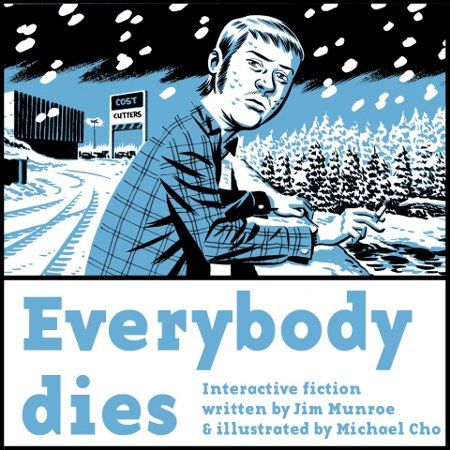
The visual style of Everybody Dies leans into moody atmospherics, combining muted color palettes with sharp highlights to underscore life-and-death stakes. Environments range from the drab interiors of the Rouge River Cost Cutters plant to ethereal backdrops where ghostly Graham and Ranni wander. Subtle particle effects—floating dust motes, flickering lights—enhance the sense of temporal distortion that permeates each scene.
Character models are expressive, particularly during close-up conversations. Facial animations capture a broad spectrum of emotion: Lisa’s determination, Graham’s bewilderment in death, and Ranni’s tragic realization. While not pushing the boundaries of photorealism, the art direction effectively conveys mood and personality, ensuring that each death scene and subsequent flashback carries weight.
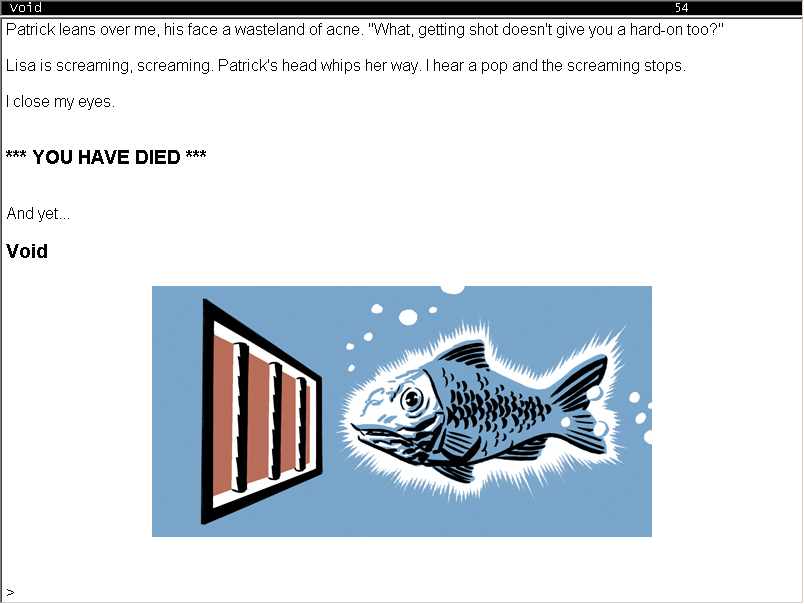
Loading transitions between time periods are slick, using brief visual glitches and auditory cues to keep you immersed in the shifting timelines. The UI remains clean and unobtrusive, with simple icons denoting interactable objects or spirits you can influence. On modern hardware, the game runs smoothly even during more visually complex moments, though players on older machines may need to adjust settings to maintain steady performance.
Story
At its heart, Everybody Dies is a study of fate, responsibility, and the lengths one will go to rewrite tragedy. The central narrative revolves around four colleagues: Graham, who perishes in a workplace accident; Ranni, who endures multiple murders at Patrick’s hands; Patrick himself, whose motivations slowly unravel; and Lisa, a mysterious time traveler determined to rewrite destiny. Their interwoven tales unfold in a non-linear fashion, challenging you to piece together how each death can be prevented.
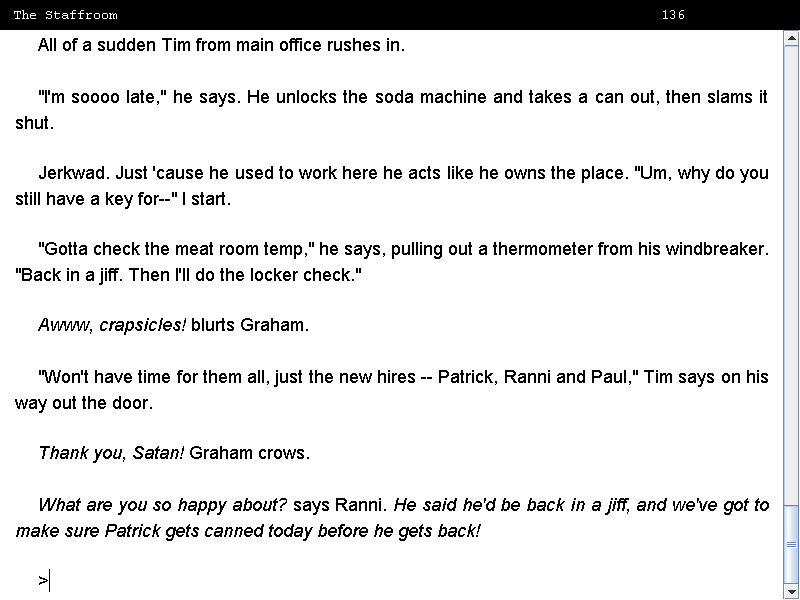
Dialogue is sharp and character-driven, revealing personality quirks and backstory through everyday interactions as well as life-or-death crises. Ranni’s fear and frustration bleed through her lines when she’s faced with imminent danger, while Graham’s posthumous reflections add a bitter-sweet layer of tragedy. Lisa’s mission provides the connective tissue, her urgency and moral dilemmas driving the narrative forward.
Plot twists abound: a revelation about the true nature of Lisa’s time-travel powers, the darker side of Patrick’s psyche, and the haunting possibility that some events may be immutable. While some twists feel telegraphed, others hit with genuine emotional impact—particularly in episodes where you experience a character’s final moments. The story’s nonlinear delivery invites multiple playthroughs, as replaying earlier chapters with new knowledge can uncover hidden dialogue branches and alternate resolutions.
Overall Experience
Everybody Dies stands out as a bold experiment in narrative design, offering players a chance to tinker with fate itself. Its contemplative pacing and emphasis on story over action may not suit adrenaline junkies, but fans of story-rich adventures will find much to admire. The interplay of time travel, limited ghostly influence, and branching dialog creates a tapestry that rewards close attention and emotional investment.
Pacing can feel uneven at times—with quieter, introspective segments followed by high-stakes race-against-the-clock sequences—but this ebb and flow mirrors the game’s themes of life, death, and consequence. Enthusiastic players may encounter a few logical leaps in puzzle design, yet the satisfaction of orchestrating a successful rescue of Graham or thwarting Patrick’s murderous spree makes each triumph a memorable one.
In the end, Everybody Dies is more than its morbid title suggests. It’s a thoughtful exploration of loss and agency, wrapped in an inventive gameplay structure that challenges you to rewrite history. If you’re drawn to story-driven adventures that blend mystery, emotion, and light puzzle-solving, this title deserves a spot on your playlist.



Reviews
There are no reviews yet.