 Retro Replay Retro Replay gaming reviews, news, emulation, geek stuff and more!


Retro Replay Review
Gameplay
Fighter’s History Dynamite refines the classic 2D versus-fighting formula with an accessible yet deep combat system. Each fighter comes equipped with two punch buttons (light and hard), two kick buttons (light and hard), and one or more unique throws. The inclusion of special move inputs—down, down-forward, forward plus a punch—will feel familiar to anyone who’s mastered Street Fighter II, but here the emphasis is on fluid, combo-friendly design rather than strict timing precision.
(HEY YOU!! We hope you enjoy! We try not to run ads. So basically, this is a very expensive hobby running this site. Please consider joining us for updates, forums, and more. Network w/ us to make some cash or friends while retro gaming, and you can win some free retro games for posting. Okay, carry on 👍)
The standout feature is the new “one-two attack” mechanic: pressing a hard attack button during a light attack or block shortens the gap between strikes, opening the door to more elaborate chains. This tweak simplifies input complexity without sacrificing depth, making it easier for newcomers to land satisfying combos while still allowing veterans to explore creative juggle setups. Learning each character’s signature throws and linking them into longer sequences rewards experimentation and memorization.
The match structure follows the traditional two-round format, with a sudden-death third round in case of ties. While this keeps bouts brisk, the animated background shifts between rounds add visual interest and subtly raise the stakes. The time limit ensures matches never drag on, forcing aggressive play or clutch defensive tactics as the clock winds down. Whether you’re tackling the single-player ladder or facing off against a friend in two-player mode, the pacing remains tight and exciting throughout.
Graphics
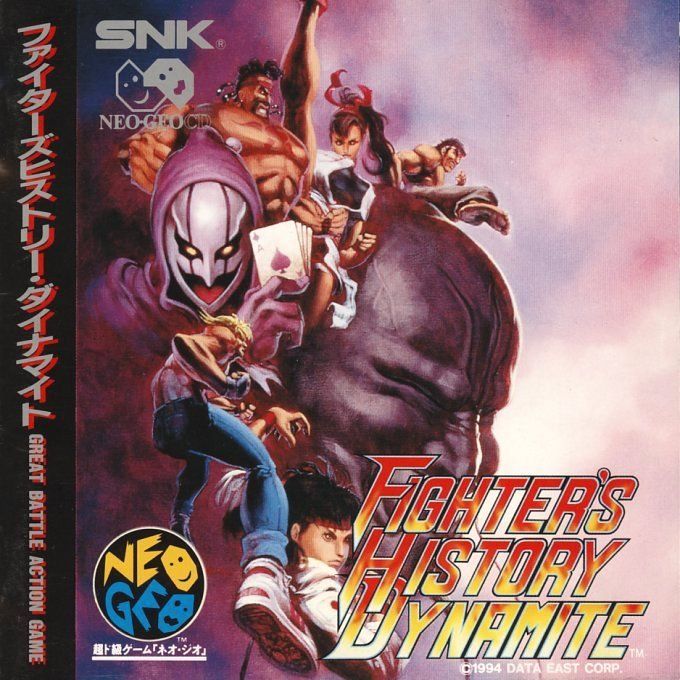
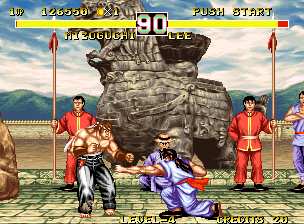
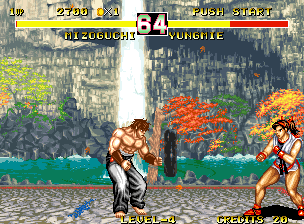
Visually, Fighter’s History Dynamite delivers colorful, hand-drawn sprites that channel the mid-’90s arcade era. Each character boasts a distinct silhouette—whether it’s Ray’s powerful grappler frame or Yungmie’s nimble kickboxing stance—and the animation frames are smooth enough to convey impactful strikes and dynamic poses. Moves feel weighty, and the visual feedback on hits (screen shakes, flash effects) enhances the sense of power behind each blow.
The stages feature richly detailed backgrounds that change subtly between the first, second, and third rounds. From bustling cityscapes to serene temple courtyards, these animated backdrops help maintain visual variety as you climb the tower of opponents. Occasional crowd animations and environmental flourishes—like fluttering banners or passing animals—add life to the arenas without distracting from the action in the foreground.
Character portraits and select cutscenes are rendered in crisp pixel art, complete with expressive facial animations that punctuate victory screens and story interludes. While some backgrounds feel reused across mirrors or palette swaps, the overall presentation holds its own against contemporaries, making Dynamite a visually appealing alternative for fans of 2D fighters.
Story
Fighter’s History Dynamite picks up one year after the events of the original Fighter’s History and the catastrophic “Great Grapple” tournament. The enigmatic martial artist known only as K, having tasted defeat, throws down the gauntlet once more, inviting fighters from across the globe to settle old scores and prove their supremacy. The narrative framework is straightforward, serving mainly as a vehicle to reunite familiar faces and introduce new challengers.
The roster includes the nine returning combatants—Ray, Feilin, Ryoko, Matlok, Samchay, Lee, Mizoguchi, Jean, and Marstorius—each with their own tournament-worthy motivations. New fighters Yungmie and Zazie bring fresh fighting styles and backstories, while hidden bosses Clown and the titular Karnov return as unlockable adversaries, adding mystery and replay value. Brief character bios and opening animations set the stage for each bout, though story beats remain minimal once the fight begins.
For those seeking narrative depth, Dynamite offers enough lore to spark curiosity—what drove K to re-launch the tournament? How have the original nine evolved since their last encounter?—but the game’s primary focus is visceral, round-by-round combat rather than elaborate cutscenes. In that respect, it captures the spirit of arcade fighters where story is suggested between matches rather than spelled out in lengthy dialogues.
Overall Experience
Fighter’s History Dynamite stands as a worthy evolution of its predecessor and a solid competitor in the crowded mid-’90s fighting scene. The accessible control scheme, bolstered by the innovative one-two attack system, makes for an inviting learning curve that doesn’t skimp on combo potential. Casual players can jump in and feel effective quickly, while hardcore enthusiasts will appreciate the layers of depth waiting to be unlocked.
Multiplayer sessions shine brightest, delivering tense back-and-forth matches that hinge on well-timed throws, punishes, and strategic use of the time limit. The roster’s balance ensures that each character can hold their own in skilled hands, and hidden fighters like Karnov offer extra incentives to revisit the single-player ladder. Though it draws clear inspiration from Street Fighter II, Dynamite carves out its own identity through throw-focused mechanics and unique character animations.
Whether you’re a collector of fighting-game history or a newcomer looking for a retro-styled brawler with modern sensibilities, Fighter’s History Dynamite remains an engaging choice. Its blend of colorful graphics, approachable gameplay enhancements, and streamlined storytelling strikes a fine balance between nostalgia and innovation, making it a recommended pick for anyone building a classic 2D fighting library.



Reviews
There are no reviews yet.