 Retro Replay Retro Gaming History, Reviews & Emulation
Retro Replay Review
Gameplay
The first few attempts to land are where Gravity Well earns your attention. Your ship keeps moving in its current direction until you rotate it and apply thrust, so a planet is not a button to press but a destination you have to approach with a plan. Gravity complicates the final stretch. You need to point at the target, then turn and thrust at the right moment to shed speed and fight the pull. It is an arcade-minded skill check sitting inside a conquest game, and that is a far more memorable hook than another abstract battle map.
Once the flying starts to click, the strategic loop has a solid purpose. You explore the sector, locate planets, land to claim them, and defend them long enough for freighters to establish colonies on habitable worlds or outposts and tech bases elsewhere. Taking an enemy-held colony is more demanding than merely arriving first, since its existing structures must be destroyed before you can make it yours. That creates a useful sense of escalation: discovery becomes occupation, occupation becomes defense, and defense eventually becomes an offensive campaign.
The controls are also the source of the game’s likely frustration. Fast ships and persistent momentum mean careless movement can turn a simple landing into repeated corrections. If you want a strategy game where orders resolve cleanly from a safe distance, this can feel fussy. If you enjoy learning the timing of a vehicle and accepting that your own piloting can jeopardize a strategic objective, the tension is the point rather than a distraction.
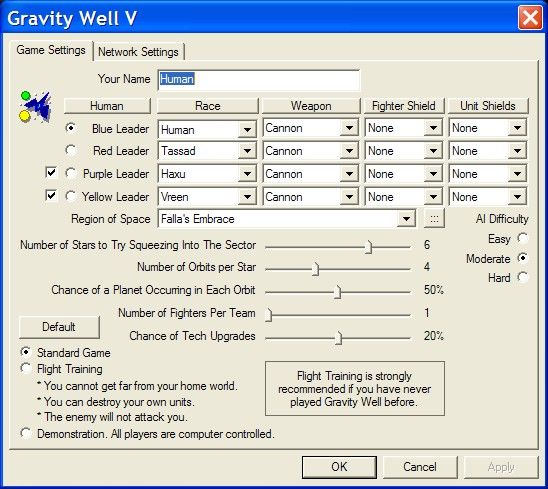
Solo play gives you worthwhile room to shape the fight. You face three computer opponents, choose them from sixteen races with behavior ranging from timid to suicidal, and adjust ship counts and starting weapon types. Weapons and base upgrades also arrive during play, so the opening setup matters without locking the whole match in place. Multiplayer is an even better fit for the underlying territorial struggle, because another human can make the race for planets and the pressure on colonies much less predictable.

Graphics
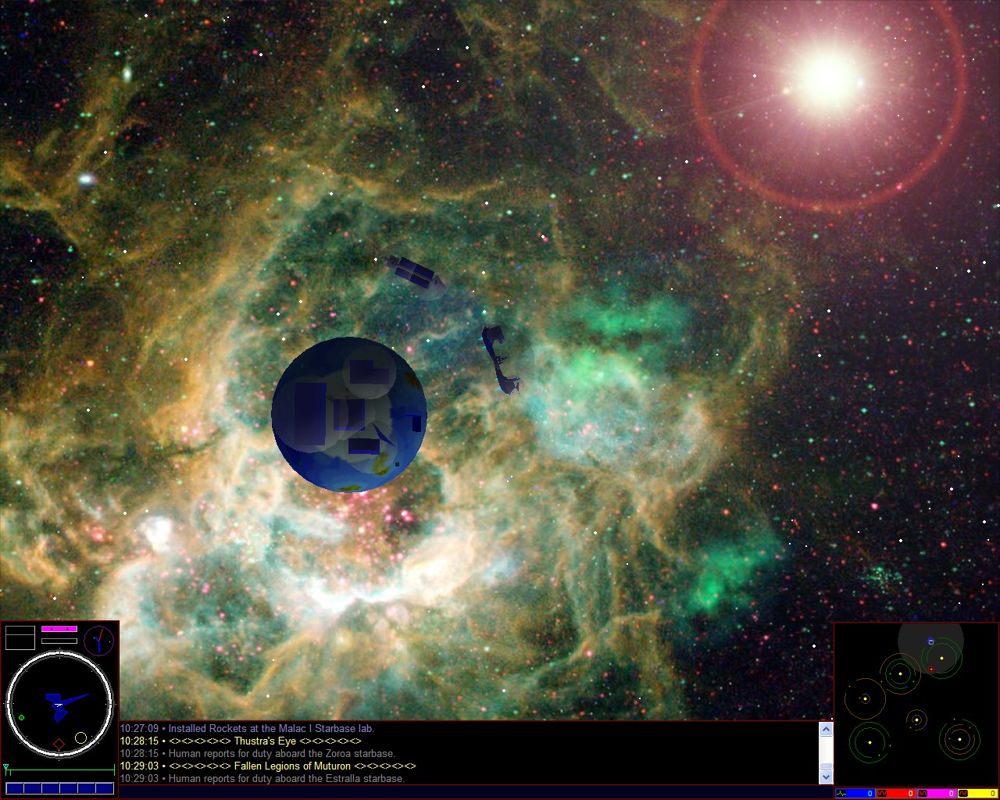
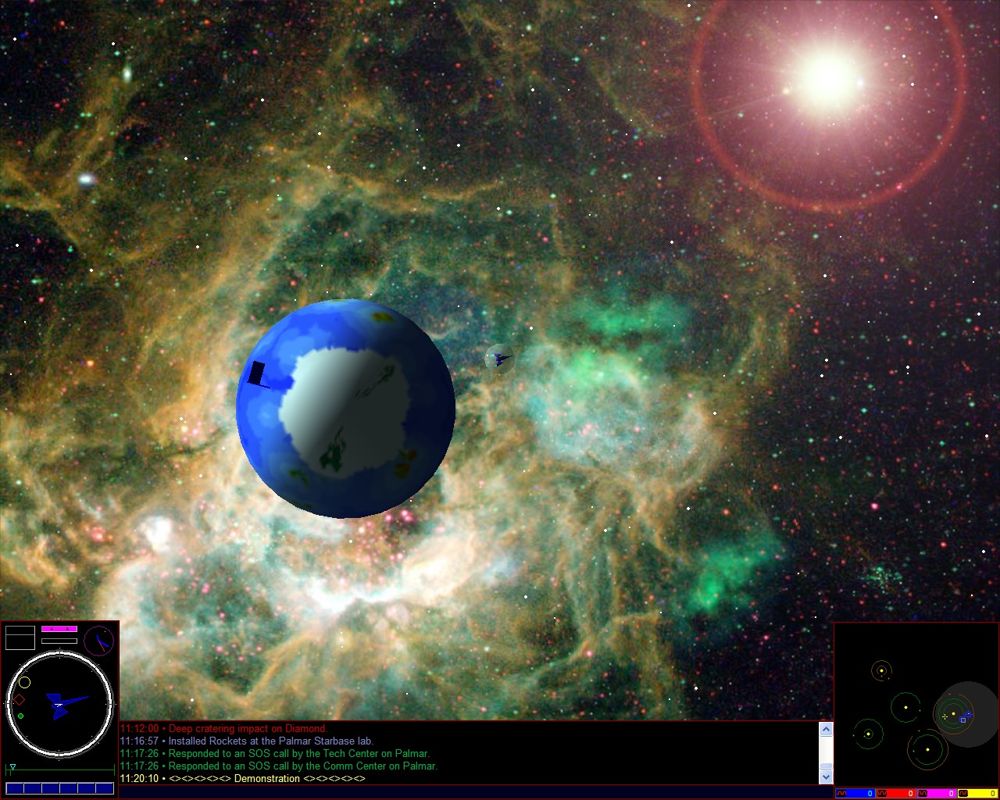
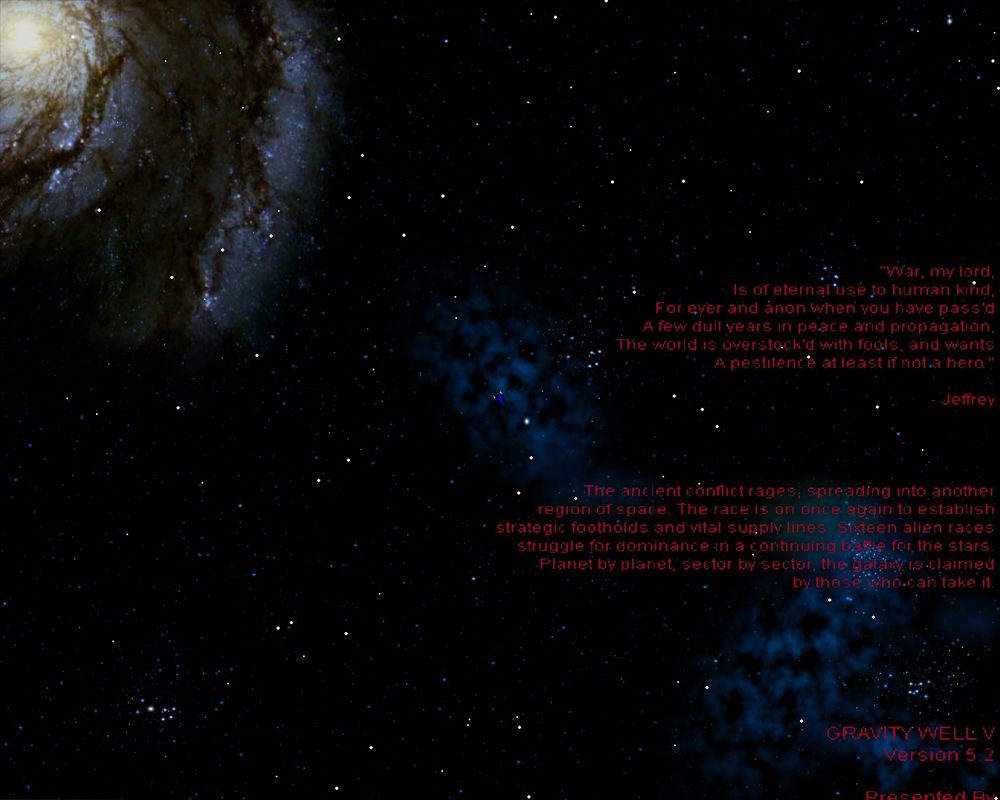
Gravity Well uses a top-down viewpoint suited to watching ships maneuver around planets and bases. That angle matters most during landings: you can focus on heading, distance, and the gravitational pull that threatens to carry you beyond your destination.
Story
This is a conquest premise rather than a story-led campaign. You take command of one of four races with a straightforward imperial objective: claim every available planet in the sector. The lack of a more elaborate narrative frame keeps attention on expansion and survival instead of asking you to invest in a scripted plot.
What passes for drama comes from the changing state of the sector. An unclaimed world is an opportunity; a newly established colony is something worth defending; an enemy colony becomes an obstacle that has to be dismantled before ownership can change. That gives the campaign a natural arc even without named characters or plot turns.
The race selection adds some flavor to each war through opponent behavior. Facing cautious computer rivals should produce a different pace from fighting suicidal ones, and that is a more useful kind of personality here than pages of lore would be. You are writing the memorable moments through successful landings, territorial grabs, and the planets you manage to hold.
Overall Experience
Gravity Well is worth trying because it refuses to separate strategy from execution. Conquering the sector is not only about deciding what planet matters next; it is about having the nerve and control to reach it cleanly. That combination can make a single claimed world feel earned in a way conventional territory games rarely manage.
Its payoff depends on whether the ship handling becomes satisfying rather than exhausting for you. Give it enough time to learn braking, turning, and working against gravity before judging the broader war. Once those basics settle in, the freighters, defenses, colonies, and enemy structures stop being a list of duties and start becoming stakes for every risky flight.
Recommended for strategy fans who like some hands-on arcade pressure in their campaigns, especially if they enjoy adjusting computer opponents to find the right level of hostility. Skip it only if momentum-based maneuvering sounds like an unwanted barrier between you and the map. For everyone else, its mix of planetary expansion and demanding approach control is distinctive enough to overcome the occasional irritation.


Reviews
There are no reviews yet.