 Retro Replay Retro Replay gaming reviews, news, emulation, geek stuff and more!
Retro Replay Review
Gameplay
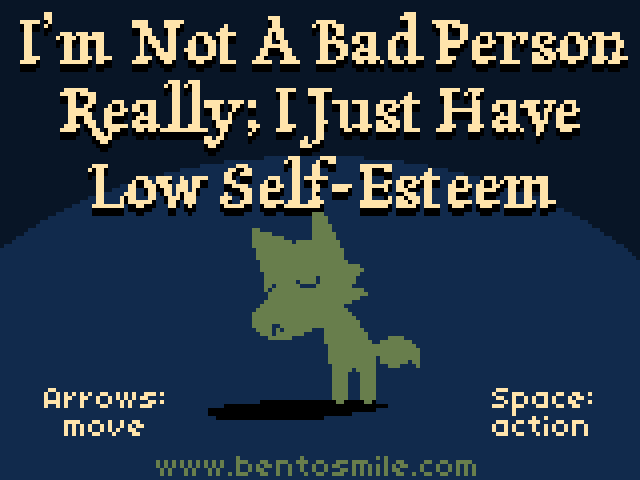
I’m Not a Bad Person Really; I Just Have Low Self-Esteem delivers an experience that’s surprisingly polished for a one-day game jam entry. You assume the role of the wolf from Little Red Riding Hood, navigating a linear path through a modest forest and a small cottage. Controls are straightforward—arrow keys or WASD to move, with simple interaction prompts that let you converse with key characters or examine noteworthy objects. While this limits the scope of player choice, it also keeps the focus firmly on the narrative and atmosphere.
(HEY YOU!! We hope you enjoy! We try not to run ads. So basically, this is a very expensive hobby running this site. Please consider joining us for updates, forums, and more. Network w/ us to make some cash or friends while retro gaming, and you can win some free retro games for posting. Okay, carry on 👍)
The interactions are mostly dialog-driven, with a handful of environmental touches that hint at deeper layers of emotion. You can pause to sniff flowers, peer into windows, or nudge objects around, each action reinforcing the wolf’s introspective state. Although there’s no branching storyline, the pacing of these moments creates a rhythm that feels deliberate rather than rushed. It’s a testament to how a brief game can still offer moments of genuine engagement.
Replay value is modest, reflecting its experimental roots. However, a second playthrough reveals tiny nuggets—offhand comments, brief visual gags, and subtle shifts in dialogue—that you’ll likely miss the first time. If you’re keen on uncovering all the little touches the developer added under time constraints, it’s worth diving in again. Even in its short runtime, the design encourages curiosity and a closer look at the world you’re inhabiting.
Graphics
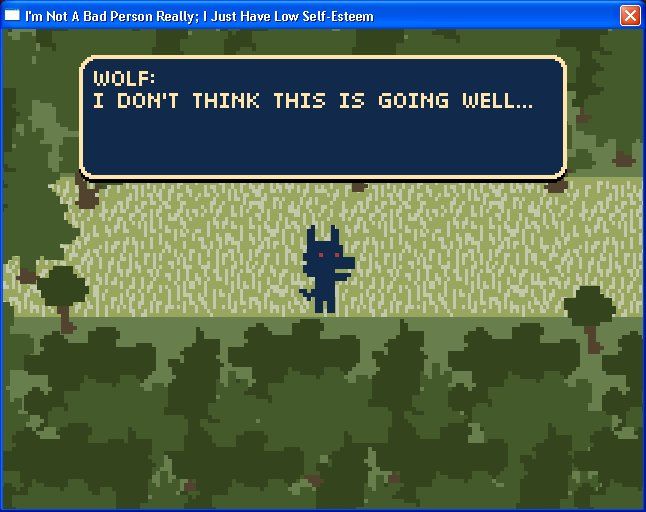
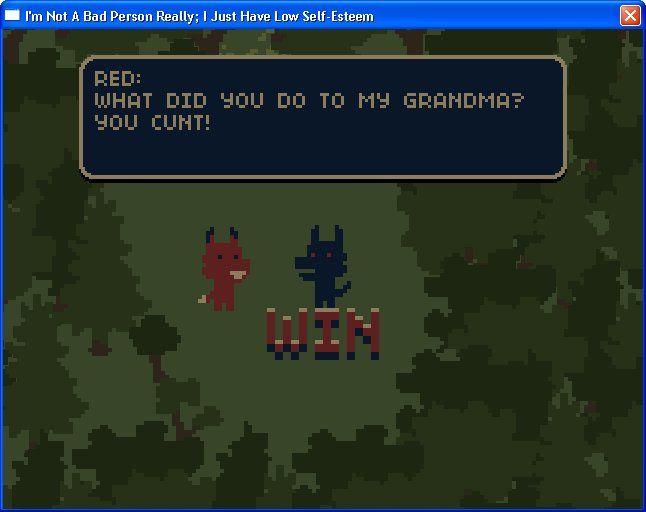
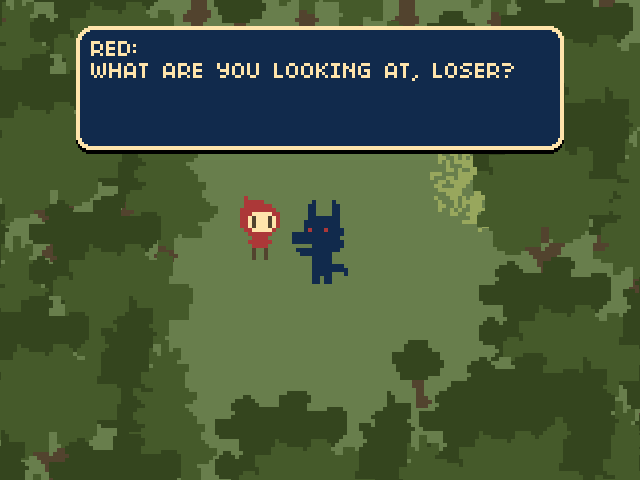
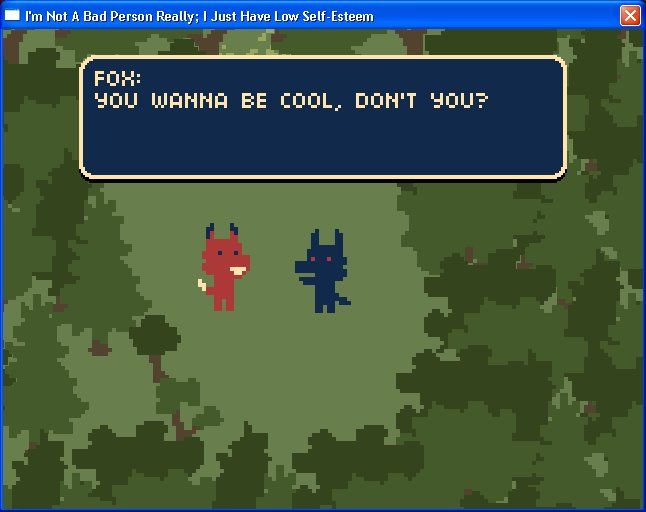
Visually, the game leans into a stylized, hand-drawn aesthetic that suits its fairy-tale origins. Character sprites are simplistic but expressive, their exaggerated movements conveying the wolf’s awkward self-doubt. The use of muted colors and soft shading lends a dreamlike quality to each scene, reinforcing the sense that you’re experiencing a memory or an internal monologue rather than a high-stakes adventure.
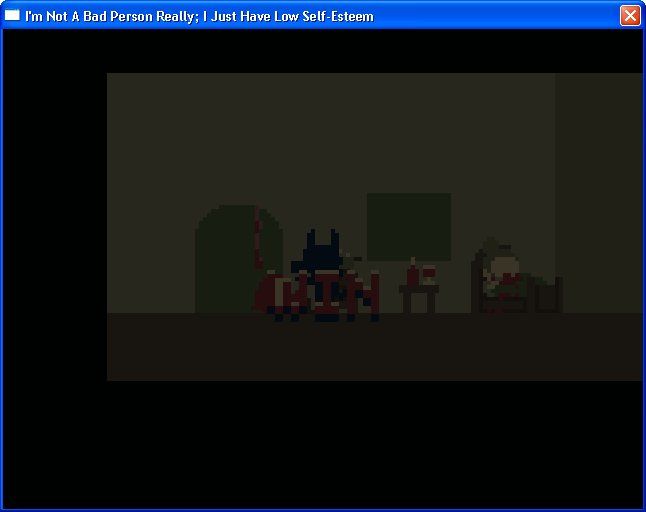
Backgrounds are minimal but thoughtfully composed. Forest environments consist of layered foliage and occasional glimmers of light filtering through the trees, setting an immersive mood despite the small canvas size. Inside the cottage, sparse furniture and a single window emphasize isolation, spotlighting the wolf’s vulnerability in an otherwise familiar setting. These design choices make the world feel cohesive, even if it’s built in a matter of hours.
There are moments when the limitations of a one-day jam are apparent—occasional animation stutters, a sprite that pops in midair, or a texture that feels too plain. Yet these rough edges almost become part of the charm, reminding you of the game’s experimental ethos. For a free or low-cost title, the graphical presentation surpasses expectations and highlights what can be achieved when creativity takes center stage over technical polish.
Story
This retelling of Little Red Riding Hood is unorthodox, framing the wolf as a sensitive, self-critical protagonist instead of a menacing predator. The script plays with these conventions, sprinkling moments of humor—“I’m definitely not a villain, right?”—alongside touches of melancholy that explore the wolf’s self-esteem struggles. The result is a surprisingly human character whose motivations feel believable, even within the fairy-tale context.
Story beats unfold in a linear sequence, starting with a hesitant journey through the woods and culminating in a tense but introspective encounter at Grandma’s cottage. Dialogue exchanges range from lighthearted banter to reflective monologues that reveal the wolf’s doubts. Although there’s no major plot twist, the emotional arc is satisfying, guiding you from self-questioning to a tentative sense of acceptance by the end.
While the narrative’s brevity leaves you wanting more depth, it also prevents any unnecessary padding. Every scene serves a purpose, whether to flesh out character or to set up the final emotional payoff. For players who appreciate concise storytelling and experimental narratives, this game delivers a complete, coherent tale in under fifteen minutes.
Overall Experience
I’m Not a Bad Person Really; I Just Have Low Self-Esteem stands out as a memorable experiment in narrative-driven design. Its jam roots are evident in both strengths—fresh ideas, bold perspective shifts—and limitations—brief length, minor technical quirks. Yet these elements combine into a cohesive whole that’s greater than the sum of its parts, offering a unique twist on a classic story.
The game’s emotional resonance is its strongest asset. By placing you in the wolf’s paws and exploring themes of self-doubt, it invites empathy and introspection rarely found in brief indie experiments. You’ll find yourself rooting for the seemingly “villainous” character and genuinely caring about the outcome of this short journey.
If you’re intrigued by alternative fairy tales, experimental storytelling, or indie game jams, this title is a must-try. Its low price point and short runtime make it a low-risk purchase, and the creative execution ensures you’ll walk away thinking about it long after the credits roll. Even with its simplicity, I’m Not a Bad Person Really; I Just Have Low Self-Esteem offers a refreshingly human tale worth experiencing.



Reviews
There are no reviews yet.