 Retro Replay Retro Gaming History, Reviews & Emulation
Game Overview
Gameplay
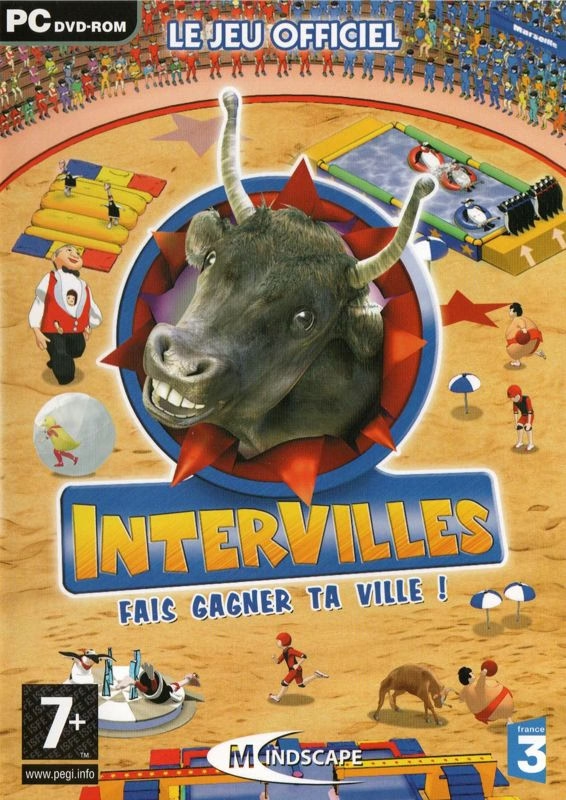
Intervilles starts from an easy-to-grasp idea: you represent a town, take on a series of mini-games, and try to push your team to victory. It is a better premise than simply asking you to chase an isolated high score. Every contest feeds into the same friendly town rivalry, which gives short activities a little extra purpose.
The focus is clearly on direct, immediate play rather than a long campaign of systems to learn. That makes it a reasonable fit for a casual group that wants to trade turns and see which town comes out ahead. You can get into the competitive spirit quickly because the central goal never becomes complicated.
The tradeoff is that mini-game collections live or die on how much you enjoy repeating small challenges. Intervilles does not promise the kind of sustained strategy or character progression that can carry a solo game for hours. Go in wanting brief rounds, a little local bragging rights, and a recognizable game-show structure, not a deep action experience.
Graphics
Intervilles uses the French game show as its subject matter, with the action framed around competing teams and the towns they represent. The concept naturally gives the game a more communal, event-based flavor than a generic collection of challenges.
Story
There is no sweeping adventure at the center of Intervilles. Its narrative drive is the competition itself: your town enters events, earns its standing through performance, and aims to win the overall contest.
That is a perfectly sensible fit for a TV game-show adaptation. A heavier plot would only get in the way of the quick-event format, while the town affiliation gives the matches a clear side to root for.
Still, do not expect the license to turn this into a character-driven game. The stakes are proudly small-scale, centered on pride, rivalry, and the satisfaction of putting your team ahead.
Overall Experience
Intervilles has a clean, social premise that can work when you want a low-pressure party game with a little competitive structure. The licensed town-versus-town angle is more memorable than a random assortment of events, and it gives each mini-game a shared destination.
Its limits are just as clear. The format is designed around short challenges, so your enjoyment depends heavily on whether that style holds your attention and whether you have other people around to share the competition. Alone, the thin framework has less to lean on.
Give it a chance if the Intervilles name means something to you or if you enjoy quick contests where the result contributes to a team victory. If you want a substantial single-player game with a developed story or lasting mechanical depth, this is likely too slight to be your main event.
Reviews
There are no reviews yet.