 Retro Replay Retro Replay gaming reviews, news, emulation, geek stuff and more!

Retro Replay Review
Gameplay
Legacy of Kain: Defiance continues the series’ tradition of tightly crafted, third‐person action set‐pieces blended with light puzzle‐solving. Players alternate control between Kain and Raziel across discrete chapters, with each hero offering distinct combat styles and traversal mechanics. Kain’s levels emphasize brute force, devastating melee combos with his corporeal Soul Reaver sword, and the strategic use of Pillar‐based upgrades. By contrast, Raziel’s chapters focus on agility, stealth, and world‐shifting between the material and spectral realms to bypass obstacles and unearth hidden paths.
(HEY YOU!! We hope you enjoy! We try not to run ads. So basically, this is a very expensive hobby running this site. Please consider joining us for updates, forums, and more. Network w/ us to make some cash or friends while retro gaming, and you can win some free retro games for posting. Okay, carry on 👍)
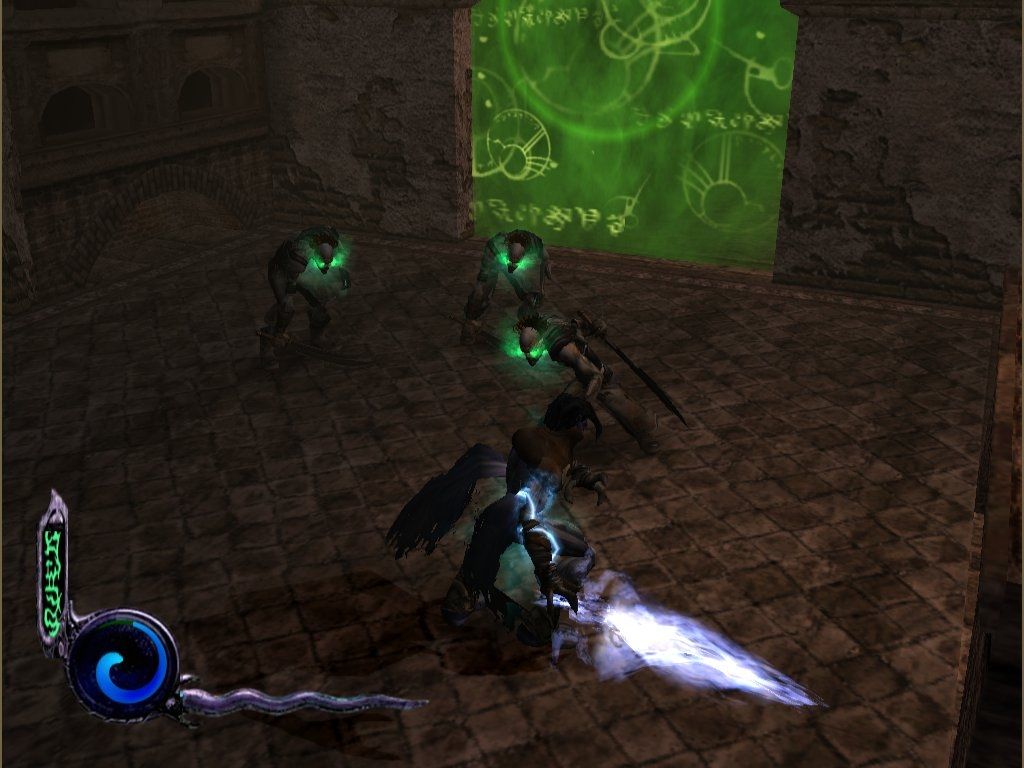
The core combat loop involves standard attacks, charged Soul Reaver abilities, and telekinetic object manipulation—allowing for dynamic encounters where fighting, environment interaction, and puzzle elements blend seamlessly. Both characters expend energy over time; Kain feeds on living creatures for blood energy, while Raziel absorbs souls of both living and inanimate foes to replenish his spectral form. This constant drain adds tension, encouraging careful planning of fights and exploration of feeding opportunities rather than button‐mashing through entire areas.
Puzzle segments often require you to toggle between material and spectral realms (especially as Raziel), move objects with telekinesis, or manipulate elemental powers bound to the Soul Reaver weapon. While some puzzles feel intuitive—such as using a charged Reaver attack to overload a mechanism—others can lean toward backtracking or pixel‐perfect platforming. Overall, the balance between combat encounters and environmental challenges keeps the pace varied, with occasional difficulty spikes that may frustrate newcomers but reward perseverance.
The control scheme remains mostly solid, with responsive targeting and camera behavior that seldom obstructs the action. Quick‐time events appear sporadically during boss fights or story beats, adding cinematic flair without overstaying their welcome. For players familiar with Soul Reaver 2 or Blood Omen 2, the learning curve is gentle; newcomers will appreciate the brief tutorials that introduce Raziel’s spectral phasing and Kain’s Pillar‐based enhancements. Ultimately, Defiance delivers a satisfying gameplay experience that honors its predecessors while refining core mechanics.
Graphics
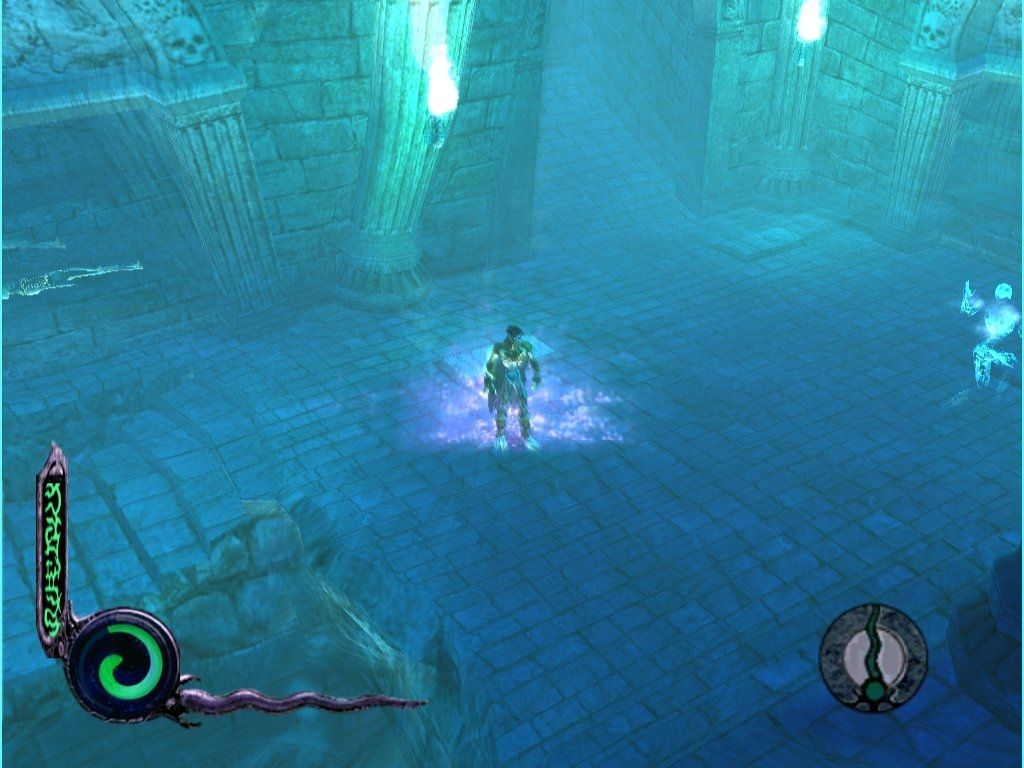
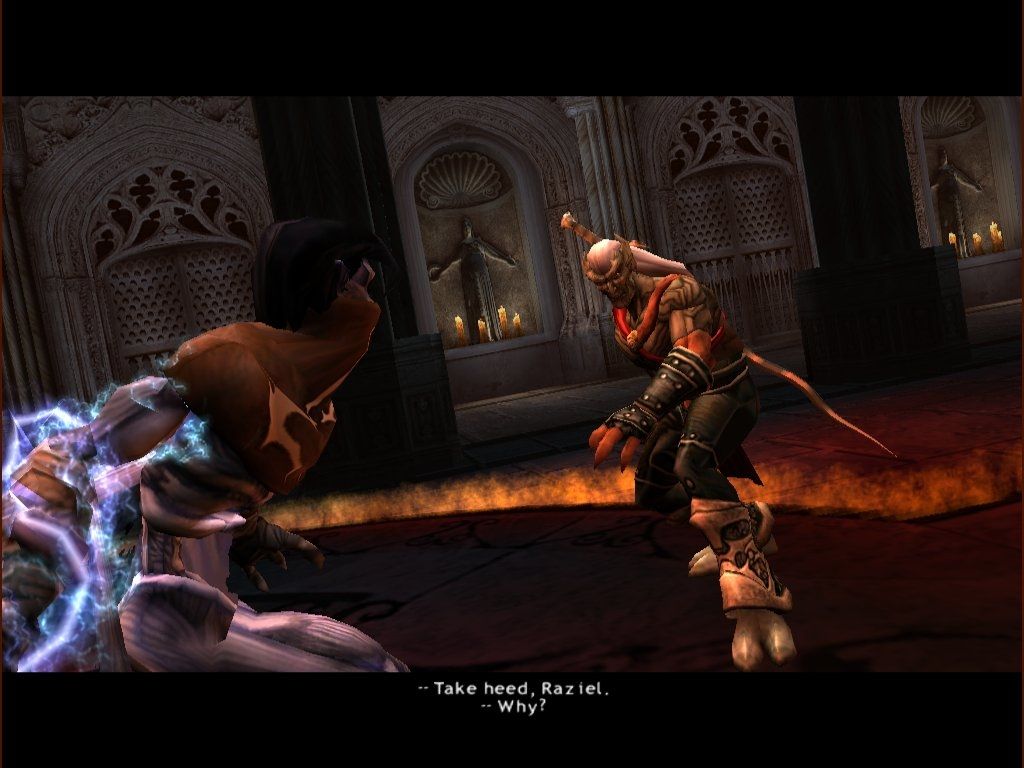
On a visual level, Legacy of Kain: Defiance stands out for its richly detailed environments and moody atmosphere. Nosgoth’s gothic architecture—ruined temples, mist‐shrouded forests, and foreboding Serafan fortresses—are brought to life with intricate textures and dynamic lighting. The contrast between the material and spectral realms is particularly striking: the spectral world appears as a ghostly, luminescent mirror of reality, with ethereal hues that underscore Raziel’s otherworldly perspective.
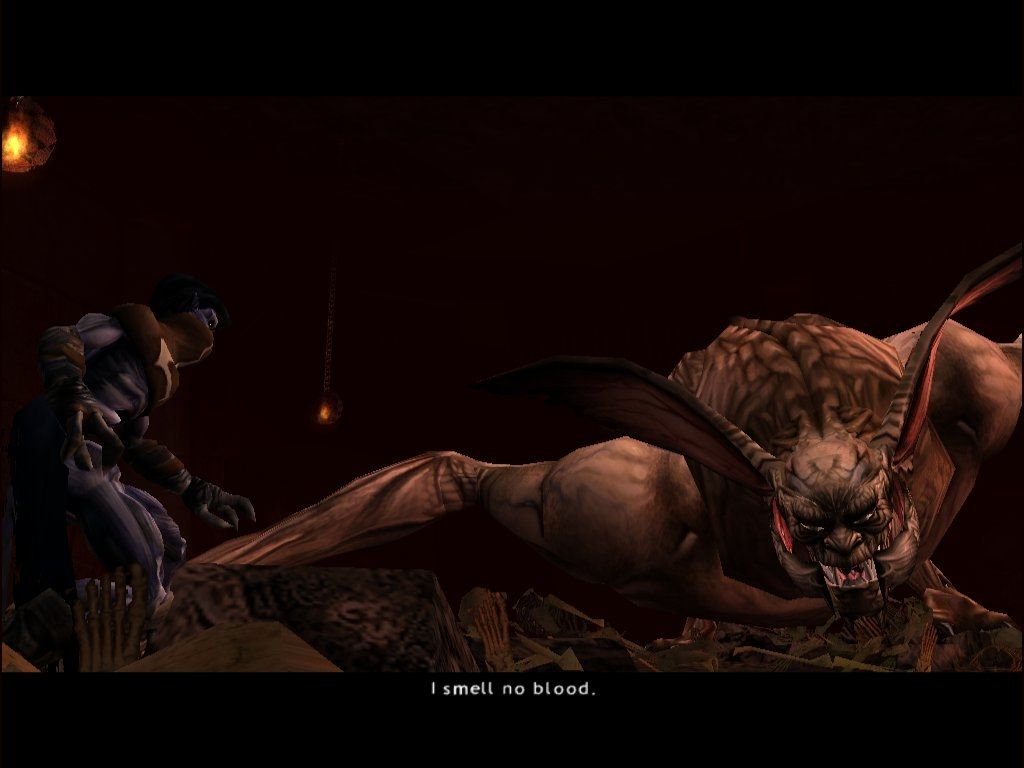
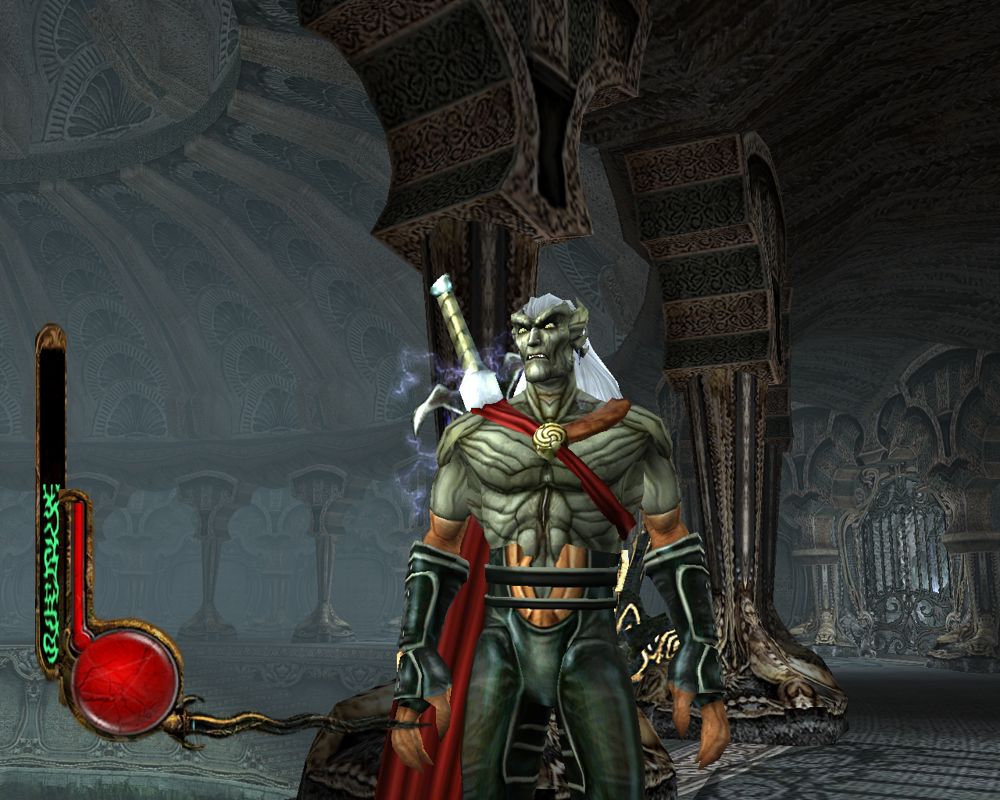
Character models for Kain and Raziel exhibit impressive detail, especially in their armor, flowing robes, and the spectral trails that follow their movements. Enemy designs range from deranged Serafan soldiers to twisted spectral beasts, each rendered with convincing animation and occasional gory flourishes. Boss encounters are visually grand, with large scale models and elaborate set‐pieces that heighten the sense of scale and danger.
Particle effects—for charged Soul Reaver strikes, blood splatter, and ghostly apparitions—add visual flair without overwhelming the screen. Environmental effects such as drifting fog, flickering torches, and rain‐soaked ruins contribute to immersion, while seamless transitions between realms maintain the flow of exploration. On consoles of its era, Defiance pushed polygon counts and texture resolutions to their limits, and it still holds up for fans of atmospheric, gothic art direction.
Performance is generally stable, though occasional frame drops can occur during the most elaborate scenes or when multiple particle effects coincide. Load times are reasonable, helping maintain narrative momentum. Overall, Defiance’s graphics may not match modern high‐end titles, but its distinctive visual identity and strong art direction ensure it remains a memorable entry in the series.
Story
Defiance picks up directly after the events of Soul Reaver 2, finding Raziel trapped in the Serafan stronghold and Kain desperately seeking escape and answers. The narrative alternates between their viewpoints, weaving a dual‐protagonist structure that highlights the unique motivations and personalities of both antiheroes. This intercutting builds suspense as players gradually discover how Raziel’s fall from grace and Kain’s struggle against destiny are interconnected.
Dialogue is delivered through high‐quality voice acting, with Tony Jay’s resonant baritone returning as the omniscient narrator and Michael Bell’s chilling performance as Raziel anchoring the emotional weight of the quest. Kain’s cold wit surfaces in his own segments, offering philosophical quips about fate, free will, and the nature of power. The writing threads together series lore, ancient prophecies, and unexpected twists, culminating in revelations that reshape the player’s understanding of Nosgoth’s history.
Defiance excels in pacing by balancing exposition with action. Cutscenes are cinematic yet not overlong, and important plot developments are often tied directly to gameplay—such as unlocking new Reaver powers or encountering pivotal characters mid‐mission. While some narrative beats may feel familiar to veterans of the franchise, newcomers will appreciate the careful world‐building and thematic depth centered on betrayal, redemption, and the cycle of time.
The game’s conclusion delivers dramatic payoffs, though it also leaves tantalizing threads open for future installments (and indeed, several follow‐up titles). For players invested in the complex mythology of the Legacy of Kain universe, Defiance provides both satisfying resolutions and provocative questions about the true nature of the Pillars and the Elder God. The story remains a high point of the series, blending dark fantasy with philosophical undercurrents.
Overall Experience
Legacy of Kain: Defiance offers a compelling mix of action, puzzle‐solving, and narrative depth that will satisfy longtime fans and appeal to players seeking a darker, story‐driven adventure. The dual‐character structure provides varied gameplay, preventing monotony as you switch between Kain’s raw power and Raziel’s spectral finesse. Moments of high‐intensity combat, atmospheric exploration, and thought-provoking lore create a well‐rounded package.
While occasional puzzle backtracking and intermittent performance dips may frustrate some, the strength of the core mechanics and the rich art direction carry the experience. Defiance strikes a careful balance between challenging encounters and accessible controls, making it approachable yet rewarding. Those who relish uncovering hidden areas, mastering Soul Reaver abilities, and delving into a multi‐layered plot will find themselves fully engaged.
Ultimately, Defiance stands as one of the more memorable entries in the Legacy of Kain franchise. Its polished combat systems, evocative graphics, and mature narrative make it a standout among early 2000s action titles. Whether you’re drawn by Raziel’s haunted journey through shifting realms or Kain’s defiant struggle against cosmic forces, this game delivers a rich, immersive experience.
For prospective buyers, Legacy of Kain: Defiance remains a worthy purchase for those who appreciate dark fantasy, lore‐heavy storytelling, and a blend of visceral action with cerebral puzzles. Its lasting influence on the genre and the series’ devoted fanbase attest to its quality and ambition. Prepare to lose yourself in Nosgoth’s tortured history and emerge with revelations that echo long after the credits roll.



Reviews
There are no reviews yet.