 Retro Replay Retro Replay gaming reviews, news, emulation, geek stuff and more!



Retro Replay Review
Gameplay
The gameplay in Nancy Drew: Last Train to Blue Moon Canyon centers on classic point-and-click mechanics, seamlessly blending exploration, puzzle-solving, and dialogue-driven investigation. Players navigate the eerie train cars, dusty mine shafts, and ghostly canyon landscapes, collecting items and deciphering cryptic notes. The controls are intuitive, with a cursor that clearly indicates interactive objects, making it easy for newcomers and series veterans alike to dive into the mystery without a steep learning curve.
(HEY YOU!! We hope you enjoy! We try not to run ads. So basically, this is a very expensive hobby running this site. Please consider joining us for updates, forums, and more. Network w/ us to make some cash or friends while retro gaming, and you can win some free retro games for posting. Okay, carry on 👍)
Puzzle design shines in this installment, offering a balanced mix of logic-based challenges and inventory-driven conundrums. From repairing locomotive engines to decoding secret messages, each puzzle feels thoughtfully integrated into the narrative. Optional hint features are available for players who get stuck, ensuring the game remains accessible without sacrificing the satisfaction of solving a tough riddle. The variety of puzzles keeps engagement high, with no two tasks feeling repetitive.
Interaction with characters is a key gameplay pillar. Conversations with Frank and Joe Hardy, as well as other suspects scattered throughout Blue Moon Canyon, use a branching-dialogue system that encourages thorough questioning. Choices in dialogue can unlock new areas or provide crucial clues, adding a subtle layer of agency to the investigation. The dynamic between Nancy and the Hardy Boys provides both cooperative problem-solving moments and occasional friendly banter that lightens the mood.
Graphics
Visually, Last Train to Blue Moon Canyon transports players to the late 19th century with richly detailed environments and period-appropriate color palettes. The rusty reds of the canyon walls, the creaking wood of the abandoned train cars, and the flickering lantern light in the mines all contribute to an immersive Old West atmosphere. Each setting feels meticulously crafted, drawing players deeper into the haunting mystery.
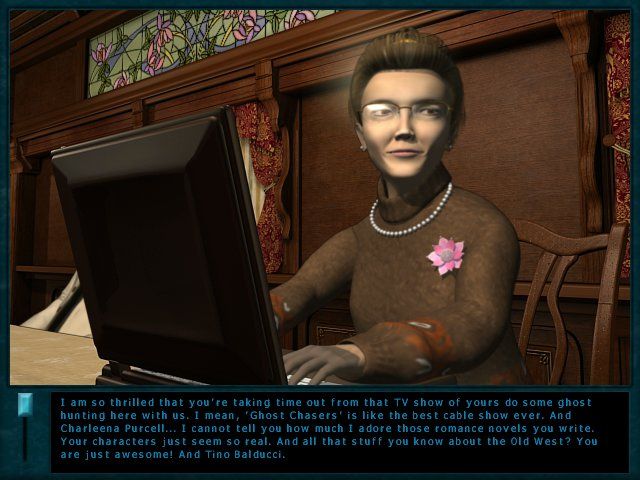
Character models strike a balance between realism and stylized aesthetics. Nancy’s observant eyes, the Hardy Boys’ rugged attire, and the ghostly apparitions rumored to roam the tracks are rendered with enough detail to convey personality and emotion. Facial animations during dialogue exchanges are smooth, helping to sell subtle expressions and maintain immersion during critical storytelling moments.
Lighting effects play a pivotal role in heightening suspense. Shadows stretch across abandoned corridors, lanterns cast dancing light on dusty walls, and sudden flare-ups of brightness can signal an important clue or shift in the narrative. Coupled with ambient sounds like the distant echo of running water in the mine and the creaking of metal, the game’s audiovisual presentation enhances the overall sense of unease and curiosity.
Story
Last Train to Blue Moon Canyon opens with a gripping legend: during the gold rush, locomotive engineer Jake Hurley and his wife Camille vanished after claiming there was “gold in them thar hills.” Their train later reappears, abandoned in the shadowy canyon, with Camille and the engineer found dead and Jake mysteriously missing. This chilling premise sets the stage for a tale that weaves history, tragedy, and possible supernatural elements into a compelling narrative.
Invited by the Hardy Boys, Nancy Drew arrives in Blue Moon Canyon to uncover the truth. The story unfolds through exploration of key locations: the derelict train, Jake’s hidden mine, and other secretive hideouts. As Nancy, Frank, and Joe piece together torn maps, cryptic diary entries, and miners’ tools, layers of betrayal, greed, and loss are revealed. The pacing of revelations keeps tension high, with each discovery prompting new theories about what really happened aboard the haunted locomotive.
Subplots involving local townsfolk, rival prospectors, and rumored spirits add depth to the main mystery. NPCs each harbor secrets, and their varied motives—ranging from protecting a family legacy to concealing evidence of foul play—drive the narrative forward. Twists late in the game tie together seemingly disparate clues into a satisfying conclusion that honors the series’ tradition of intellectual detective work and suspenseful storytelling.
Overall Experience
Nancy Drew: Last Train to Blue Moon Canyon offers a richly immersive experience that combines classic detective gameplay with a haunting Western mystery. The blend of challenging puzzles, character-driven investigation, and atmospheric graphics creates a captivating world that encourages exploration and critical thinking. Whether you’re a longtime fan of the Nancy Drew series or a newcomer seeking a story-driven adventure, this installment delivers on multiple fronts.
The cooperative dynamic between Nancy and the Hardy Boys adds a fresh twist to the franchise, allowing players to engage in collaborative clue-gathering and dialogue choices. The hint system ensures that even those less experienced with point-and-click adventures can progress without frustration, while hardcore sleuths will appreciate the opportunity to tackle every puzzle unassisted. The game’s moderate length and measured pacing make it ideal for players seeking a satisfying mystery that can be completed over a few evenings.
Ultimately, Last Train to Blue Moon Canyon stands out for its strong narrative, evocative setting, and thoughtfully designed challenges. It captures the essence of the Old West while staying true to the investigative spirit of Nancy Drew. For gamers who enjoy unraveling intricate plots, exploring richly detailed environments, and immersing themselves in character-driven drama, this title is a must-play addition to your adventure game collection.



Reviews
There are no reviews yet.