 Retro Replay Retro Replay gaming reviews, news, emulation, geek stuff and more!




Retro Replay Review
Gameplay
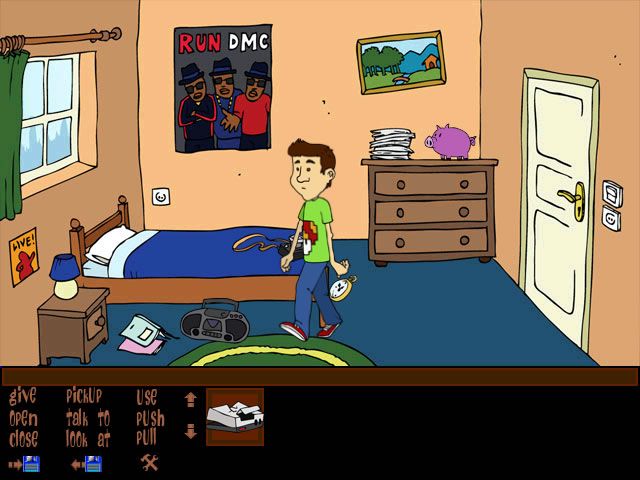
NES Quest embraces the timeless appeal of point-and-click adventures, powered by the third iteration of the Adventure Game Studio engine. From the very first screen, players are invited to explore a whimsical town map filled with quirky landmarks and hidden secrets. The classic interface places interactive verbs in the bottom-left corner of the screen, while the inventory resides in the bottom-right, ensuring that puzzle-solving tools are always at your fingertips.
(HEY YOU!! We hope you enjoy! We try not to run ads. So basically, this is a very expensive hobby running this site. Please consider joining us for updates, forums, and more. Network w/ us to make some cash or friends while retro gaming, and you can win some free retro games for posting. Okay, carry on 👍)
Navigation and interaction feel smooth and intuitive. You can either click directly on the action icons or use hotkeys for faster access—perfect for those who like to keep their hands on the keyboard. Combining inventory items with the environment or with other items is as simple as dragging and dropping, yet the real challenge lies in figuring out which oddball object, be it rotten Chinese food or a borrowed Star Wars lightsaber, will unlock the next clue.
Puzzles range from straightforward fetch quests, like retrieving fish food for a cranky goldfish, to more layered logical challenges that require a keen eye for detail. Along the way, you’ll interact with eccentric characters who each guard a piece of the puzzle needed to get your prized NES console repaired. The game strikes a good balance: it’s forgiving enough to prevent players from getting stuck for too long, yet clever enough to satisfy seasoned adventure fans.
Progression is largely non-linear, allowing you to tackle certain tasks in varying orders, which adds replayability. However, the game smartly guides you when you’re truly stuck by having NPCs drop subtle hints. If you’re a veteran of 90s-era PC adventures, you’ll appreciate how NES Quest modernizes classic mechanics without sacrificing the thoughtful challenge and reward structure that defined the genre.
Graphics
The visual style of NES Quest is a loving homage to 8-bit era consoles, rendered in crisp pixel art that pops even on high-resolution monitors. Characters are animated with a charmingly bouncy motion, and each location—from the dusty attic where your NES awaits repair to the neon-lit arcade—boasts a vibrant color palette that never feels overstated.
Detail is where the game really shines. Scan the background of the town square and you’ll spot posters referencing Sam & Max, Mario’s past plumbing exploits, and other classic franchises. These Easter eggs are tucked away in every corner, rewarding perceptive players who take the time to soak in the environment. The attention to detail transforms every scene into a treasure hunt in itself.
While the pixel art maintains a retro aesthetic, the UI elements are clean and unobtrusive. Menus and dialogue boxes use a modern, legible font that contrasts nicely with the vintage graphics. Transitions between scenes are smooth, and simple effects—like flickering neon signs or drifting clouds—add life without overwhelming the core art style.
Story
At its heart, NES Quest tells a deceptively simple story: a gamer’s cherished console is returned in pieces, and the hero must enlist help from local denizens—most notably Mr. T, the town’s resident geek, and a surprisingly spry Mario who has traded pipes for pixelated quests. The premise taps into a universal nostalgia, making the objective of retrieving broken cartridges and soldering wires feel like an epic journey.
The narrative unfolds through witty dialogue and humorous cutscenes. You’ll laugh as you debate the merits of using fish food as an improvised cleaning agent or haggle with a used-game shop owner over the value of a battered controller. Despite its comedic tone, the story carries a genuine emotional hook: the bond between the protagonist and his NES symbolizes friendship, family, and the childhood memories tied to gaming.
Supporting characters are more than just puzzle givers. Each has a backstory hinted at through collectible notes and environmental clues. Whether you’re helping Mario face his retirement blues or cheering on Mr. T as he tinkers with hardware, the interplay of personalities ensures the narrative remains engaging from start to finish.
Overall Experience
NES Quest successfully marries retro charm with modern design sensibilities, delivering an adventure that feels both fresh and familiar. Fans of classic point-and-click games will instantly recognize the underlying framework, but they’ll stay for the clever puzzles, vibrant pixel art, and tongue-in-cheek humor that saturates every scene.
The inclusion of a customizable hint system prevents frustration without diluting the sense of achievement that comes from solving a tough conundrum. And thanks to localization in French and Spanish, the game’s playful dialogue reaches a broader audience, ensuring that language barriers won’t impede the fun.
From its engaging gameplay loop to the evocative chiptune soundtrack—an homage to both NES beeps and late-90s PC speaker tunes—NES Quest offers an experience that feels lovingly handcrafted. The game’s pacing is spot-on: it never outstays its welcome, wrapping up in under six hours while still leaving you nostalgic for more pixelated escapades.
For anyone looking to revisit the golden age of adventure gaming, or simply curious about a quirky, self-aware tribute to console culture, NES Quest is an easy recommendation. It’s a heartfelt adventure that proves sometimes the greatest quests are the ones to reclaim the past—broken wires and all.


Reviews
There are no reviews yet.