 Retro Replay Retro Replay gaming reviews, news, emulation, geek stuff and more!

Retro Replay Review
Gameplay
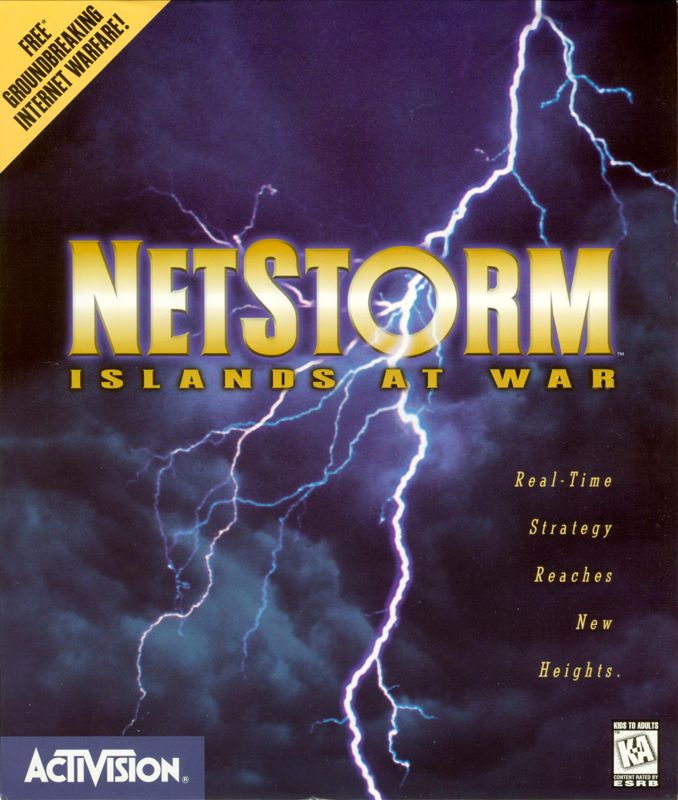
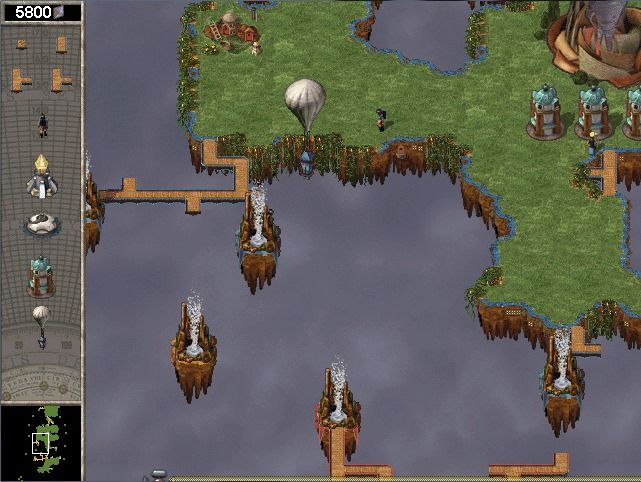
NetStorm: Islands at War places you at the heart of a dynamic real-time strategy battlefield where every decision—where to build, when to attack, and how to manage your precious priests—matters. You begin with a single home island, your High Priest, and a reservoir of basic storm energy. From there, success hinges on your ability to expand across the floating archipelago by constructing temples aligned with one of the four Furies. These structures channel storm power drawn from nearby geysers, fueling your efforts to bridge gaps and fortify new outposts.
(HEY YOU!! We hope you enjoy! We try not to run ads. So basically, this is a very expensive hobby running this site. Please consider joining us for updates, forums, and more. Network w/ us to make some cash or friends while retro gaming, and you can win some free retro games for posting. Okay, carry on 👍)
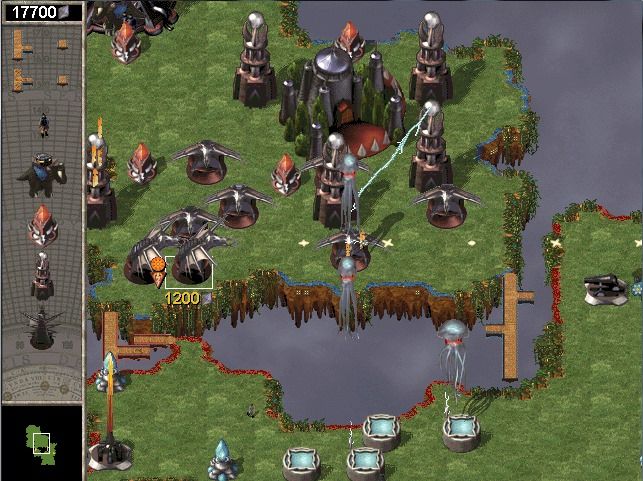
Unit management in NetStorm diverges from traditional RTS conventions: once produced in your workshops, units are autonomous. You cannot micromanage their movement or target selection; instead, you must carefully consider placement, timing, and the synergy of different unit types. Siege engines, flying units, and ground troops each boast unique attack ranges and abilities, and positioning them strategically on bridges and islands becomes the heart of tactical warfare. Salvage destroyed units to reclaim some energy, but be mindful—your most valuable asset remains your priest.
The High Priest is far more than a symbolic leader; it embodies your access to advanced knowledge and divine power. Capturing an enemy priest and sacrificing them at your Fury’s altar unlocks devastating late-game units and spells, turning the tide of battle. Meanwhile, losing your own priest can spell disaster, so you must balance aggression with careful protection. In single-player, tutorials and priest training missions ease you into these mechanics, teaching fundamental strategies before plunging you into the main campaign’s escalating challenges.
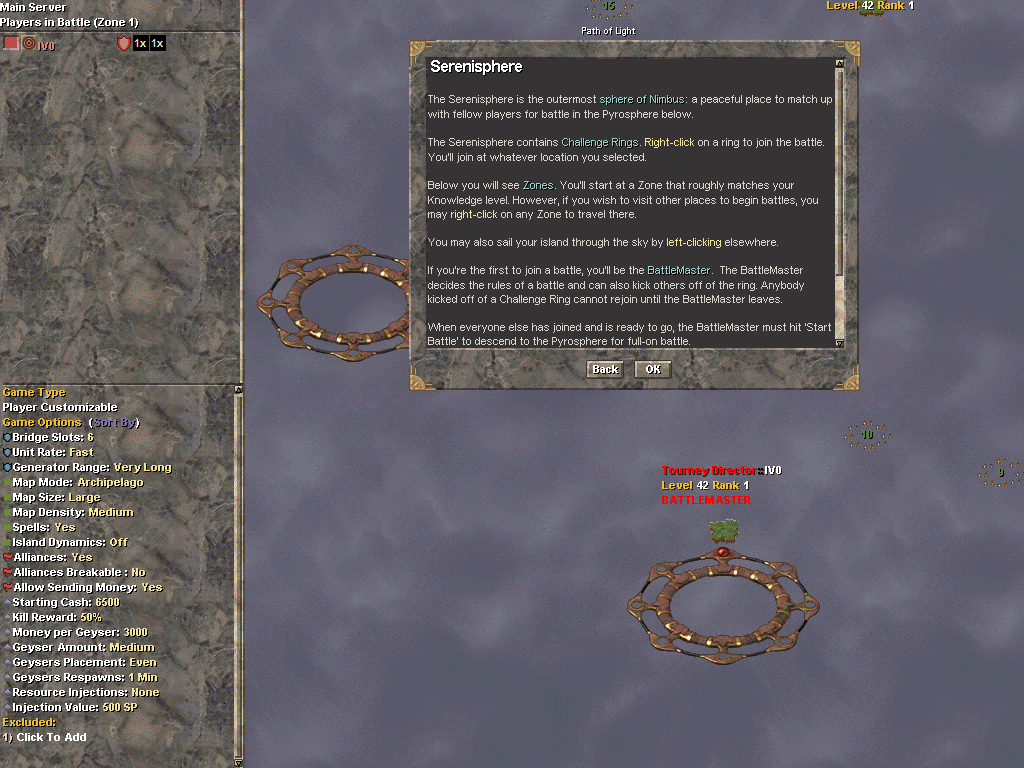
However, it’s in multiplayer where NetStorm truly shines. Up to eight players square off on procedurally generated maps, ensuring no two battles feel alike. You’ll first gather in the serene hub of Sereni, socializing and scouting for rings to join. Once you enter a battle, every geyser, every island, and every bridge becomes contested territory. The constant ebb and flow—capturing outposts, defending supply lines, and staging priest abductions—creates a frenetic, high-stakes environment that rewards both quick reflexes and long-term planning.
Graphics
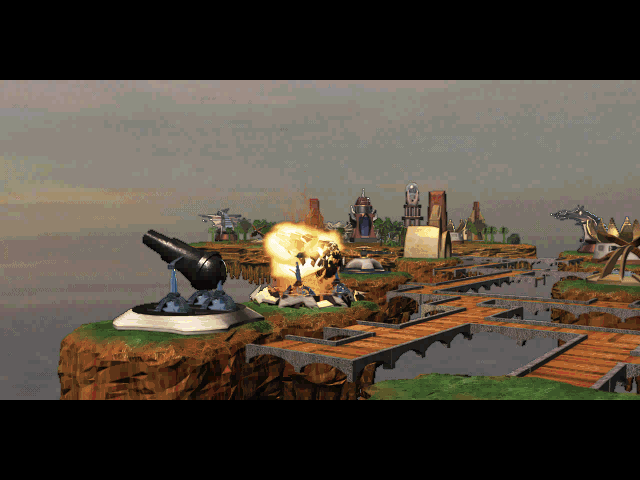
Although NetStorm debuted in the late 1990s, its isometric 2D visuals retain a nostalgic charm that resonates with fans of classic strategy titles. The floating islands are richly detailed, each terrain type—volcanic, lush green, or icy—rendered with distinct color palettes that help you quickly identify strategic choke points and valuable geyser locations. Bridges shimmer with static textures, giving a sense of otherworldly energy that ties back to the game’s elemental theme.
Unit sprites are small yet distinctive, allowing you to differentiate between catapults, archers, flyers, and siege towers at a glance. Explosions, lightning strikes, and storm effects during key moments—such as priest sacrifices—are accompanied by vibrant animations that give every clash a cinematic flair. While modern players might find the frame rate tighter than today’s standards, the game’s optimized engine ensures smooth performance even in full eight-player battles.
The UI strikes a delicate balance between simplicity and depth. A minimalist sidebar displays your storm energy levels, temple status, and selected Fury alignment, while quick-access buttons let you issue build orders or salvage units in a pinch. Though there’s no scrolling mini-map as seen in later RTS titles, the zoom and pan mechanics are responsive, and tooltips help explain each unit’s strengths, from range to hit points. Overall, the visual presentation feels coherent, immersing you in Nimbus’s turbulent skies without overwhelming you with clutter.
In terms of audio-visual synergy, each Fury has its own thematic color and particle effect that pulsates around temples and altars. Thunder crackles in deep blues, Rain shimmers in gentle aquamarine, Wind rustles emerald currents, and Fire roars in scarlet flares. These visual cues not only enhance the game’s atmosphere but also serve as quick reminders of which elemental path you’ve chosen—and which one your opponents might exploit.
Story
The lore of NetStorm unfolds through atmospheric snippets that explain why Nimbus fractured into countless airborne isles. In a time “before memory,” one harmonious sphere was torn apart by the Furies—Thunder, Wind, Rain, and Fire—each consumed by envy and craving the strengths of the others. Their epic clash rent the land, casting splintered islands skyward and scattering divine power across the newly formed archipelago.
While the single-player campaign offers limited narrative interludes compared to modern story-driven RTS games, it still provides enough context to appreciate your priest’s role as a vessel of Knowledge. Each mission subtly builds on the elemental conflict, challenging you to master one Fury’s domain before confronting the next. The story is evocative rather than expositional, inviting players to imagine the larger war that rages beyond what you see on your minimap.
The true narrative spectacle emerges organically in multiplayer when priest captures and sacrifices become battlefield turning points. Each successful ritual symbolizes your Fury’s ascendancy, and every lost priest feels like a dramatic setback in an ongoing mythic saga. This emergent storytelling—driven by player actions rather than cutscenes—cements NetStorm’s unique identity, blurring the line between gameplay and mythic reenactment.
For those seeking deeper lore, scattered entries in the manual and early promotional materials expand on Nimbus’s creation myths, the nature of storm power, and the ancient priesthood. While not mandatory reading, these tidbits reward lore-hungry fans and help illustrate why NetStorm’s elemental warfare stands apart from typical medieval or sci-fi settings.
Overall Experience
NetStorm: Islands at War delivers a refreshingly cerebral approach to RTS gameplay. By eliminating direct unit control and emphasizing strategic placement, it encourages players to think several moves ahead, much like a game of aerial chess. This twist keeps matches tense and unpredictable, as both rookies and veterans must adapt to ever-shifting island topologies and geyser distributions.
The learning curve is steeper than many contemporaries, especially given the absence of hotkeys for complex build chains. Yet the designers mitigate this with robust tutorials, priest training maps, and a friendly multiplayer lobby where seasoned commanders often share tips. Once you grasp the fundamentals—temple alignment, energy management, and priest preservation—each match unfolds with exhilarating momentum.
Longevity is baked into the game’s multiplayer DNA. Randomized maps, up to eight-way free-for-alls, and alliances that can shift mid-battle ensure that no two sessions feel alike. Even single-player enthusiasts will find replay value in experimenting with different Furies, testing unorthodox unit compositions, or challenging friends in local network skirmishes.
While modern RTS titles boast high-definition graphics and sprawling narratives, NetStorm’s focused vision still holds up. It’s a hard-hitting bridge between old-school simplicity and innovative strategy, perfect for gamers who relish fast-paced, mind-boggling island warfare. If you’re eager to master the art of storm-driven conquest and experience elemental conflict in its purest form, NetStorm invites you to claim your place among the floating isles of Nimbus.


Reviews
There are no reviews yet.