 Retro Replay Retro Replay gaming reviews, news, emulation, geek stuff and more!
Retro Replay Review
Gameplay
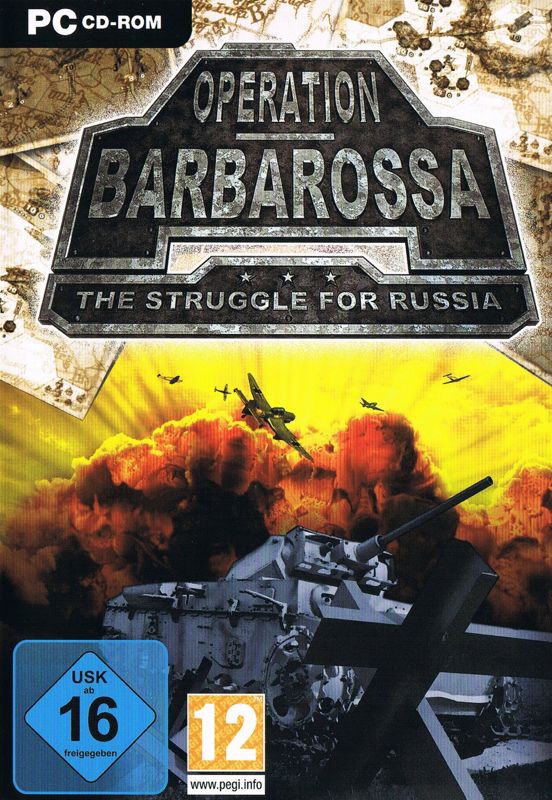
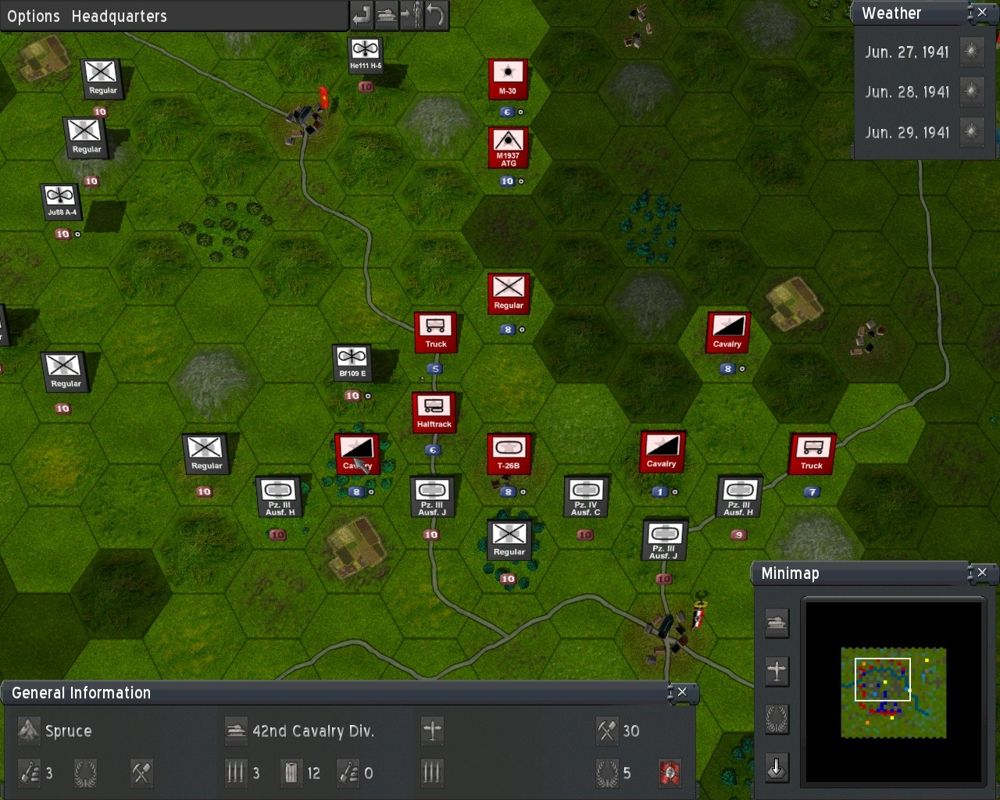
Operation Barbarossa: The Struggle for Russia delivers a classic turn-based strategy experience on the vast Eastern Front of World War II. Drawing inspiration from Panzer General II, each turn unfolds on a hex‐based map where every hex represents roughly five square kilometres of terrain. Players can choose from two German campaigns—Operation Barbarossa (June–December 1941) and Operation Blau (June–August 1942)—or take command of the Soviet forces running from December 1941 through April 1945. Each campaign is broken into a string of historically inspired scenarios that challenge players to adapt their tactics as seasons and frontlines shift.
(HEY YOU!! We hope you enjoy! We try not to run ads. So basically, this is a very expensive hobby running this site. Please consider joining us for updates, forums, and more. Network w/ us to make some cash or friends while retro gaming, and you can win some free retro games for posting. Okay, carry on 👍)
Core units in the campaigns gain experience, allowing commanders to upgrade and specialize tanks, infantry, artillery, and support elements over time. This RPG‐style progression lends each veteran formation a distinct personality, rewarding careful preservation and smart maneuvering. In addition to the main campaigns, a series of single scenarios spotlights crucial battles beyond the core timeline, offering bite-sized challenges for those looking to sharpen specific tactical skills.
For creative strategists, the built-in scenario editor opens up virtually endless replayability. You can craft custom maps, adjust victory conditions, or recreate obscure clashes from 1941 to 1945. This feature not only extends the game’s lifespan but also fosters a community around user-generated content. Whether you’re meticulously planning a pincer movement or experimenting with unconventional unit compositions, the game’s turn structure and editor support a high degree of strategic depth.
Graphics
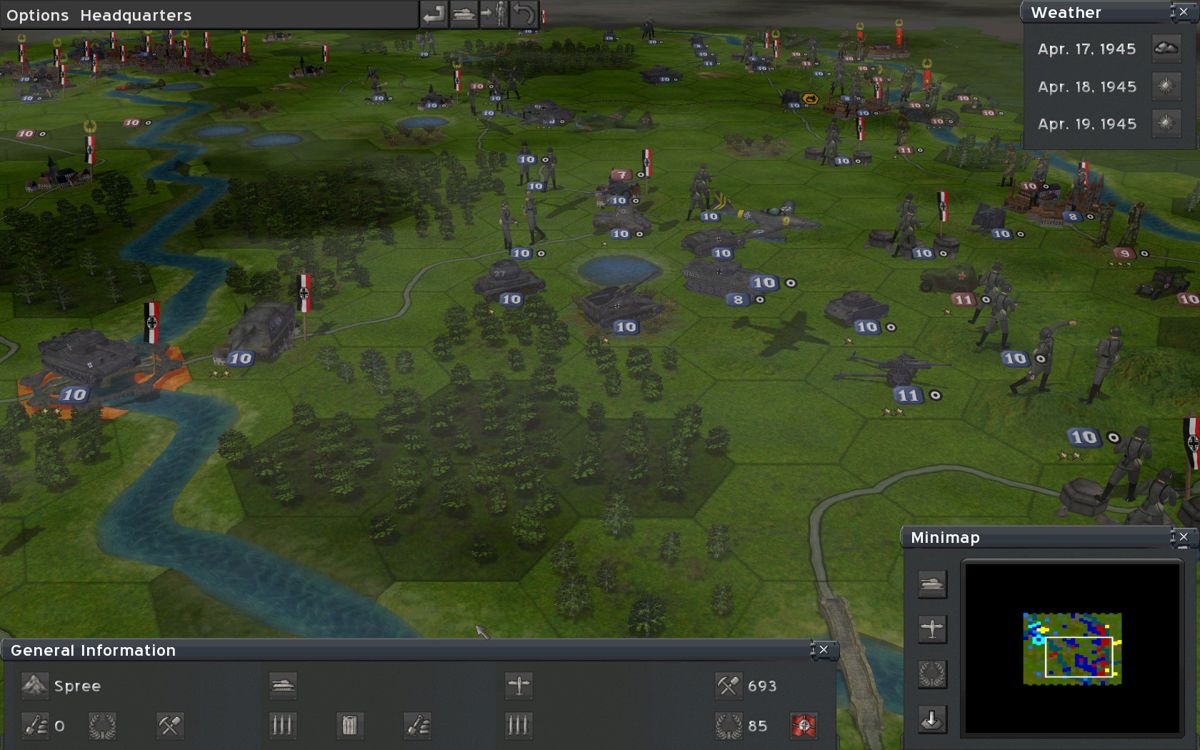
The Struggle for Russia showcases a fully 3D battle environment that brings hexfields and unit models to life in surprising detail. Tank silhouettes, infantry blobs, and artillery icons sit atop gently rolling hills, dense forests, and frozen rivers, all rendered with enough clarity to distinguish unit types at a glance. Zooming and rotating the camera helps you survey the sprawling map, spot chokepoints, and plan your next thrust.
Combat animations are functional rather than flashy, emphasizing tactical feedback over cinematic flair. Artillery barrages bloom in puffs of smoke, while armored engagements flash briefly before the outcome is resolved. These concise effects keep the pace snappy, ensuring that each turn flows smoothly even in large battles involving dozens of units.
On modest hardware, the game runs steadily without noticeable lag, thanks to efficient engine optimizations. The user interface remains clean and intuitive: context‐sensitive tooltips, clear unit stat displays, and color-coded supply lines all contribute to a transparent command experience. While graphics aren’t cutting-edge by modern AAA standards, the practical presentation serves the strategic gameplay admirably.
Story
Although Operation Barbarossa isn’t a story-driven RPG, it delivers a compelling historical narrative through scenario briefings, after-action reports, and unit continuity. Each mission begins with a concise overview of strategic objectives and period‐correct constraints, immersing players in the high stakes of the Eastern Front. As your veteran core units survive one scenario after another, you develop a sense of attachment to formations that carry their battle scars forward.
The German campaigns capture the initial Blitzkrieg momentum, the grinding attrition of the Russian winter, and the desperate efforts to push toward the Volga in 1942. Conversely, the Soviet campaign pivots from brutal defense to cautious counterattacks, reflecting the Red Army’s adaptation to mechanized warfare. Although there are no cinematic cutscenes or voiced characters, the ebb and flow of frontlines, supply shortages, and unit promotions weave a narrative of survival and strategic ingenuity.
Each scenario’s historical authenticity—unit strengths, reinforcements, and seasonal weather effects—adds to the emergent storytelling. Whether you’re holding the line at Smolensk or spearheading a winter counteroffensive near Moscow, you’ll feel the weight of history in every decision. This low-key, simulation‐style presentation appeals to history buffs who prefer to craft their own battlefield sagas.
Overall Experience
Operation Barbarossa: The Struggle for Russia is a solid offering for fans of hex-based, turn-based wargames. Its combination of campaign depth, RPG-style unit progression, and user-friendly scenario editor makes it a standout for replayability and creative engagement. The learning curve is approachable for newcomers to the genre but still offers enough strategic complexity to satisfy hardened grognards.
Graphics and sound design take a functional approach, focusing on clarity and performance rather than theatrical presentation. This emphasis on gameplay substance over style ensures that players remain focused on tactics and logistics without distraction. The historical authenticity of maps, unit rosters, and event briefings further enhances immersion and educational value.
For anyone intrigued by the strategic struggles on the Eastern Front, this title provides hundreds of hours of tactical planning, hard-won victories, and harrowing defeats. Between the main campaigns, standalone scenarios, and the robust editor, Operation Barbarossa: The Struggle for Russia stands as a comprehensive package for strategy enthusiasts seeking to rewrite history one hex at a time.

Reviews
There are no reviews yet.