 Retro Replay Retro Gaming History, Reviews & Emulation
Retro Replay Review
Gameplay
The first stretch is about accepting that victories start well away from the track. You are responsible for the athletic and financial health of a Formula-style team, so sponsors, merchandise, personnel, drivers, buildings, research, car assembly, and race tactics all compete for your attention. That broad responsibility is the reason to play: a successful result can feel like the payoff from several sensible decisions rather than a lucky break.
The 1-to-100 driver statistics are a welcome fit for this kind of game. They give you more room to judge a driver than a blunt star rating, while training and successful races can improve those numbers over time. It makes recruitment and development feel more like an ongoing project. The same goes for constructing buildings on the team grounds for bonuses: you are not merely picking a lineup before each race, but shaping the infrastructure behind it.
Car work is where the management focus becomes especially dense. Research, assembly, and expanded tuning options invite you to chase incremental advantages, and that will either be engrossing or exhausting depending on your taste for detail. The race itself switches to a tactical top-down view, with every driver represented by a block, so you are overseeing the contest rather than taking the wheel. That is a sensible match for the rest of the game, though it means the on-track portion is more about decisions and observation than racing spectacle.
The main frustration is also the genre’s usual cost: there are many levers, and not every one produces an immediately thrilling response. You need to enjoy gradual improvement, numbers, and the possibility that a well-considered plan still takes time to bear fruit. Stick with it if you like the satisfaction of building toward competitiveness; skip it if you need every race to deliver arcade-style excitement.
Graphics
Races are viewed from above, with drivers shown as simple blocks moving around the circuit. A small window in the upper-right highlights interesting race scenes, but the visual language is plainly functional. It helps you follow the tactical flow without turning the event into a driver’s-eye racing game.
Story
There is no authored narrative to carry you along. Your story is the season you build: a sponsor deal that funds a needed upgrade, a driver improving through training, or a team investment paying off in results. For a management simulation, that self-made arc is more appropriate than a scripted plot.
The lack of licensed teams and drivers gives the game a generic Formula-style backdrop, but the included editor lets you reshape that roster to your liking. If recognizable names are important to you, that extra setup is a compromise rather than a substitute. If you mainly care about the management puzzle, it is an easy detail to work around.
What makes the campaign compelling is not a dramatic rivalry written for you; it is the slow accumulation of decisions. You set the team’s direction, then live with the consequences in finances, development, and race performance. That gives success a personal edge, even if the game does not dress it up with much narrative ceremony.
Overall Experience
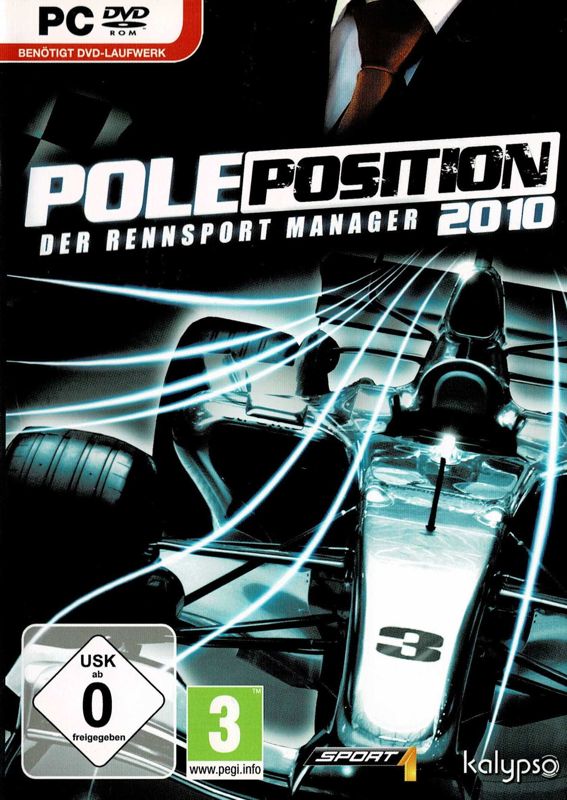
Pole Position 2010 is a solidly focused racing management game for anyone who would rather run the garage than sit in the cockpit. Its strongest quality is the breadth of connected team-building decisions: money, personnel, facilities, driver growth, and car development all point toward the same goal. When those pieces begin to line up, a better race result has real weight.
It is not a game for someone chasing a licensed Formula 1 fantasy or a social multiplayer competition, since it has neither licensed teams and drivers nor a multiplayer mode. The editor softens the first omission, but not the second. Its races also remain deliberately abstract, which reinforces the sense that you are a manager watching from the pit wall rather than a racer seeking close-up action.
Give it a chance if detailed sports-business simulations are your comfort food and you can enjoy a season built on marginal gains. The payoff is worthwhile for that audience: a team that improves because you found funding, developed people, invested in facilities, and refined the car feels like your achievement. Everyone else may find the spreadsheet-heavy route to the finish line too clinical.



Reviews
There are no reviews yet.