 Retro Replay Retro Gaming History, Reviews & Emulation
Retro Replay Review
Gameplay
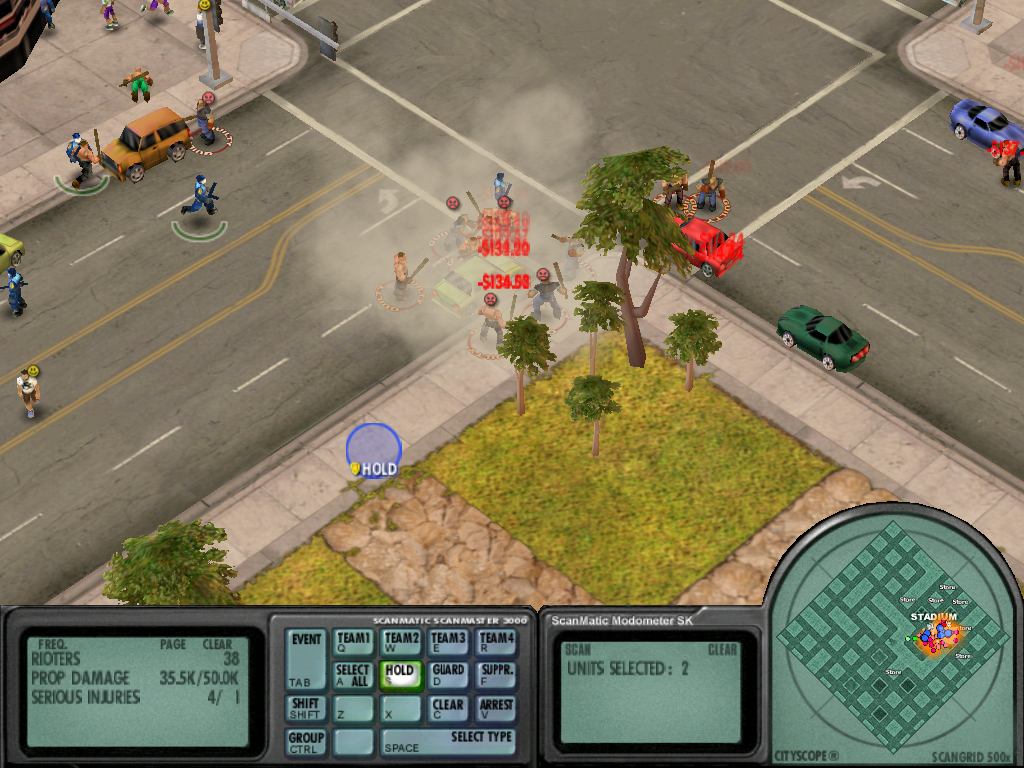
The first hour of Riot Police makes its point quickly: this is not a strategy game about simply overwhelming a map. You are in charge of Metro City Police Force, responding in real time to missions that can ask for restrained property damage, the capture of a particular criminal, or another tightly defined result. That focus gives every order some weight. A crowd is not just scenery when your own actions can determine whether it remains cooperative or becomes a riot.
The central tension comes from deciding when force is justified. Capturing a criminal pleases civilians, while assaulting an unproven suspect creates rioters. That is a sharp rule because it turns identification and restraint into practical concerns, not merely role-playing flavor. You cannot treat every person as an enemy without making the job harder for yourself. When that cause-and-effect relationship clicks, the game’s police-command premise becomes more compelling than a standard map-clearing exercise.
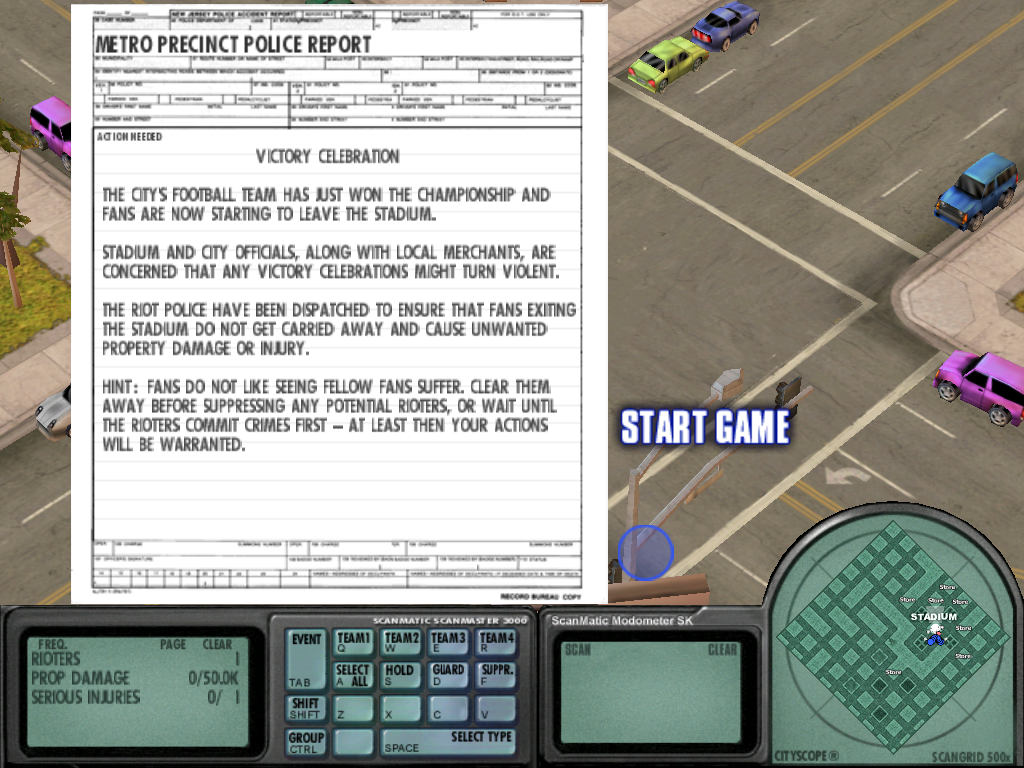
You command an increasing number of pre-selected units rather than building an army to a preferred template. That limitation can be frustrating if you enjoy total control over a strategy game’s roster, but it also keeps the attention on deployment and response. You work with what the mission gives you, then decide how to use it under pressure. The 16 missions, plus a bonus mission, offer a compact run of scenarios built around that approach.
Success will likely feel most satisfying when you solve a problem without inflaming the entire city. If you want a real-time tactics game where the obvious aggressive answer can backfire, Riot Police has a genuinely interesting hook. If you mainly want elaborate force-building and uncomplicated combat, its narrower command structure may feel restrictive.
Graphics
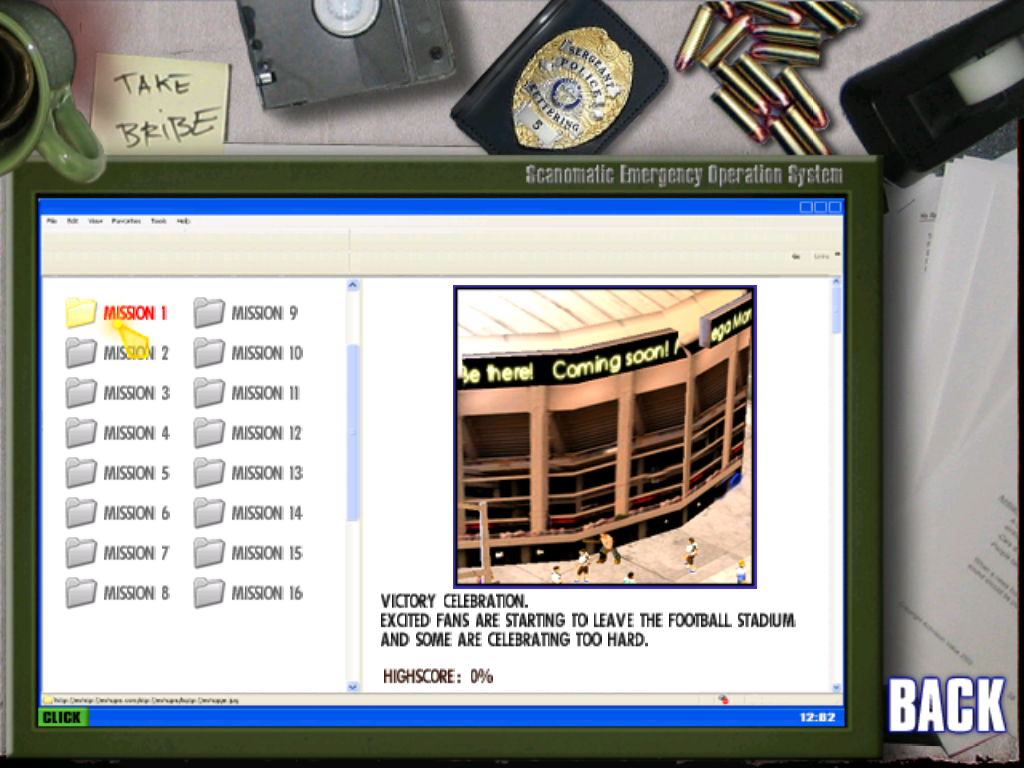
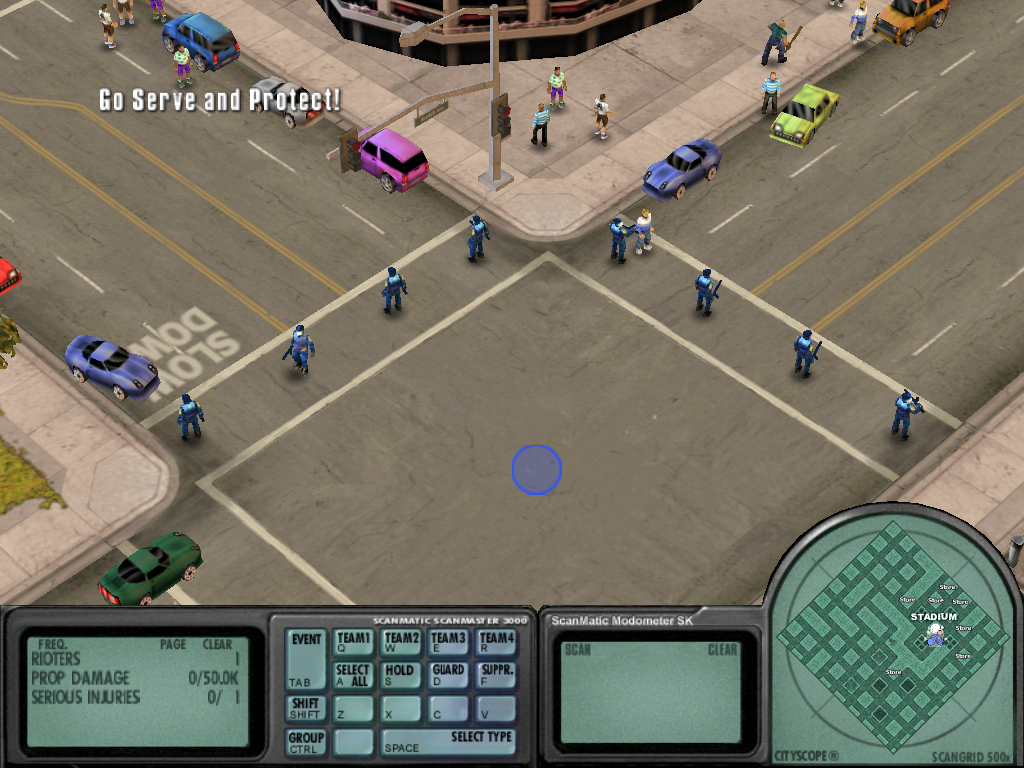
The game uses an isometric, diagonal-down view with a free camera, putting Metro City’s incidents beneath you like tactical problem boards. That angle suits a game about moving multiple police units around civilians and suspected criminals, since you can watch the situation develop across the map rather than seeing it only from ground level.
Story
Riot Police frames its action through the job of commanding Metro City Police Force. The story is carried primarily by the situations themselves: a city in disorder, goals that demand a response, and the consequences of how you treat the people involved.
That framework has more bite than a simple crime-fighting setup because civilians react directly to your conduct. A lawful capture improves their mood; an assault on someone not proven guilty can push them into rioting. The game turns public trust into part of the drama, so your conduct shapes the tone of each operation.
The result is a scenario-driven police story rather than one built around a single stated villain or personal character arc. Each mission asks a small but pointed question: can you restore order without becoming the reason the situation deteriorates? That is enough to give the objectives a welcome edge.
Overall Experience
Riot Police earns attention through the friction between control and restraint. Plenty of strategy games reward you for applying more power; this one explicitly recognizes that mishandling a suspect can create a bigger crisis. That simple feedback loop gives its real-time missions a thoughtful, uneasy energy.
Its limits are also clear. The unit selection is pre-set, and the mission structure is goal-focused, so you should not expect the freedom of a strategy sandbox. The game lives or dies on whether you enjoy working inside those constraints, assessing a volatile situation, and finding a measured response before it becomes unmanageable.
For a gamer drawn to unusual tactical premises, the payoff is worth it. The 16 standard missions and extra bonus mission give the concept room to test different objectives, while the civilian-reaction system keeps the police theme connected to your actual decisions. It is a focused real-time strategy game with a more consequential idea of “winning” than simply beating the opposition.



Reviews
There are no reviews yet.