 Retro Replay Retro Replay gaming reviews, news, emulation, geek stuff and more!




Retro Replay Review
Gameplay
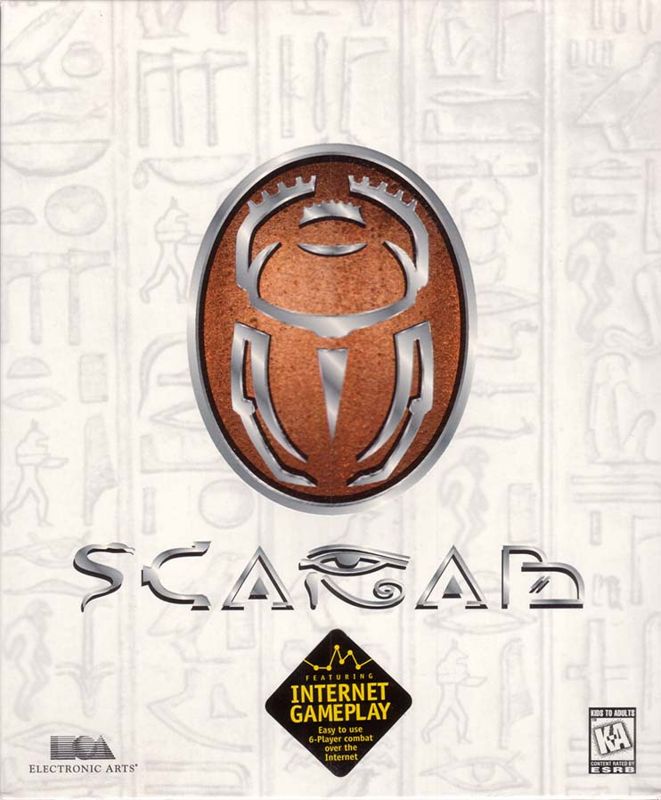
SCARAB masterfully blends action and strategy by placing players in the role of a disembodied Underworld deity commanding lethal combat robots. Each match revolves around the dual objectives of territorial domination and outright annihilation of your foes. Whether you choose to capture power-producing towers or hunt down the opposing mechanical avatars, every decision impacts the ebb and flow of battle. The strategic depth is remarkable for a game of its era, as positioning and resource control are just as vital as reflexes and combat instincts.
(HEY YOU!! We hope you enjoy! We try not to run ads. So basically, this is a very expensive hobby running this site. Please consider joining us for updates, forums, and more. Network w/ us to make some cash or friends while retro gaming, and you can win some free retro games for posting. Okay, carry on 👍)
The game’s control scheme shines when played with a joystick, as originally intended. Analog precision allows you to micro-manage your robot’s movements in tight corridors, dodge incoming fire, and align shots against well-armored targets. Keyboard and mouse can fill in, but the tactile feedback of a joystick elevates the experience, making every skirmish feel more immediate and satisfying. Newcomers will encounter a learning curve, but once you master smooth turns and strafing, the battlefield opens up in exciting ways.
One of SCARAB’s most compelling features is the “three incarnations” system. You begin with three lives, each time selecting between Anubis, Horus, or Sekhmet—robots with distinct speed, armor, and firepower profiles. This choice transforms each playthrough into a customized experience, as you adapt your strategy around the strengths and weaknesses of each combatant. Once all three lives expire, your spirit fades, leaving you to reflect on your tactical triumphs and missteps.
Graphics
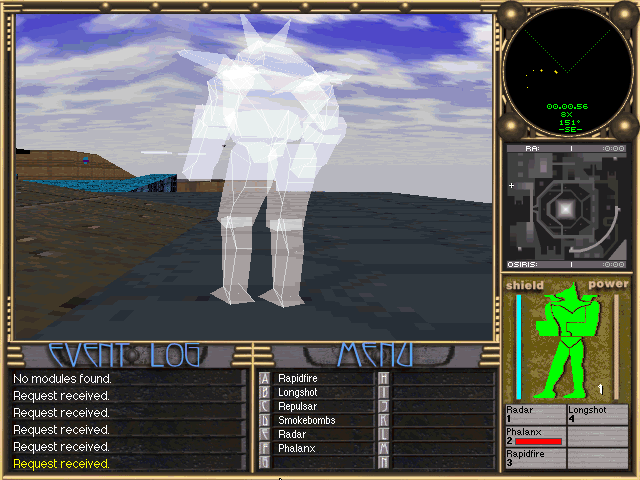
For its release period, SCARAB boasts impressively detailed robot models and atmospheric arenas. Each combat zone is littered with towering structures, crumbling columns, and ramparts for cover. The palette leans heavily into earthy tones and sandswept skies, reinforcing the game’s ancient-Egyptian aesthetic. While textures may feel dated by modern standards, nostalgia shines through every sandstone pillar and hieroglyph-adorned wall.
The unique silhouettes of Anubis, Horus, and Sekhmet ensure that you always know which avatar is on screen. Lighting effects—such as muzzle flashes and energy projectiles—pop against the monotonous desert backdrop, signaling incoming danger or openings to press an attack. Animations are functional rather than flashy, but the mechanical clank of joint movements and recoil animations contribute significant tactile weight to each engagement.
In the v1.1 multiplayer patch, the addition of “deathmatch” mode doesn’t just change the rules—it brings new maps and tweaks to level geometry. These updates refresh the visual experience, adding new vantage points and strategic chokepoints. Whether navigating narrow corridors or sprawling plazas dotted with control towers, the environments feel polished and purpose-built for intense, fast-paced skirmishes.
Story
SCARAB doesn’t indulge in lengthy cutscenes or dialogue trees; instead, its narrative unfolds through the game’s underlying premise and minimalist mission briefings. You are a god of the Underworld, harnessing mortal constructs to wage war over territory and supremacy. This framing injects every firefight with thematic weight, as you are not merely a pilot but a divine will inhabiting a metal husk.
Each robot—Anubis, Horus, and Sekhmet—carries mythological significance, and though the game doesn’t dwell on lore, the namesakes evoke a sense of epic gravitas. The barren battlefields feel less like arenas and more like stages for cosmic conflict. Victories are not just tactical wins but expansions of your divine influence, while defeat hints at the fragility of godhood when tethered to flesh-and-blood—or in this case, steel—shells.
The patch’s new deathmatch option subtly reinforces the theme of immortal spirits clashing in endless cycles of rebirth and demise. By removing power towers as a victory condition, the focus shifts entirely to the purity of combat, mirroring mythic duels where champions fight until only one deity stands. This variation enhances narrative resonance, making each match feel like a battle for eternal prestige.
Overall Experience
SCARAB delivers a compact yet deep action-strategy package that rewards planning, adaptability, and skillful execution. The three-life incarnation system and dual win conditions add replay value, while the joystick-centric controls ensure that matches never feel floaty or imprecise. Each skirmish tests your ability to balance offensive maneuvers with strategic tower captures, resulting in tense, dynamic gameplay.
The game’s graphics and sound design, though dated in certain respects, reinforce a cohesive ancient-meets-futuristic style. The environments are thoughtfully designed to promote strategic engagements, and the evocative robot designs maintain visual clarity during heated battles. The multiplayer deathmatch patch further expands longevity, opening new tactical possibilities and fostering competitive play.
While SCARAB may lack a sprawling narrative or cinematic storytelling, its minimalist approach suits the fast-paced, strategy-focused gameplay. Fans of tactical shooters and mythologically flavored settings will find plenty to admire. For those seeking a distinctive blend of action and resource management wrapped in a divine framework, SCARAB remains a fierce and memorable experience.


Reviews
There are no reviews yet.