 Retro Replay Retro Replay gaming reviews, news, emulation, geek stuff and more!
Retro Replay Review
Gameplay
Season of Mystery: The Cherry Blossom Murders delivers a classic hidden-object experience enriched by light adventure mechanics. Players begin by scanning intricately detailed Victorian-era Japanese rooms for a list of items displayed at the bottom of the screen. Each list entry can be clicked to reveal a silhouette inside a paper lantern, allowing for strategic problem solving when an object is particularly well camouflaged.
(HEY YOU!! We hope you enjoy! We try not to run ads. So basically, this is a very expensive hobby running this site. Please consider joining us for updates, forums, and more. Network w/ us to make some cash or friends while retro gaming, and you can win some free retro games for posting. Okay, carry on 👍)
The inventory system adds depth to the otherwise straightforward search-and-click formula. As you collect key items, they accumulate in the inventory and can later be dragged and dropped on glowing hotspots within the environment. This fusion of hidden-object scenes and environmental interaction allows the title to maintain narrative momentum rather than confining you strictly to “find-and-click” chores.
Between chapters, a collection of mini-games further diversifies the gameplay loop. You’ll reassemble torn letters, use logical deduction to pick the correct home from a row of eleven, and tackle memory challenges matching pairs of shells. A “Solve” button is available if you prefer to skip these diversions, while the hint system—though powerful—requires time to recharge, preserving the balance between frustration and assistance.
Progression feels satisfying, with each new location unlocking fresh scenery and puzzles. Although long-time hidden-object aficionados may find the core mechanics familiar, the variety of tasks—from lock combinations to spot-the-difference pairings—ensures that engagement remains high throughout Irene’s investigation.
Graphics
The Cherry Blossom Murders showcases hand-painted backgrounds that beautifully evoke late 19th-century Kyoto and surrounding regions. From a candlelit embassy office to a cherry orchard in full bloom, every scene feels atmospheric and historically grounded. Fine details such as silk textures on kimonos and tatami mat patterns reinforce the sense of place.
Interactive elements are subtly highlighted with a gentle blue glow, which enhances usability without breaking immersion. Item silhouettes displayed in the paper lantern are crisp and easy to interpret, while the user interface remains unobtrusive, allowing the artwork to take center stage. Transitions between scenes are smooth, and ambient animations—flickering lanterns, drifting petals—lend a dynamic quality to otherwise static screens.
Mini-games also benefit from polished visuals. The torn-letter puzzle features realistically textured parchment, and memory games of matching shells are presented with lifelike lighting and shadowing. This attention to graphical fidelity ensures each diversional challenge feels consistent with the main game’s aesthetic.
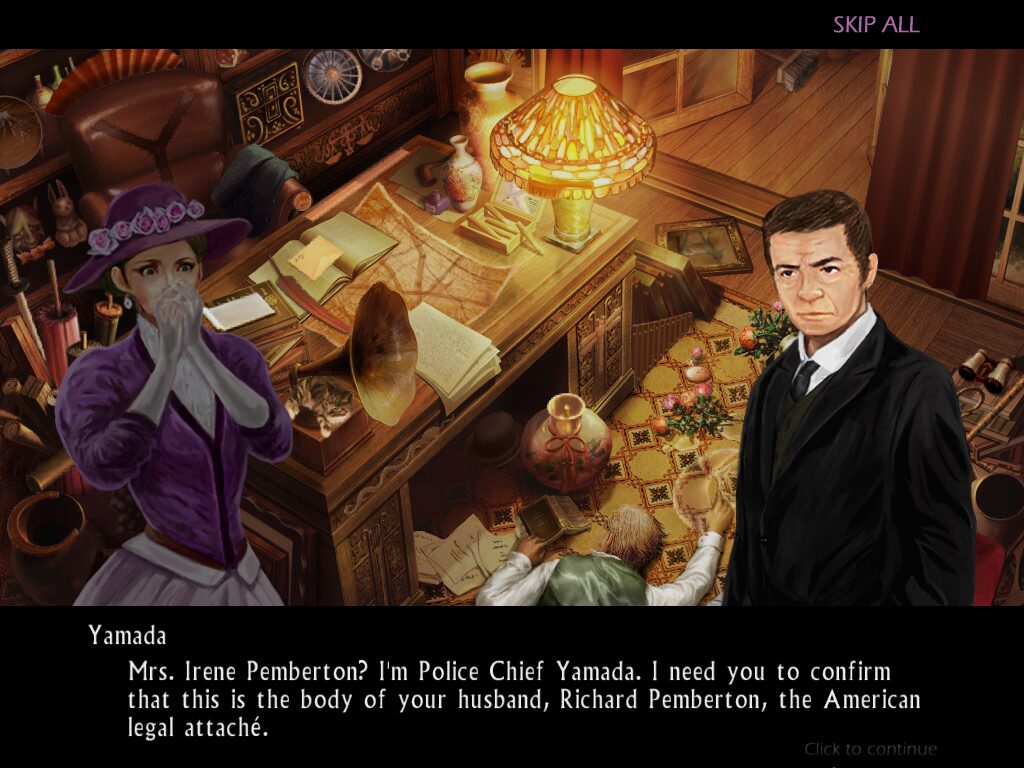
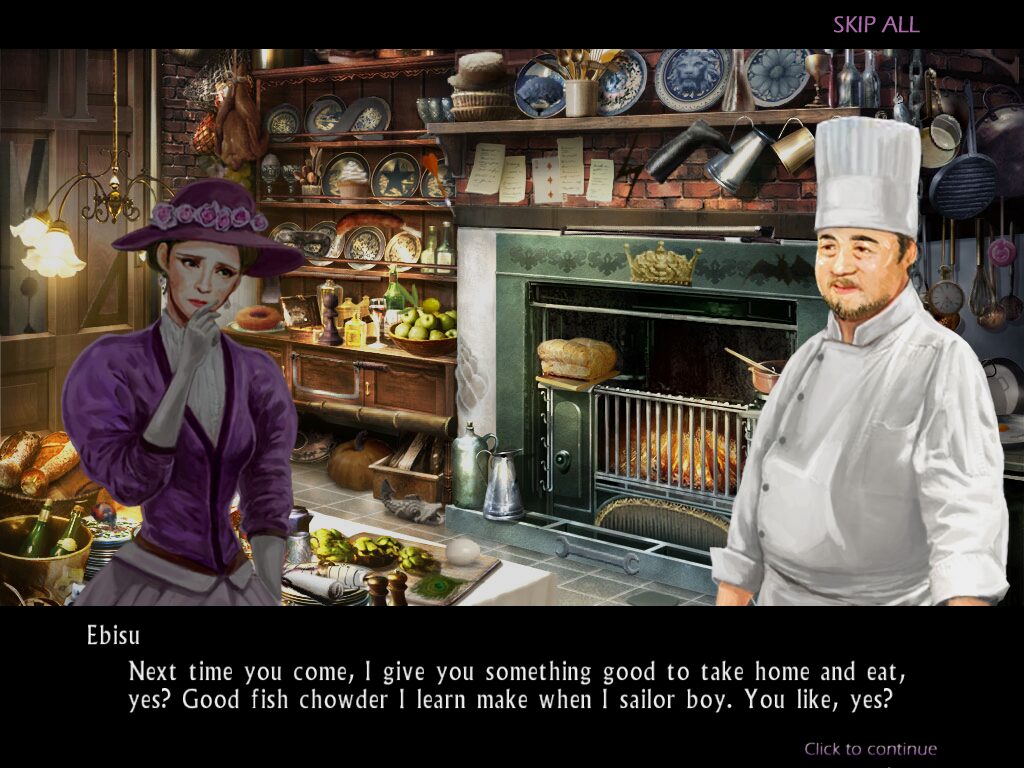
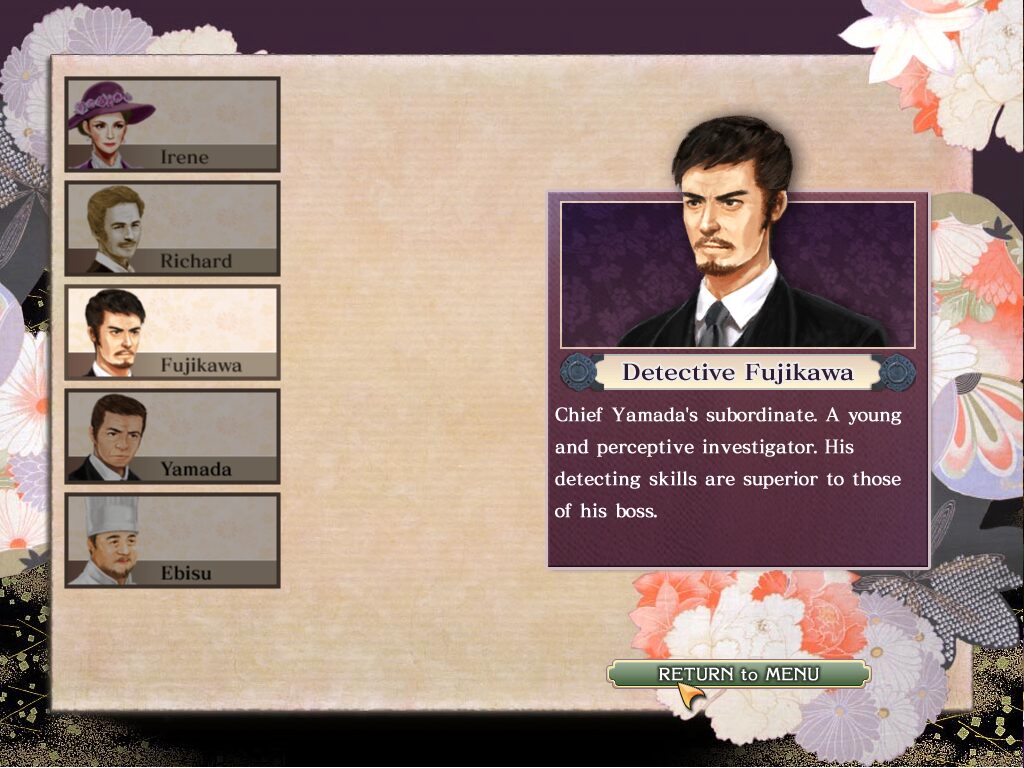
Character portraits, particularly of Irene and important suspects, are rendered with expressive detail. Though full voice acting is limited, subtle facial animations accompany key dialogue moments, adding emotional weight to the storytelling.
Story
At the heart of Season of Mystery lies the tragic discovery of Richard Pemberton’s apparent suicide. When Irene Pemberton uncovers his confession of corruption, a deeper mystery emerges: why would a devoted husband betray both his post and his own conscience? The premise sets the stage for a gripping whodunit that unfolds across a tapestry of cultural intrigue and political tension.
As Irene, you navigate a web of suspects ranging from secretive embassy staff to local dignitaries. Clues are hidden both in the environment and within torn letters, forcing players to piece together not only shredded documents but also complex motivations. The pacing is deliberate, granting time for reflection between scenes while steadily raising the stakes as you draw closer to the truth.
Dialogue exchanges are concise yet evocative, with historical details thoughtfully woven into conversations. You will question alibis, decode cryptic references to cherry blossoms, and confront the shadow of imperial politics. This layered narrative elevates the hidden-object genre by giving every discovered item and solved mini-game a tangible narrative payoff.
Plot twists land effectively, and while the overall story arc follows a familiar investigative structure, the 19th-century Japanese setting and themes of honor, loyalty, and political corruption imbue it with fresh emotional resonance.
Overall Experience
Season of Mystery: The Cherry Blossom Murders caters perfectly to fans of hidden-object adventures who appreciate a strong narrative backbone. The combination of static scenes, interactive hotspots, and varied mini-games keeps gameplay loops fresh, and the hint system’s measured recharge time ensures that players are encouraged to explore thoroughly before seeking assistance.
The production values are consistently high, from the art direction to the ambient soundtrack, which features subtle koto and shakuhachi melodies that underscore key moments without overwhelming the senses. Occasional voice clips add texture without distracting from the central focus on object hunting and puzzle solving.
While seasoned adventure gamers might find the challenge level more forgiving than in hardcore puzzle titles, the story’s emotional stakes and period atmosphere offer compelling reasons to push through each chapter. The ability to skip mini-games or use hints means the experience can be tailored to a player’s preferred pace, whether they crave depth or simply wish to follow Irene’s quest.
In sum, The Cherry Blossom Murders is a polished, engaging hidden-object adventure that melds narrative intrigue with satisfying puzzle design. For anyone seeking a leisurely yet thematically rich investigative journey set against the backdrop of 19th-century Japan, this title will prove a delightful purchase.



Reviews
There are no reviews yet.