 Retro Replay Retro Replay gaming reviews, news, emulation, geek stuff and more!

Retro Replay Review
Gameplay
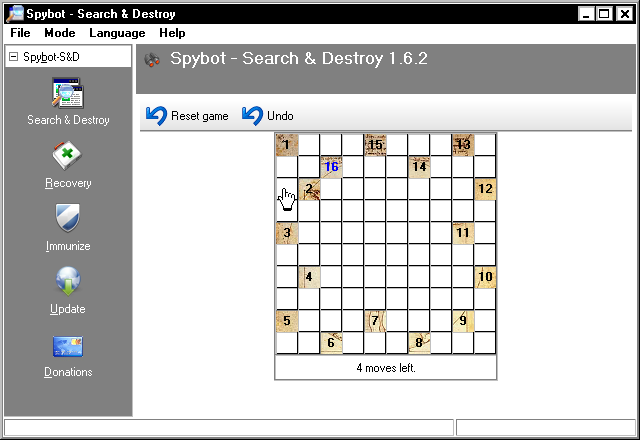
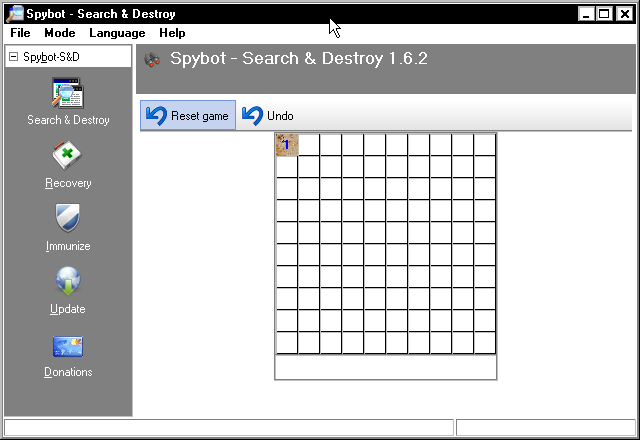
The hidden mini-game tucked inside Spybot: Search & Destroy turns a classic chess challenge into an engaging puzzle of logic and foresight. Clicking the small binoculars icon beneath the main toolbar activates the “Traveling Knight Problem” simulation, where you must shepherd a knight from one corner of an 8×8 grid so that it visits every square exactly once. The controls are intuitive—simply click on valid L-shaped moves—and the board highlights available jumps, making the core mechanics approachable even for players new to knight’s tours.
(HEY YOU!! We hope you enjoy! We try not to run ads. So basically, this is a very expensive hobby running this site. Please consider joining us for updates, forums, and more. Network w/ us to make some cash or friends while retro gaming, and you can win some free retro games for posting. Okay, carry on 👍)
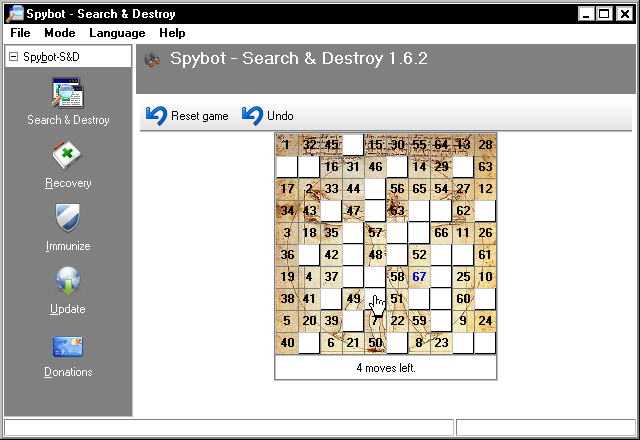
What makes this implementation stand out is the incremental reveal of Leonardo da Vinci’s Vitruvian Man. Each time you land on a fresh square, a portion of the famous anatomical sketch is uncovered on the board. This progress mechanic adds immediate visual feedback to every move, turning each click into a mini reward. It’s not merely about completing a tour but about unveiling a piece of Renaissance art, which injects a pleasant sense of discovery into each session.
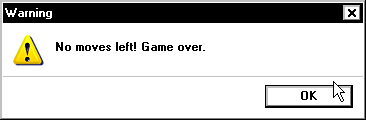
However, the puzzle’s simplicity belies its strategic depth. One wrong jump can corner you into an unenviable dead-end, prematurely ending the attempt and forcing a restart. Planning ahead is crucial: veteran players will find themselves mapping multiple moves in their heads to avoid getting stuck. This trial-and-error approach makes the game addictive, challenging you to learn from past mistakes and refine your knightly path until you finally complete the full tour.
Graphics
Visually, the mini-game is minimalist but effective. The chessboard is rendered with clean lines and muted tones, ensuring the focus stays on the unfolding image. The simplicity of the grid guarantees quick loading and zero distraction from the puzzle itself. While it doesn’t push any graphical boundaries, it’s perfectly suited for its purpose: a functional, no-frills interface that highlights the occasional splash of color from da Vinci’s drawing.
As you progress, the revealed segments of the Vitruvian Man are rendered in crisp black-and-white detail, replicating the fine hatchwork and precise lines of the original sketch. Each new cell seamlessly joins the emerging portrait, creating a satisfying mosaic effect. The contrast between the stark board and the refined anatomy drawing evokes a feeling of uncovering a hidden masterpiece, heightening the aesthetic appeal despite the absence of flashy effects or animations.
Because this game is an Easter egg within a security tool rather than a standalone title, you won’t find advanced graphical options or high-resolution texture packs. Yet, the retro charm and intentional simplicity give it a unique character. The smooth responsiveness of the knight’s movement and the immediate cell-reveal animation ensure that the visuals—though basic—never feel clunky or outdated.
Story
Strictly speaking, Spybot’s knight puzzle contains no narrative in the traditional sense: there are no characters to meet, no overarching plot, and no dialogue. Instead, the “story” emerges through the artistic revelation of Leonardo da Vinci’s Vitruvian Man. Each click peel back the layers of a centuries-old drawing, forging a subtle connection between modern cybersecurity software and Renaissance artistry.
This convergence of utility and culture feels like a playful message: even in the technical realm of malware removal, there is room for creativity and intellectual curiosity. As you race the clock to complete your knight’s tour before running out of valid moves, you’re also racing to reconstruct an iconic symbol of human proportion and scientific inquiry. The absence of text or voiceover keeps the experience pure, letting the artwork speak for itself.
The minimalism of the story—you are simply “the knight” uncovering a masterpiece—allows players to craft their own motivations. Whether driven by the challenge of the puzzle or the desire to see da Vinci’s figure whole once again, you become both solver and storyteller, weaving your own mini-narrative of perseverance and discovery.
Overall Experience
Spybot’s Easter egg game is a delightful surprise for anyone installing the malware-removal tool. In minutes, you can switch from deleting spyware to tackling a timeless mathematical puzzle, making for a refreshing break during long security scans. The addictive mix of strategy and art reveal ensures that even a casual gamer will find themselves coming back for “just one more tour.”
While it lacks the polish and depth of standalone puzzle titles, this hidden gem shines through its charming simplicity. There’s no progression system, no achievements, and no multiplayer—just a solitary knight, an empty board, and the slowly emerging Vitruvian Man. For those who appreciate cerebral challenges and classical art, it’s a perfect pocket pastime that complements Spybot’s primary function.
In short, Spybot’s included mini-game turns an essential security utility into a dual-purpose tool: clean your system, then test your wits. It may not replace your favorite dedicated puzzle app, but as a thoughtful Easter egg, it elevates the overall package, offering an engaging diversion that underscores the developers’ creativity and attention to detail.


Reviews
There are no reviews yet.