 Retro Replay Retro Replay gaming reviews, news, emulation, geek stuff and more!


Retro Replay Review
Gameplay
The core of Strategic Command: European Theater lies in its intricate turn-based gameplay. Players assume the role of supreme commander for either the Axis or Allied powers, guiding a sprawling theater of war that stretches from North America’s east coast to the Ural Mountains, and from the Arctic Circle down to North Africa. Each turn demands careful consideration of unit placement, supply lines, and production priorities, ensuring that every decision has far-reaching consequences on the front lines and in the strategic reserves.
(HEY YOU!! We hope you enjoy! We try not to run ads. So basically, this is a very expensive hobby running this site. Please consider joining us for updates, forums, and more. Network w/ us to make some cash or friends while retro gaming, and you can win some free retro games for posting. Okay, carry on 👍)
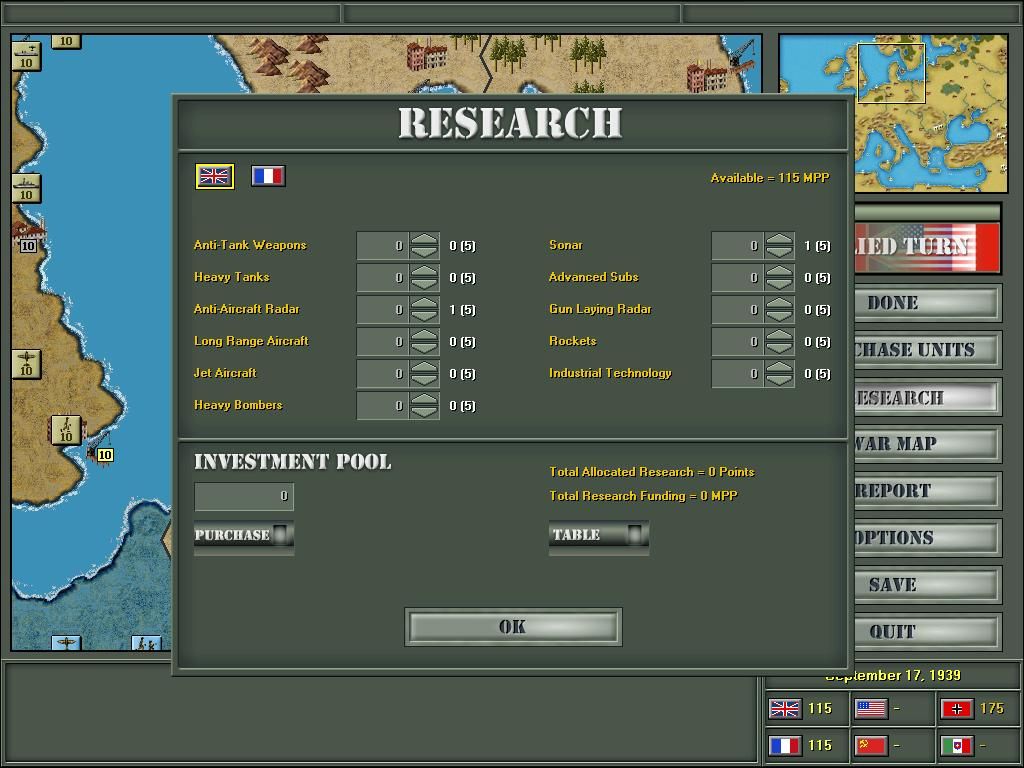
With six distinct campaigns—each representing a single year of World War II—there is a clear progression from the German invasion of Poland in 1939 to the final battles on German soil. Players must research and upgrade equipment for HQs, Corps, Armies, Tanks, Submarines, and Air Fleets, balancing technological advancement with the pressing demands of the battlefield. Managing supply depots and transport routes adds further depth, pushing you to weigh the risk of an ill-prepared offensive against the delay of waiting for reinforcements or better armaments.
Multiplayer options bolster replayability, offering hotseat play, LAN and Internet matches, as well as Play-By-Email (PBEM) for those who prefer a more deliberate pace. A built-in Campaign Editor further expands the sandbox, allowing veteran commanders to craft custom scenarios and share them with the community. Whether you’re coordinating a massive armored thrust across the Eastern Front or conducting submarine wolf-packs in the Atlantic, Strategic Command’s gameplay rewards strategic planning and adaptability.
Graphics
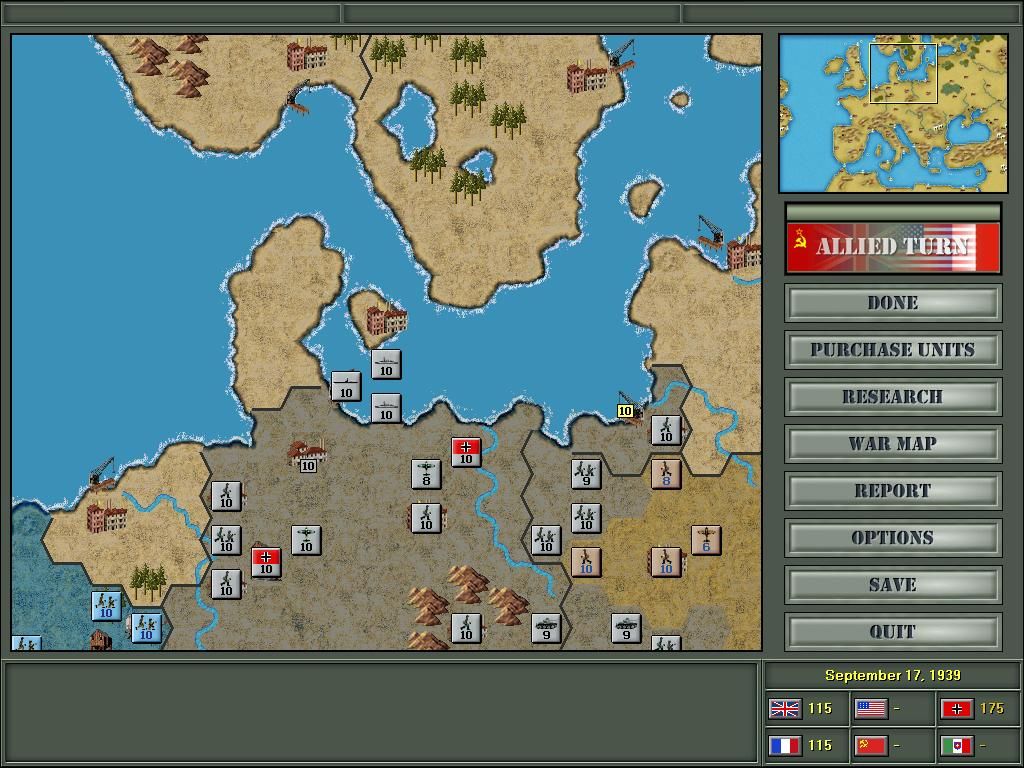
Visually, Strategic Command: European Theater opts for a clean, functional style rather than flashy, high-polygon artwork. The hex-based map is rendered in subdued tones that clearly differentiate terrain types—plains, forests, mountains, and coastal zones—ensuring that movement costs and combat modifiers are always legible at a glance. Unit counters are iconographically distinct, allowing quick identification of land, sea, and air formations.
Animations are minimal but purposeful. When a battle is resolved, a brief cut-in shows the attacking and defending units clashing, giving a satisfying moment of visceral feedback before returning to the strategic map. Supply lines and zone-of-control overlays can be toggled on and off, helping players visualize logistics without cluttering the battlefield. Overall, the graphics serve the gameplay rather than overshadow it, striking a balance between clarity and atmosphere.
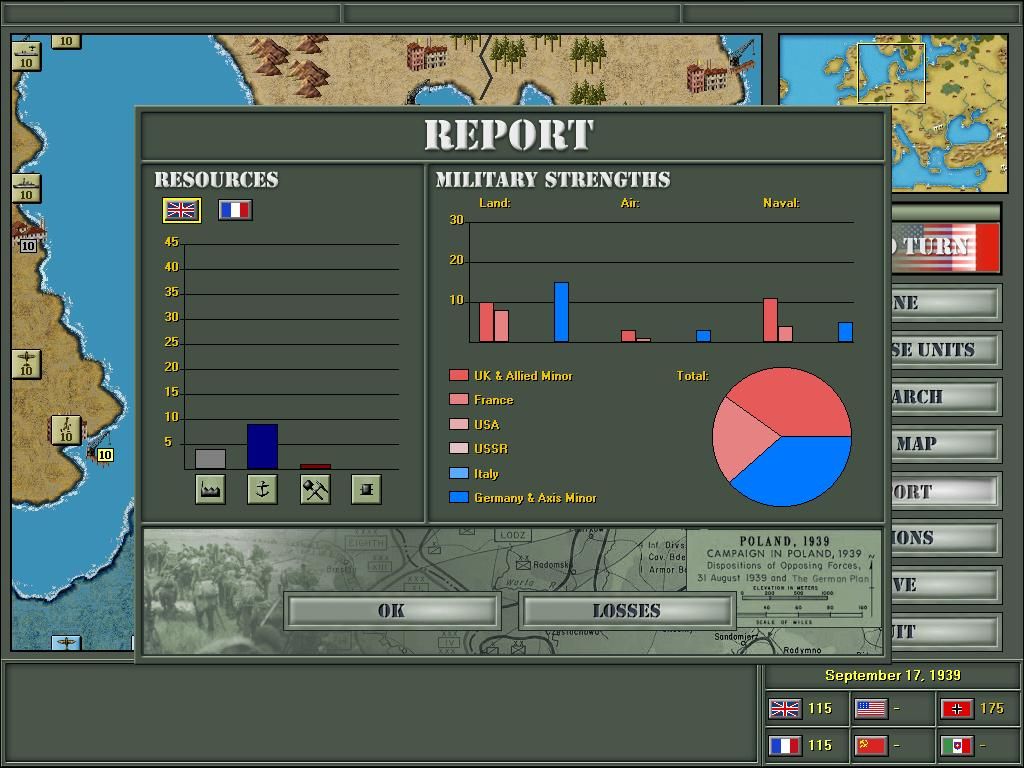
The user interface is thoughtfully organized, with side panels that display national production, research sliders, and diplomatic status. Tooltip pop-ups provide detailed unit statistics, combat odds, and terrain effects, reducing the learning curve for newcomers. While not cutting-edge by modern AAA standards, the presentation remains efficient and purposeful, emphasizing substance over style.
Story
As a grand strategy title, Strategic Command: European Theater doesn’t offer a scripted narrative in the traditional sense. Instead, the story unfolds dynamically through your actions on the geopolitical and tactical stages. The six chronological campaigns mirror real historical events, giving you the chance to rewrite—or relive—history from the German blitzkrieg in Poland to the climactic battles on Berlin’s outskirts.
Minor powers such as Yugoslavia, Romania, and Finland can be coerced or convinced into alliances, adding layers of diplomatic intrigue. These shifting loyalties can dramatically alter the course of a campaign, creating emergent narratives that no scripted mission could replicate. Key decisions—like when to launch Operation Barbarossa or how to respond to a coup in a satellite state—provide a compelling sense of immersion and replayability.
Even without a traditional storyline, flavor events and unit histories enrich the backdrop, while the Campaign Editor lets players craft their own “what-if” scenarios. By presenting history as a malleable chessboard, the game invites you to become the author of your own wartime saga.
Overall Experience
Strategic Command: European Theater offers a deep, immersive experience for fans of World War II grand strategy. Its thoughtful blend of operational warfare, logistics management, and diplomatic maneuvering creates a tapestry of challenges that will keep both newcomers and veterans engaged for dozens of hours. The learning curve is moderate, but the in-game help and tooltips ease the transition from casual to committed strategist.
While the graphics are functional rather than spectacular, they underscore the game’s emphasis on clarity and decisive thinking. Multiplayer and PBEM matches foster a vibrant community of rival commanders, and the Campaign Editor ensures that fresh content is never far away. Whether you’re coordinating a multi-theater conflict or focusing on a single critical front, the title’s scope and depth deliver a rewarding strategic sandbox.
In an era crowded with tactical shooters and real-time strategy titles, Strategic Command: European Theater stands out by letting you shape the grand sweep of World War II from one end of the map to the other. It may not hold your hand, but for those who relish the challenge of mastering supply chains, researching breakthroughs, and orchestrating massive offensives, it remains a must-play classic in the wargaming genre.

Reviews
There are no reviews yet.