 Retro Replay Retro Replay gaming reviews, news, emulation, geek stuff and more!


Retro Replay Review
Gameplay
TalonSoft’s East Front offers a deep, turn-based tactical experience that places you directly in command of either Hitler’s Wehrmacht or Stalin’s Red Army. Each turn unfolds in phases—movement, combat, and supply—which demand careful planning and foresight. Units have distinct strengths and weaknesses: infantry excel in urban assaults, armor dominates open plains, and artillery can soften enemy defenses from afar. This variety encourages experimentation and adaptive strategies as you advance across the Eastern Front.
(HEY YOU!! We hope you enjoy! We try not to run ads. So basically, this is a very expensive hobby running this site. Please consider joining us for updates, forums, and more. Network w/ us to make some cash or friends while retro gaming, and you can win some free retro games for posting. Okay, carry on 👍)
Whether you opt for a single battle or launch into a full-fledged campaign, the pacing remains deliberate and absorbing. Single battles let you explore iconic clashes like Moscow or Kursk in quick, focused engagements, while campaigns thread these encounters into a larger strategic tapestry. In campaign mode, decisions carry over: losing a key battalion at Kharkov might leave you vulnerable at Stalingrad. This continuity gives each victory a satisfying, living-edge feel.
Internet play via e-mail adds a social dimension to the tactical challenge. Though it might sound antiquated today, asynchronous play ensures you can trade moves with friends at your leisure, turning weekends into epic testing grounds for grand strategies. The interface tracks moves and sends notifications automatically, so you never lose momentum even when opponents log off for hours. It’s a feature that helped East Front stand out in its day—and still holds appeal for dedicated turn-based aficionados.
Graphics
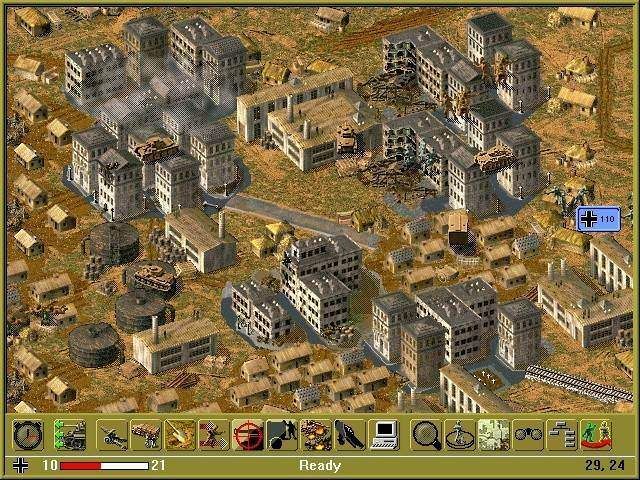
Visually, East Front employs a clean, functional map that prioritizes clarity over flashy effects. Terrain types—forests, swamps, cities, and rivers—are easily distinguishable by distinct color coding and icons. Unit counters display key stats at a glance: attack, defense, movement points, and organization level. While the graphics may seem dated compared to modern 3D war titles, they remain perfectly suited to the game’s tactical demands.
Animations are limited but purposeful: unit icons flash when they attack, shell bursts briefly highlight artillery strikes, and supply lines pulse when threatened. These subtle cues draw your eye to the most important developments without interrupting the flow of play. Zoom levels let you shift between a wide strategic overview and a more detailed tactical map, helping you track large-scale movements while still managing individual battalions.
Color palettes lean toward muted earth tones, reflecting the bleak Eastern Front environment. Weather effects—snow drifts, mud splashes, or autumn leaves—are represented through subtle overlays on the battlefield. Though not photorealistic, these touches reinforce immersion by reminding you of the harsh conditions faced by soldiers on both sides of the conflict. Overall, East Front’s graphics serve the gameplay superbly, emphasizing readability and historical atmosphere.
Story
East Front does not follow a traditional narrative arc or feature cinematic cutscenes. Instead, it weaves historical context into scenario briefings and post-battle reports. Each scenario comes with a concise background on objectives, force composition, and the strategic implications of victory or defeat. Reading these summaries before launching into a scenario helps you appreciate the real-world stakes of each engagement.
As you progress through campaign mode, a dynamic campaign journal logs key events: units destroyed, towns captured, and prisoner counts. This log effectively becomes your “story,” providing a running commentary on how your decisions shape the course of history. Watching an understrength rifle division rout a panzer corps, for instance, feels like you’ve rewritten a small fragment of World War II history in your favor.
Historical accuracy is a core pillar of East Front. TalonSoft includes notes on order of battle, unit organization, and logistical challenges faced by both armies. While purists might crave even deeper simulation, the level of detail here strikes a solid balance between authenticity and playability. For players interested in the Eastern Front’s strategic dilemmas, the game’s sparse but informative storytelling delivers a compelling backdrop for your tactical maneuvers.
Overall Experience
TalonSoft’s East Front remains a standout for fans of classic turn-based war games. Its blend of tactical depth, historical scenarios, and flexible play options—single battles, linked campaigns, and e-mail multiplayer—offers hours of replayability. The learning curve is steep enough to be rewarding but not so punishing that newcomers give up in frustration. Tutorials and reference charts help you get up to speed quickly.
The game’s user interface is straightforward: unit orders, combat results, and supply status are all accessible through intuitive menus and tooltips. Even veteran war-gamers will appreciate the ability to save mid-turn and review the results of each engagement step by step. This granular control ensures you never feel blindsided by a dice roll or an overlooked supply disruption.
Ultimately, East Front delivers a rich, immersive portrayal of Eastern Front warfare. It may lack cinematic flair, but its meticulous design, historical grounding, and strategic flexibility make it a must-have for any serious wargamer. If you’re eager to lead panzer divisions across the steppes or orchestrate Red Army counteroffensives, TalonSoft’s classic remains as engaging today as the day it was first released.


Reviews
There are no reviews yet.