 Retro Replay Retro Replay gaming reviews, news, emulation, geek stuff and more!


Retro Replay Review
Gameplay
Three Weeks in Paradise delivers a faithful throwback to mid-eighties action-adventure platformers, preserving the tight, screen-by-screen progression that defined the genre. You guide Wally Week through a sprawling African jungle, hopping between discrete screens to gather tools, keys, and other vital objects. The core loop revolves around item collection and environmental puzzle solving—wielding a machete to clear foliage, using a rope to swing over chasms, or combining inventory items to unlock new areas.
(HEY YOU!! We hope you enjoy! We try not to run ads. So basically, this is a very expensive hobby running this site. Please consider joining us for updates, forums, and more. Network w/ us to make some cash or friends while retro gaming, and you can win some free retro games for posting. Okay, carry on 👍)
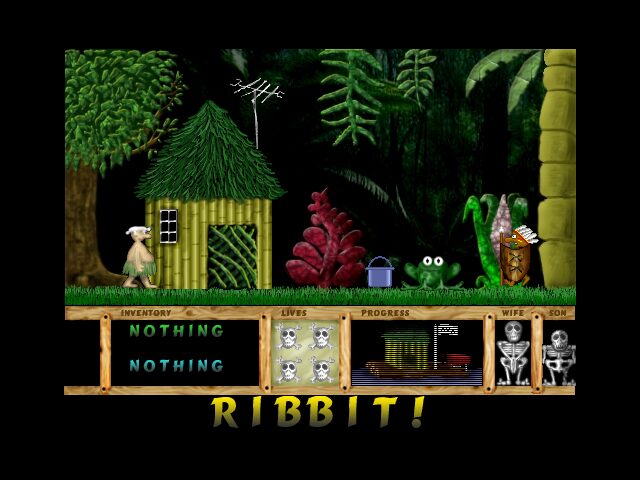
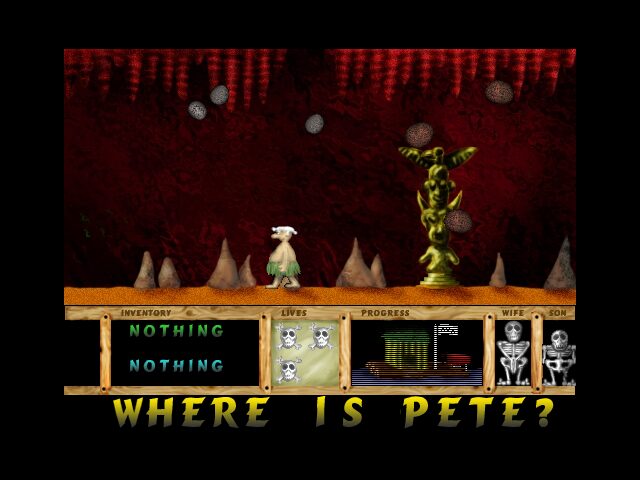
The two-slot inventory system forces you to plan each excursion carefully. With just a pair of item slots visible at the bottom of the interface, you must choose the right tool for the job and avoid needless backtracking. Dialog messages scroll in a typewriter-style banner at the screen’s foot, offering cryptic hints and story beats. These snippets not only nudge you toward your next objective—rescuing Wally’s wife and son—but also cultivate a sense of discovery as each clue clicks into place.
Enemies and environmental hazards keep the tension alive: hungry crocodiles lurk by rivers, venomous spiders crawl unseen until the last moment, and crumbling platforms test your timing. Rather than overwhelming the player with random mob fights, each threat feels well placed, encouraging cautious exploration and mouse-fine pixel-perfect jumps. For veterans of Dizzy and its contemporaries, the difficulty curve will feel immediately familiar—rewarding persistence and observation over brute reaction speed.
Graphics
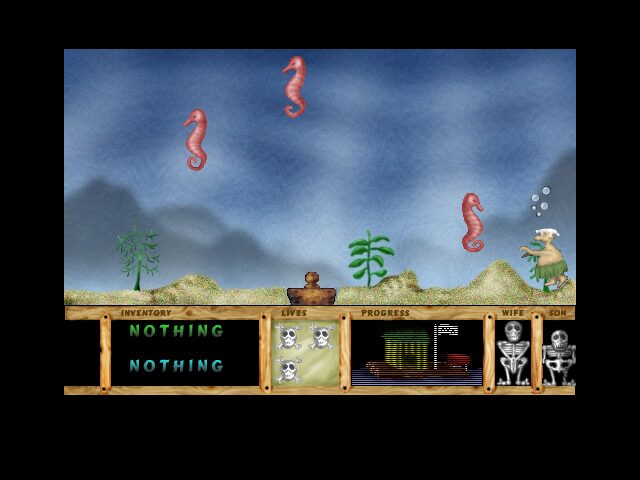
The remake’s pixel art upgrades are nothing short of charming. While the original 1985 assets featured a limited color palette and blocky tiles, this freeware version introduces richer hues and smoother animation frames without betraying the source material’s spirit. Jungle backdrops boast layered parallax scrolling to convey depth, and ambient details—swaying vines, drifting leaves—enhance immersion without ever feeling gratuitous.
Character sprites have been carefully redrawn: Wally’s jaunty stride, his machete swings, and even his idly blinking eyes all exhibit a newfound polish. Enemies too benefit from updated designs, their animations flowing more naturally and their hitboxes feeling transparent to the player’s eye. Inventory icons sit comfortably at the bottom of the screen, their silhouettes distinct enough to recognize at a glance.
Sound and music follow the same retro-remaster approach. The original chiptunes receive a light orchestration, blending electronic drums with melodic tones that evoke 8-bit nostalgia. Sound effects— machete slices, rope grabs, creature roars—are crisp and varied, lending each action a satisfying weight. Together, the audio-visual package feels cohesive, breathing fresh life into the classic while maintaining that unmistakable eighties charm.
Story
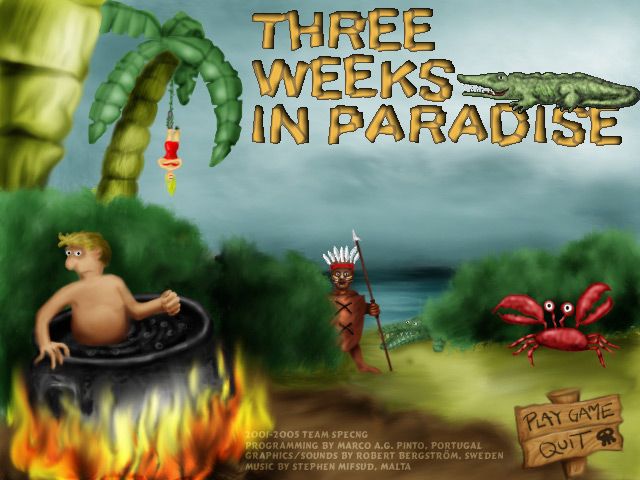
At its heart, Three Weeks in Paradise tells a straightforward rescue tale. Wally Week’s beloved wife and son have been kidnapped deep within the African jungle, and it’s up to the intrepid adventurer to reunite his family. While the narrative isn’t heavy on plot twists, its simplicity is part of the appeal—your primary motivation always remains clear, driving you onward through perilous terrain.
Storytelling unfolds through scrolling text at the bottom of the screen, reminiscent of classic home computer adventures. Occasional quips from Wally reveal his bemused personality: he’s part everyman, part plucky explorer. These bite-sized dialogue windows both guide and amuse, ensuring you never lose sight of the objective or the game’s lightly humorous tone.
Though brief by modern standards, the plot provides enough context to frame each puzzle and encounter. Finding a hidden machete near an abandoned camp, discovering a map scrawled on a cave wall, or deciphering a tribal emblem all link back to Wally’s quest. This thematic cohesion, combined with a modest—but heartfelt—script, lends the game a nostalgic allure that fans of eighties epics will appreciate.
Overall Experience
For fans of retro platform-puzzle adventures, Three Weeks in Paradise hits the sweet spot between nostalgia and modern polish. The balance of exploration, inventory management, and environmental hazards feels just right, offering a challenge that rewards careful observation rather than pixel-perfect reflexes alone. Newcomers will find its straightforward objectives inviting, while series veterans can savor each lovingly crafted callback to the era.
As a freeware release, the game’s accessibility is a major plus—you can dive in without worrying about cost, and the polished UI ensures compatibility with modern resolutions and input devices. Occasional moments of platforming tightness or trial-and-error puzzle solutions reflect the original’s design, but auto-retry on death and a forgiving respawn system soften those edges for today’s audience.
Ultimately, Three Weeks in Paradise proves that classic game design still has plenty to offer. Its concise scope—roughly a few hours of gameplay—means there’s no bloat, just pure adventuring distilled to its essentials. Whether you’re here for the pixel art sheen, the clever item-based puzzles, or the warm glow of eighties nostalgia, Wally Week’s jungle odyssey is a delightful freeware journey worth embarking on.


Reviews
There are no reviews yet.