 Retro Replay Retro Replay gaming reviews, news, emulation, geek stuff and more!
Retro Replay Review
Gameplay
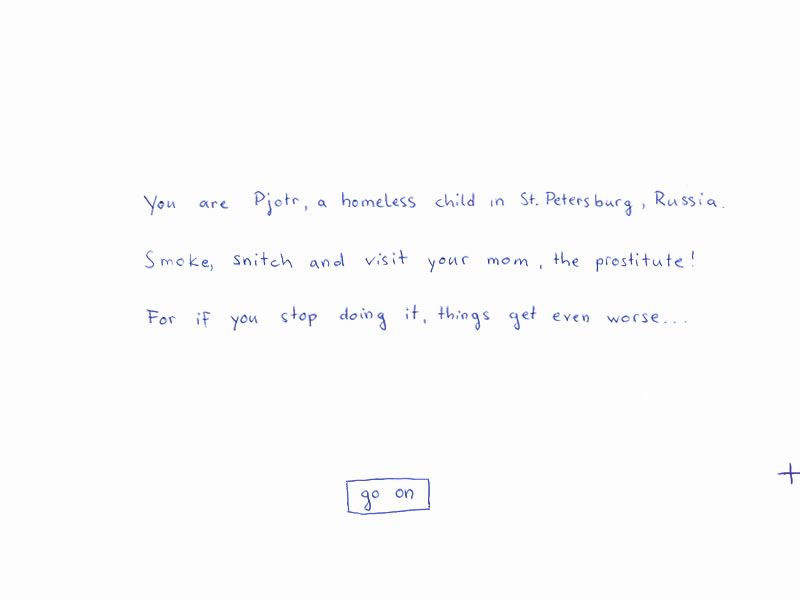
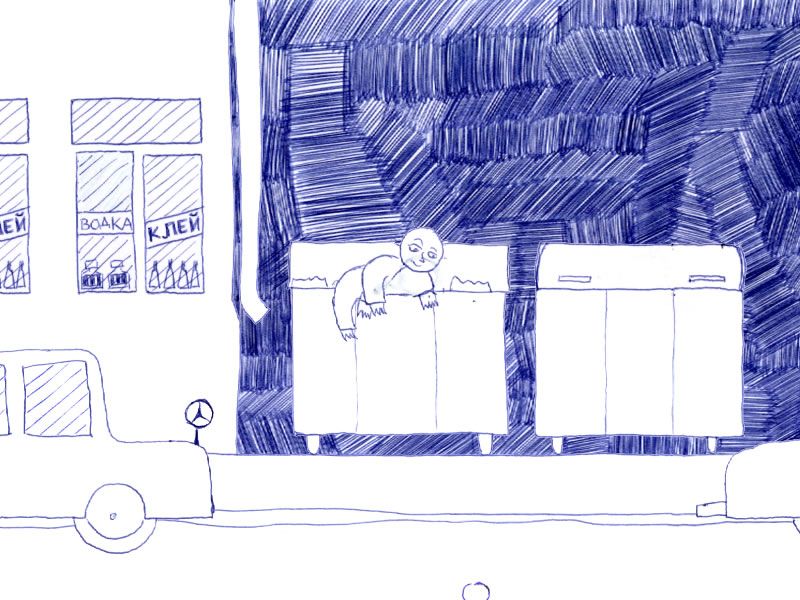
Ulitsa Dimitrova’s gameplay unfolds without conventional goals, quests, or puzzles, inviting players to inhabit the daily routine of a seven-year-old boy named Pjotr surviving on the streets of St. Petersburg. Rather than advancing through discrete objectives, the game encourages exploration of a looping, side-scrolling environment rendered in ballpoint pen style. As Pjotr crawls out of a dumpster each morning, players decide how he will secure his next cigarette or find shelter from the cold.
(HEY YOU!! We hope you enjoy! We try not to run ads. So basically, this is a very expensive hobby running this site. Please consider joining us for updates, forums, and more. Network w/ us to make some cash or friends while retro gaming, and you can win some free retro games for posting. Okay, carry on 👍)
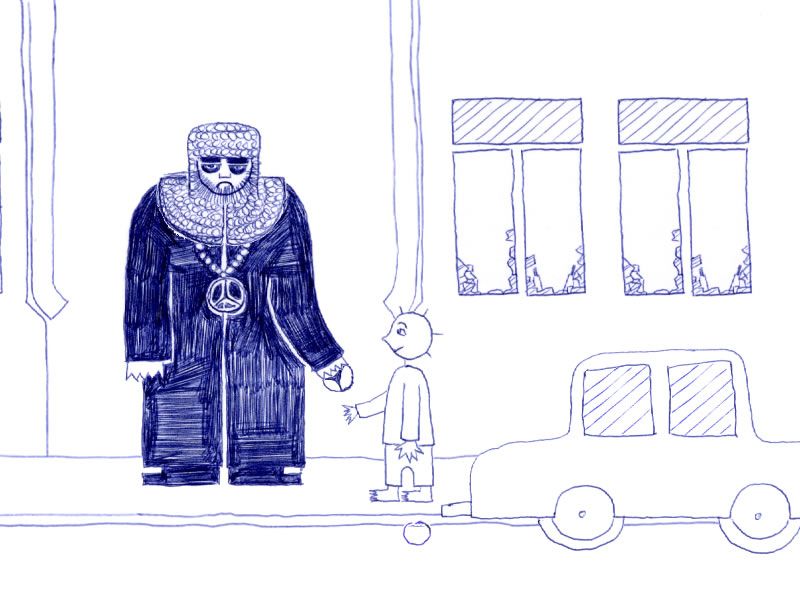
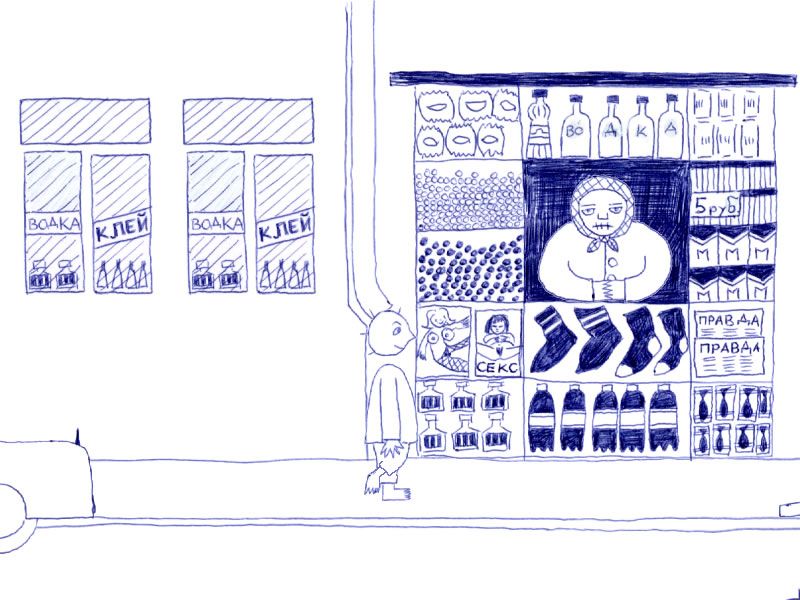
One of the driving mechanics centers on supporting Pjotr’s smoking habit. You can scavenge for cigarette packs by lifting car signs, break store windows to steal liquor, or negotiate with a local dealer. There’s also a substitute economy in which stolen booze is traded with a glue-sniffing kid or sold to Pjotr’s mother, who is a prostitute living down the street. These interactions form a loose day-to-day survival loop rather than a tight challenge or victory condition.
The interface is entirely mouse-driven, with context-sensitive cursor changes that signal when objects or characters can be interacted with. This intuitive point-and-click control feels familiar to adventure game veterans, but the lack of inventory management or puzzle logic sets it apart as a slice-of-life simulation. Movement is limited to left and right, yet the seamless wraparound of the street gives an illusion of a small but persistent community to navigate.
With no timer, health bars, or game-over screens, the player determines how long Pjotr’s cycle continues. This design choice reflects the ongoing hardships of street life: as soon as Pjotr secures enough supplies, the day simply repeats. For players seeking structured challenges, the absence of explicit progression may feel alienating. However, those drawn to contemplative, open-ended experiences will appreciate the freedom to roam and experiment within this stark microcosm.
Graphics
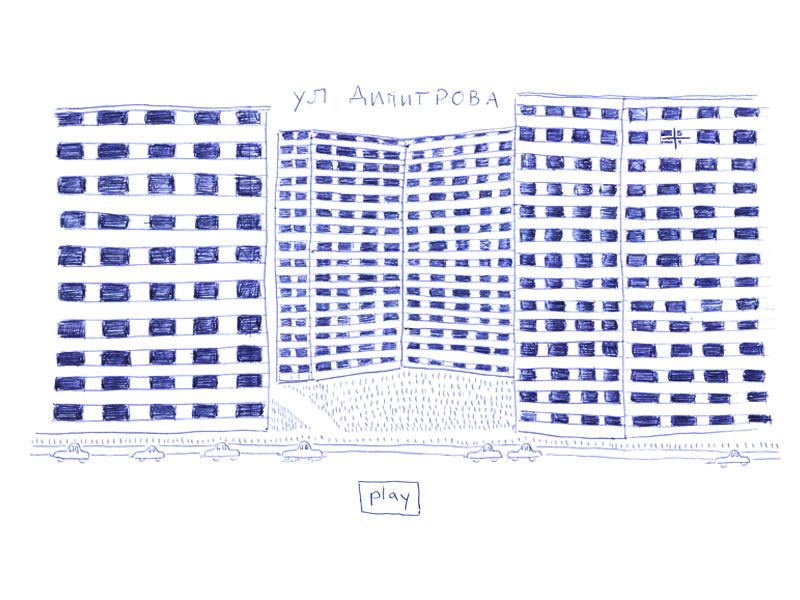
The visual identity of Ulitsa Dimitrova is defined by its handcrafted ballpoint pen art. Every frame, background detail, and character animation appears as if sketched on notebook paper, lending an intimate, almost diary-like quality to the streets of St. Petersburg. This unpolished aesthetic reinforces the game’s gritty atmosphere and underscores Pjotr’s vulnerable position in society.
Character sprites move with a charming, slightly jerky animation cycle that evokes the feel of student projects, yet the imperfections enhance the raw emotional tone of the story. From the flicker of a cigarette’s ember to the jitter of passersby, each detail feels intentionally unrefined. The color palette is muted—grays, browns, and pale blues dominate—conveying the bleakness of urban poverty without resorting to hyperrealism.
The game world scrolls laterally, wrapping around seamlessly when Pjotr ventures too far in either direction. This clever design creates the impression of a closed neighborhood loop, where every doorstep, dumpster, and storefront has a role in his daily routine. At times, you’ll notice subtle background vignettes: a glowing neon sign, distant footsteps, or an overheard snippet of dialogue—small touches that breathe life into the environment.
While Ulitsa Dimitrova doesn’t boast high-definition textures or dynamic lighting, its minimalist approach serves the narrative well. The ballpoint style offers a fresh perspective in an industry dominated by photorealistic 3D worlds. If you appreciate experimental art directions and handcrafted visuals, the game’s graphic presentation will resonate deeply.
Story
At its core, Ulitsa Dimitrova is less about plot twists and more about the daily struggles of a single, neglected child. The narrative unfolds organically as Pjotr scavenges for cigarettes, trades liquor, and interacts with the street’s more unsavory residents. There’s no clear beginning or end—just the unvarnished reality of a boy growing up without support or direction.
Intermittent encounters with a mysterious stranger punctuate the otherwise repetitive cycle. These fleeting moments hint at deeper layers of hope or threat, depending on how you interpret them. Similarly, a rare event where Pjotr searches for friendship offers a glimpse of tenderness amidst hardship. Yet neither thread is developed into a full story arc; instead, they emerge as poetic counterpoints to his monotonous routine.
By omitting a traditional storyline, the game invites players to project their own interpretations onto Pjotr’s life. Is he seeking escape, or simply enduring the grind? Are the street’s inhabitants friends, predators, or something in between? The lack of explicit narrative direction can feel challenging, but it also underscores the uncertainty and instability that define childhood homelessness.
Though there’s no scripted ending, players inevitably reach a point where the game’s open-endedness becomes its own statement. Whether you view this as a bold artistic choice or a lack of narrative closure will depend on your tolerance for ambiguity. For those who seek stories with clear acts and resolutions, Ulitsa Dimitrova may feel incomplete. For others, its unfiltered portrayal of survival offers a powerful, if unsettling, message.
Overall Experience
Ulitsa Dimitrova is a niche exploration of childhood poverty, framed through the lens of a student-developed AGS simulation rather than a traditional adventure game. It’s an experience defined by everyday minutiae—picking up cigarette butts, trading illicit goods, and avoiding the vigil of local shopkeepers. In doing so, it challenges players to reflect on social issues rarely addressed in the medium.
The game’s strength lies in its uncompromising minimalism. With no inventories, no puzzles, and no end credits, every interaction feels deliberate and thematic. The absence of goal markers or guidance encourages players to become fully immersed in Pjotr’s world, making each cigarette stolen or cigarette purchase feel weighty in context.
However, this deliberate pacing and lack of direction may frustrate players accustomed to traditional game loops. The repetitive nature of life on Ulitsa Dimitrova can feel more meditative than entertaining, and the lack of conventional rewards or narrative payoff tests patience. It’s best approached as an interactive art piece—a vignette on survival rather than a challenge to conquer.
For gamers interested in experimental design, social commentary, or the raw aesthetic of hand-drawn art, Ulitsa Dimitrova offers a unique journey through hardship. It’s not for those seeking action, puzzles, or a clear storyline, but for an audience open to contemplative, purposefully unstructured play. In that regard, it stands out as an intriguing student project that pushes the boundaries of what an “adventure” game can be.


Reviews
There are no reviews yet.