 Retro Replay Retro Replay gaming reviews, news, emulation, geek stuff and more!
Retro Replay Review
Gameplay
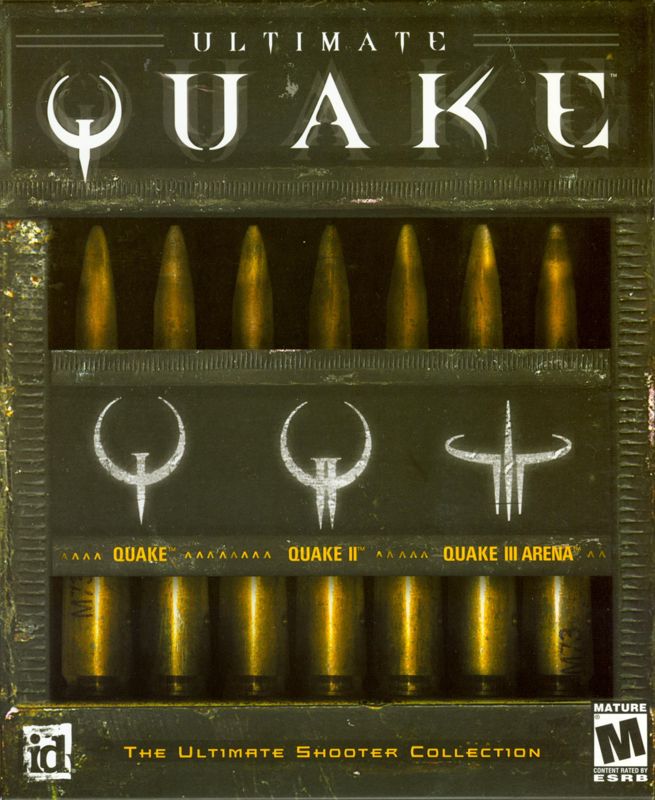
Ultimate Quake delivers a masterclass in first-person shooter mechanics, spanning three landmark titles that have each shaped the genre. The original Quake offers a raw, precision-focused experience, where every corner turned could mean a secret room or a deadly ambush. Controls feel tight and responsive, and the inclusion of both DOS and Windows versions caters to purists and modern players alike. GL Quake further elevates the feel with improved frame rates and smoother animation, making each jump and rocket blast satisfyingly weighty.
(HEY YOU!! We hope you enjoy! We try not to run ads. So basically, this is a very expensive hobby running this site. Please consider joining us for updates, forums, and more. Network w/ us to make some cash or friends while retro gaming, and you can win some free retro games for posting. Okay, carry on 👍)
Quake II builds on the foundation of its predecessor by introducing more varied objectives and tighter level design. Missions become less about hunting keys and more about tactical infiltration, defending bases, and strategic bomb placement. The weapon roster expands with the iconic railgun and grenade launcher, rewarding players who experiment with different tactics. Enemy AI has also taken a step forward, coordinating attacks and adapting to cover, which keeps the single-player campaign engaging from start to finish.
Quake III: Arena shifts focus entirely to competitive multiplayer, stripping away narrative in favor of pure combat. Movement mechanics such as strafe-jumping and rocket-jumping become essential skills, fostering a skill ceiling that still attracts dedicated communities today. Matches are fast-paced and chaotic, emphasizing map control and weapon mastery. Whether you’re playing offline against bots or online against rivals, the gameplay loop remains addictive and sharply tuned.
Graphics
The visual evolution across Ultimate Quake is striking. The original Quake’s dark, gothic environments are built from low-polygon meshes and simple textures, but they convey an atmosphere of dread that few games had achieved at the time. GL Quake’s OpenGL rendering adds dynamic lighting, colored light sources, and widescreen support, which both modernize and accentuate the game’s ominous mood.
In Quake II, textures become more detailed and varied, with industrial sci-fi facilities illuminated by flickering bulbs and harsh spotlights. The models for enemies and weapons grow more complex, featuring smoother curves and more intricate designs. The upgrade in art direction creates a cohesive world that feels familiar yet convincingly different from the original’s Lovecraftian vibes.
Quake III: Arena represents the pinnacle of the compilation’s visual journey. Running on Id Tech 3, it showcases realistic character models, detailed arenas, and dynamic lighting effects that cast shadows and highlight the frenetic action. Reflections, volumetric fog, and particle effects lend each map an unmistakable polish. Even by today’s standards, many custom mods and source ports keep the engine looking sharp and exhilarating to watch.
Story
Quake’s narrative is minimalistic but effective: an interdimensional hero battles eldritch horrors in dark, medieval castles and nightmarish landscapes. This “show, don’t tell” approach immerses players directly in the action, leaving much to the imagination. Textbook secret messages and environmental storytelling deepen the sense of mystery without bogging down the pace.
Quake II takes a more structured approach, casting you as a Marine on a mission to infiltrate the Strogg homeworld and halt their invasion of humanity. Cutscenes and mission briefings provide clear objectives and stakes, giving players a stronger sense of purpose. Though light on character development, the persistent threat of the Strogg and the gradual revelation of their cybernetic experiments add narrative drive.
Quake III: Arena abandons a traditional story altogether in favor of an arena-based premise: gladiators pulled from across time and space fight for domination. Lore is minimal, often conveyed through map names and brief arena intros. While this may disappoint those seeking a robust plot, it serves the game’s focus on visceral multiplayer battles, where identity and background take a back seat to reflexes and strategy.
Overall Experience
Ultimate Quake offers exceptional value, bundling three landmark shooters that each contributed significantly to gaming history. The compilation’s multi-platform support for the original Quake, alongside the full Quake II and Quake III: Arena titles, ensures broad compatibility and preserves each game’s authentic feel. Whether you’re revisiting nostalgia or discovering these classics for the first time, the package delivers hours of finely tuned action.
The collection also benefits from strong community support. Mods, custom maps, and source ports are readily available, extending the replayability well beyond the base campaigns. For multiplayer enthusiasts, Quake III’s servers remain active, and fan-organized tournaments show that the game’s competitive spirit is alive and well. Even the single-player components feel fresh when approached with new mod content or speedrunning challenges.
Audio design across all three games remains iconic: Trent Reznor’s industrial soundtrack in Quake, eerie ambient noises in Quake II, and aggressive metal riffs in Quake III set the tone perfectly. Weapons sound impactful, and enemy death screams are instantly recognizable. In sum, Ultimate Quake is a definitive collection that stands the test of time, offering a comprehensive tour through the evolution of fast-paced, arena-style shooters.


Reviews
There are no reviews yet.