 Retro Replay Retro Replay gaming reviews, news, emulation, geek stuff and more!


Retro Replay Review
Gameplay
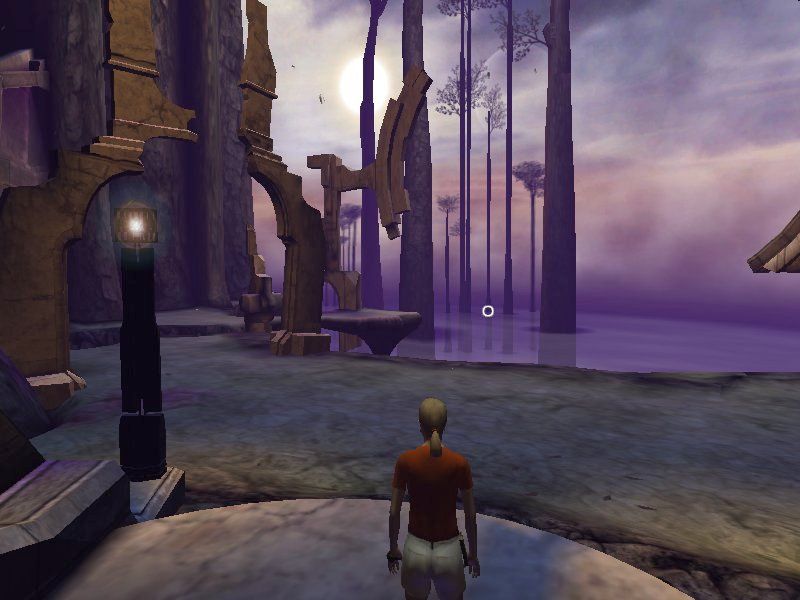
Uru: Ages Beyond Myst invites players into a richly detailed world where exploration and puzzle-solving remain at the heart of the experience. Unlike its predecessors, Uru offers both first- and third-person perspectives, giving you the freedom to approach each Age from the vantage point that feels most immersive. Whether you’re scaling the ancient architecture of a D’ni ruin in third-person or peering through your character’s eyes in first-person, the game’s real-time 3D engine brings every stone and corridor to life.
(HEY YOU!! We hope you enjoy! We try not to run ads. So basically, this is a very expensive hobby running this site. Please consider joining us for updates, forums, and more. Network w/ us to make some cash or friends while retro gaming, and you can win some free retro games for posting. Okay, carry on 👍)
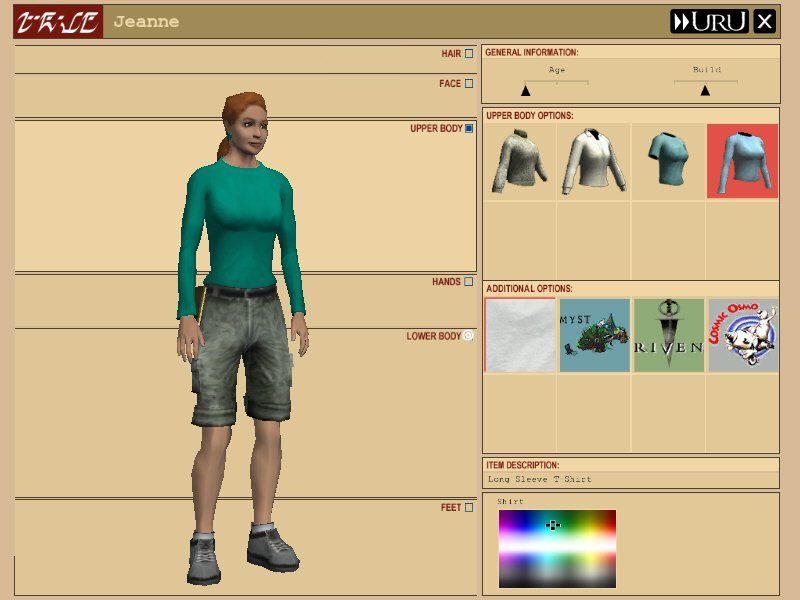
The controls are a departure from the purely point-and-click systems of earlier Myst titles. Players must now rely on a combination of keyboard and mouse inputs to move, run, strafe, climb, and jump through complex environments. This active movement model can take time to master, but it also opens up more dynamic interactions with the world—leaping across broken bridges, shimmying along narrow ledges, and scaling mossy walls in search of hidden linking books.
Traditional save slots are replaced by an auto-save that triggers when the program exits, supplemented by in-world checkpoints at each location. While this system streamlines the interface and encourages careful play, some may find it less forgiving than manual saves. Nevertheless, every solved puzzle and discovered clue carries real weight, heightening the sense of accomplishment each time you return to a new or familiar Age.
Graphics
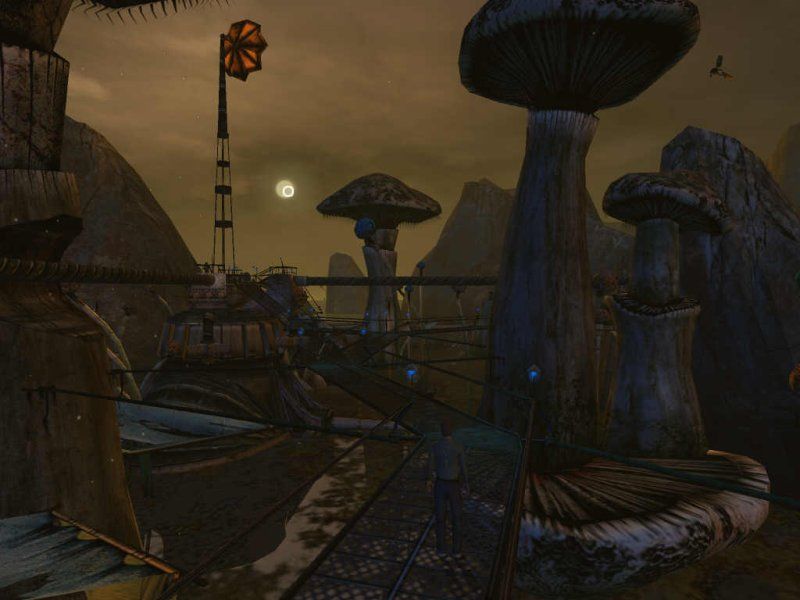
When Uru was released, its real-time 3D visuals represented a significant leap for the Myst franchise. The build-up of layered textures, dynamic lighting, and environmental effects—like wind-blown sands or flickering torchlight—combine to create worlds that feel both ancient and alive. Although modern players might notice lower-resolution textures by today’s standards, the overall artistry and architectural design remain impressive.
Each Age you visit has its own unique aesthetic palette: the stony courtyards of an abandoned city, the verdant overgrowth reclaiming D’ni halls, and the shimmering waters of subterranean cavern networks. Subtle animations—dripping water, shifting dust motes, and creaking metal—add to the atmosphere, transforming static screens into immersive spaces begging to be explored.
The seamless transitions between areas, with no loading screens interrupting your flow, reinforce the illusion of a living world. Occasional draw-in hiccups or frame-rate dips can surface in particularly dense environments, but these technical quirks rarely detract from the grandeur of Uru’s visual storytelling.
Story
Uru: Ages Beyond Myst shifts the narrative focus from Atrus and his sons to his daughter, Yeesha, whose mission sends you traversing linking books across time and space. This fresh perspective deepens the series’ lore, revealing new facets of the D’ni civilization and the tragic events that shaped its downfall. As you follow Yeesha’s guidance, you piece together not only puzzle solutions but also fragments of a larger, poignant tale.
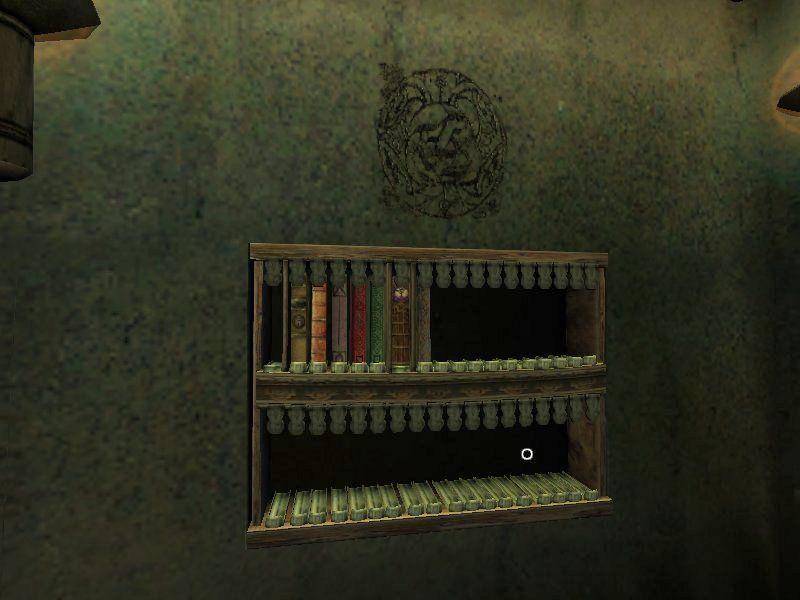
Rather than relying on lengthy expository dialogue, Uru weaves its story through environmental details and cryptic journals scattered throughout the Ages. Discovering a waterlogged library, a shattered stone glyph, or a half-buried mural becomes an act of archaeological storytelling—each artifact hinting at the hopes, failures, and final days of a once-great empire.
The sense of solitude—occasionally broken by Yeesha’s distant voice or the echoes of long-fallen halls—amplifies the emotional resonance of your journey. You are not merely solving puzzles; you are uncovering the memories of a people lost to time. This narrative approach rewards patient exploration and invites players to become active participants in the saga of the D’ni.
Overall Experience
Uru: Ages Beyond Myst stands as a bold evolution of the Myst formula. By embracing full 3D movement, a dual-perspective camera, and a more interactive interface, it invites both series veterans and newcomers to experience a richer, more tactile world. While the learning curve for controls and the auto-save design may catch some off guard, the payoff is a deeper sense of presence within each Age.
The game’s pacing is deliberately unhurried, allowing moments of wonder to flourish as you puzzle through mechanisms and absorb the haunting beauty of your surroundings. Occasional technical limitations—like dated texture resolution or minor performance dips—are offset by the enduring strength of Cyan’s level design and world-building. Each Age feels lovingly crafted, with distinct mysteries that beckon you deeper into the D’ni legacy.
For those seeking a cerebral adventure rich in atmosphere, Uru delivers an experience both contemplative and captivating. It may not cater to adrenaline-driven gamers, but its blend of exploration, environmental storytelling, and challenging puzzles offers a uniquely rewarding journey. If you’re intrigued by the idea of unearthing the secrets of a lost civilization and aren’t afraid to take your time, Uru: Ages Beyond Myst remains a compelling chapter in one of gaming’s most celebrated franchises.


Reviews
There are no reviews yet.