 Retro Replay Retro Replay gaming reviews, news, emulation, geek stuff and more!

Retro Replay Review
Gameplay
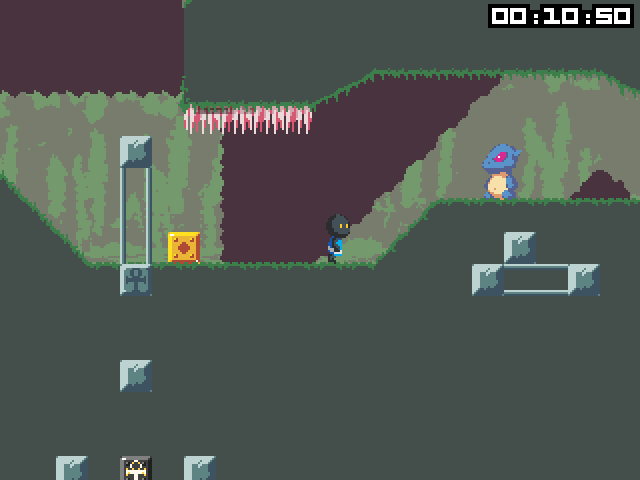
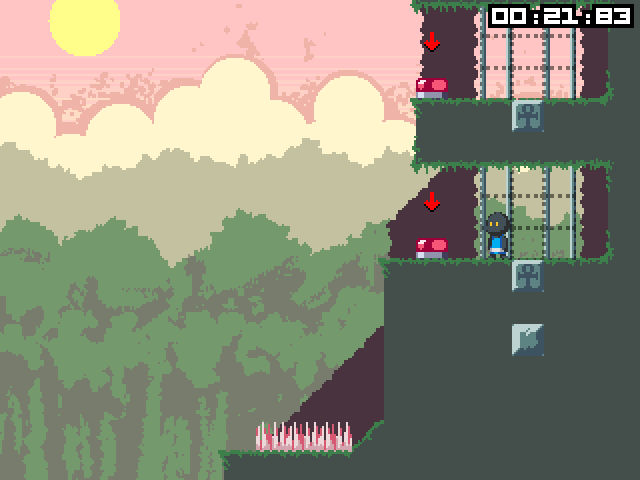
Verge delivers a tightly woven platforming experience centered on inventive puzzle mechanics. Players guide a nimble character through nine intricately designed levels filled with classic hazards—spikes, moving platforms, and enemies that must be dispatched with well-timed jumps. At first glance, the fundamental controls feel familiar: run, jump, and stomp. However, the moment your character lands on spikes, the game flips the script, transporting you into a darker mirror plane with reversed controls and inverted gravity cues.
(HEY YOU!! We hope you enjoy! We try not to run ads. So basically, this is a very expensive hobby running this site. Please consider joining us for updates, forums, and more. Network w/ us to make some cash or friends while retro gaming, and you can win some free retro games for posting. Okay, carry on 👍)
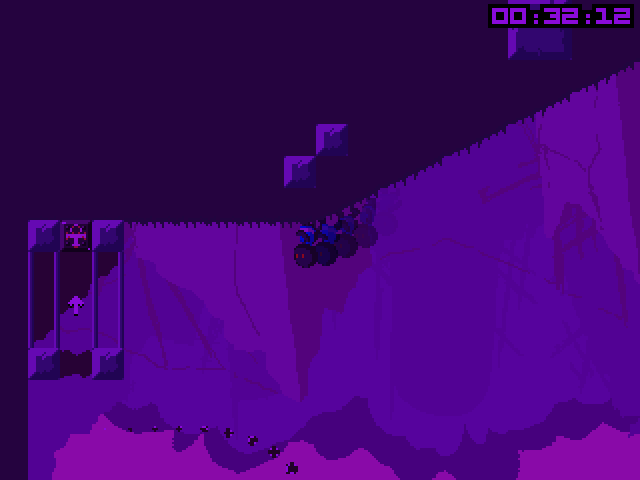
This dual-plane mechanic is the heart of Verge’s gameplay. In the mirror plane, spatial awareness is challenged as left becomes right, up becomes down, and spike-laden floors transform into traversable ceilings. Puzzles often hinge on these transitions, requiring players to bounce between realities to open passages or bypass otherwise insurmountable gaps. The satisfaction of mastering control reversals and predicting the outcome of each jump brings a fresh twist to the platform-puzzle genre.
Over the course of nine levels, difficulty ramps steadily, introducing new hazards and more elaborate puzzle constructs. Early stages teach the basics: jump on blocks to hit switches, avoid predictable enemies, and learn the feel of reversed controls. Later levels intertwine both planes, using high-speed slingshot sections that propel you from the mirror world into the overworld in a single bound. As death by spikes is merely a portal, only enemy contact ends your run, encouraging risk-taking and experimentation without the usual frustration of repeated game-overs.
Graphics
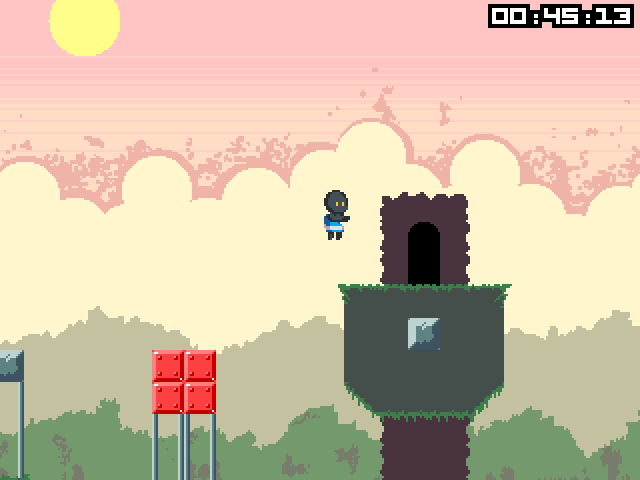
Visually, Verge opts for a minimalist aesthetic that echoes classic platformers while carving out its own identity. The overworld is rendered in crisp, bold colors—clean whites and vibrant blues—contrasted sharply with the mirror plane’s brooding blacks and muted purples. This stark visual dichotomy instantly communicates which reality you inhabit, aiding quick decision-making in the heat of puzzle-solving.
Character and enemy sprites maintain a simple, angular design that complements the game’s emphasis on precision. Moving hazards and platforms are animated smoothly, ensuring that timing-sensitive jumps feel fair and responsive. Backgrounds remain unobtrusive, providing enough context to convey depth without distracting from the core platforming action or obscuring vital foreground elements.
Transitions between planes are accompanied by subtle visual flourishes—a ripple effect and a brief flash of mirrored geometry—that reinforce immersion without slowing gameplay. These visual cues, combined with tight frame rates and glitch-free performance, create a seamless experience where the only thing you notice is how quickly you adapt to reversed controls and altered landscapes.
Story
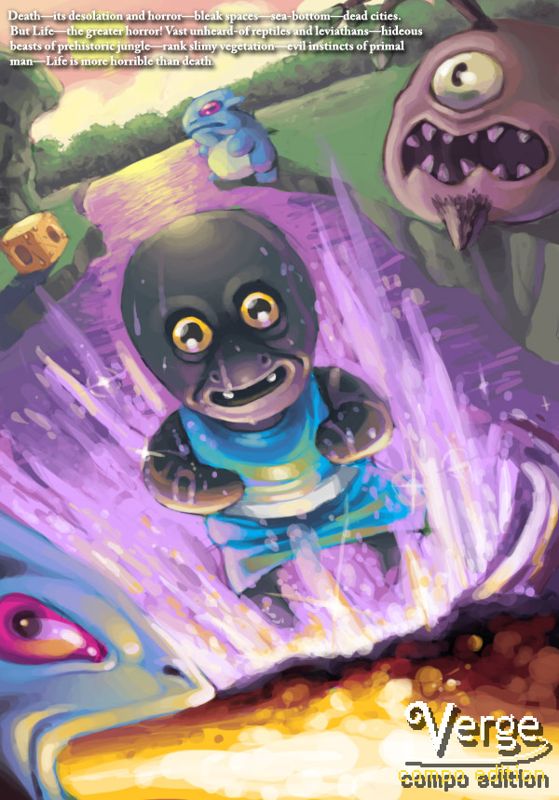
While Verge does not unfold a traditional narrative, it hints at a metaphysical journey through dual realities. The simple premise—navigate an unexplained underworld and its mirrored counterpart—allows players to project their own interpretations onto the experience. Are you a soul trapped between life and death, or a curious explorer discovering hidden dimensions? The game leaves these questions deliberately open-ended.
The lack of exposition works in Verge’s favor, directing all attention toward gameplay mechanics and level design. There are no cutscenes or dialogue to interrupt the flow; every jump and warp through a spike-laden portal serves as a moment of discovery. This minimalist storytelling approach is reminiscent of other atmospheric titles where environment and mechanics convey more than words ever could.
Despite the absence of a formal plot, there is a palpable sense of progression and escalation. Each level’s visual cues and puzzle complexity build an implicit narrative arc—from tentative experimentation in the early stages to full-blown mastery of plane-hopping in the final trials. In this way, the story emerges organically through gameplay, rewarding persistence and creative problem-solving.
Overall Experience
Verge stands out as an elegant synthesis of platforming and puzzle-solving, offering a distinctive twist on both genres. Its nine levels are concise yet meaty, each one presenting a fresh configuration of obstacles that leverage the mirror-plane mechanic in surprising ways. The learning curve is fair but firm—beginners may stumble during initial reversals, but fans of cerebral platformers will find the challenge invigorating.
Replayability is baked into Verge’s design. Speedrunners and completionists can return to earlier stages to shave seconds off their runs or discover alternate routes made possible by clever use of portals. The game’s brevity (roughly one to two hours for a first playthrough) ensures it never outstays its welcome, and the absence of grindy collectables keeps the pace brisk.
For players seeking a platformer that rewards both dexterity and lateral thinking, Verge is a compelling choice. Its polished presentation, imaginative core mechanic, and thoughtful level design combine into an experience that feels greater than the sum of its parts. Whether you’re a veteran of the indie-puzzle scene or simply curious about boundary-pushing platformers, Verge offers a memorable—and mirror-flipped—adventure well worth exploring.


Reviews
There are no reviews yet.