 Retro Replay Retro Replay gaming reviews, news, emulation, geek stuff and more!
Retro Replay Review
Gameplay
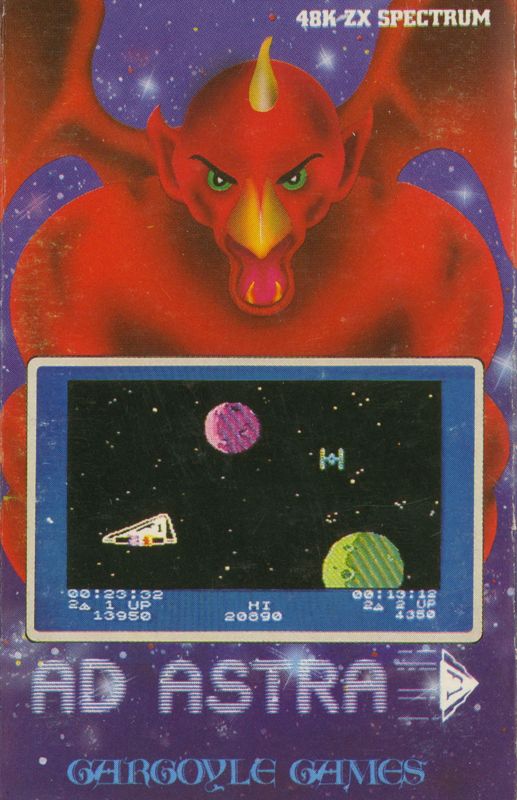
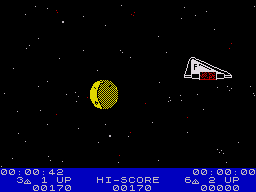
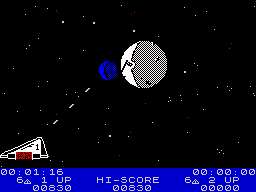
Ad Astra immediately immerses you in its classic space shoot ’em up mechanics, presenting your spacecraft in a forward-view perspective that feels both retro and engaging. The opening challenge—dodging massive planets hurtling towards you—sets the tone for a game that relies on reflexes and spatial awareness. As you weave between these obstacles, you’ll quickly learn that timing your movements is as crucial as lining up your shots.
(HEY YOU!! We hope you enjoy! We try not to run ads. So basically, this is a very expensive hobby running this site. Please consider joining us for updates, forums, and more. Network w/ us to make some cash or friends while retro gaming, and you can win some free retro games for posting. Okay, carry on 👍)
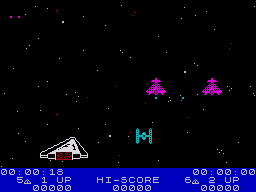
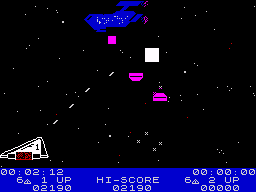
Once past this initial hurdle, the action shifts to shooting down enemy craft that appear at varying distances and angles. The so-called “trick-3D” perspective means that your angle of attack depends on how you pilot your ship into the screen, creating a gameplay loop that feels dynamic and rewarding. Mastering this visual trick is a key part of progressing through the game, as it directly affects how well you can predict enemy trajectories and target them accurately.
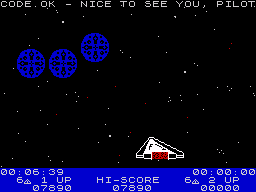
Adding to the challenge, Ad Astra introduces landmines and flying saucers. Mines drift toward you and must be shot before they collide, while saucers require multiple hits despite not firing back. Once you’ve cleared each wave, you’re presented with a numeric code—memorizing or jotting it down is essential, as it unlocks the portal to the next moon. This blend of action, memorization, and strategic pauses for code-entry keeps the gameplay varied and deeply addictive.
Graphics
For an early into-the-screen 3D title, Ad Astra’s visuals are surprisingly effective at conveying depth and motion. The planets and asteroids in the opening sequence have a convincing sense of scale, hurtling toward you with a weighty presence that underscores the game’s core challenge. Simple wireframe and flat-shaded models work in its favor, evoking a nostalgic charm that fans of retro gaming will appreciate.
The enemy craft, though not overly detailed, are distinct enough to identify on sight. Flying saucers glint in neon hues, while landmines pulse with warning lights—both stand out clearly against the starfield backdrop. The limited color palette and blocky shapes may feel dated to newcomers, but they serve as a reminder of how early 3D effects were achieved without modern hardware acceleration.
Performance-wise, Ad Astra maintains a steady framerate even when multiple objects populate the screen. There’s minimal flicker or slowdown, which is impressive given the ambitious nature of “into-the-screen” visuals on legacy platforms. Occasional pop-in of distant projectiles can occur, but it rarely disrupts the flow of combat. Overall, the graphics deliver an authentic retro experience that remains visually coherent and enjoyable.
Story
Ad Astra doesn’t boast a sprawling narrative, opting instead for a minimalist premise that places you at the helm of an interplanetary scout craft. Your mission—to navigate perilous space corridors, eliminate hostile forces, and collect access codes—serves as a straightforward backdrop for the game’s arcade-style action. While there’s no elaborate plot twist, the escalating challenge as you jump from moon to moon keeps the stakes feeling fresh.
The lack of character development or cinematic cutscenes might disappoint players seeking a rich storyline, but the game’s clean focus on gameplay delivers its own form of immersion. Each new moon introduces tougher enemies and more complex obstacle patterns, suggesting an unseen adversary is constantly pushing back against your progress. This implied struggle provides just enough context to give your shooting spree a sense of purpose.
Hidden narrative details can be extrapolated from the environment and mission briefings. The numbering system for the moons hints at a sprawling lunar colony network under threat, and the need to jot down codes adds a puzzle-like element to an otherwise linear experience. Though sparse, these storytelling touches are integrated seamlessly into the gameplay loop.
Overall Experience
Ad Astra excels as a concise, no-frills space shooter that captures the essence of early 3D arcade action. Its core gameplay loop—dodge, shoot, decode—remains compelling throughout, and the constant ramp-up in difficulty ensures that even seasoned players will find themselves challenged. The game’s emphasis on memorizing codes and beating your own high score encourages repeated runs, making it highly replayable.
While modern gamers accustomed to high-definition graphics and narrative depth may find Ad Astra’s presentation rudimentary, its retro authenticity is precisely what gives it charm. The trick-3D perspective, once a technical marvel, still provides a satisfying sensation of depth and movement. Controls are tight and responsive, and the gradual introduction of new hazards keeps the experience feeling dynamic rather than repetitive.
In the end, Ad Astra stands out as a piece of video game history that remains enjoyable today. Its blend of reflex-based shooting, spatial puzzles in the form of planet dodging, and code-based progression creates an addictive formula. For fans of classic shooters or anyone curious about the roots of 3D arcade design, Ad Astra offers both challenge and nostalgia in equal measure.


Reviews
There are no reviews yet.