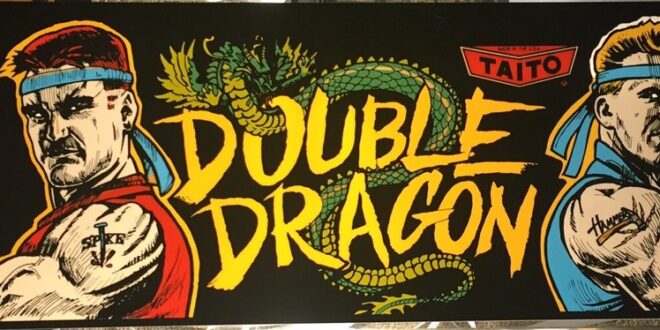
The year was 1987, and the arcade was still the epicenter of gaming culture. Kids poured their quarters into brightly lit cabinets, chasing high scores and showing off their skills to crowds of strangers who quickly became friends or rivals. The genre that captured much of that energy was the beat ’em up, a style of game where combat unfolded in scrolling stages filled with street gangs, punks, and martial artists. While earlier titles like Kung-Fu Master (1984) and Renegade (1986) set the stage, it was Double Dragon that electrified the formula and defined the golden era of cooperative brawlers.
(HEY YOU!! We hope you enjoy! We try not to run ads. So basically, this is a very expensive hobby running this site. Please consider joining us for updates, forums, and more. Network w/ us to make some cash or friends while retro gaming, and you can win some free retro games for posting. Okay, carry on 👍)
The roots of Double Dragon stretch back to Technōs Japan, a company formed in 1981 by three former Data East employees. The studio started small, literally operating out of a one-room apartment, and built its reputation with games like Tag Team Wrestling and Karate Champ before scoring its first breakthrough with Kunio-kun in 1986, known overseas as Renegade (Double Dragon Timeline).
That game, directed by Yoshihisa Kishimoto, was deeply personal. Kishimoto grew up in an era of Tokyo where biker gangs and street fights were part of daily life, and he poured those experiences directly into his design. Kunio, the tough high schooler who fought bullies and yakuza, was essentially Kishimoto’s alter ego. His aim was to create a fighting game that felt like the chaos of a real street scuffle rather than a controlled martial arts match.
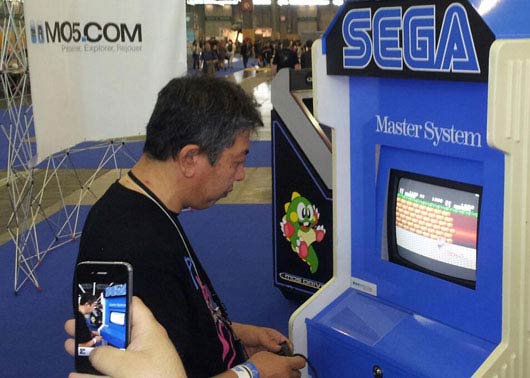
Yoshihisa Kishimoto in 2012 at the Japan Expo playing the SMS, no doubt.
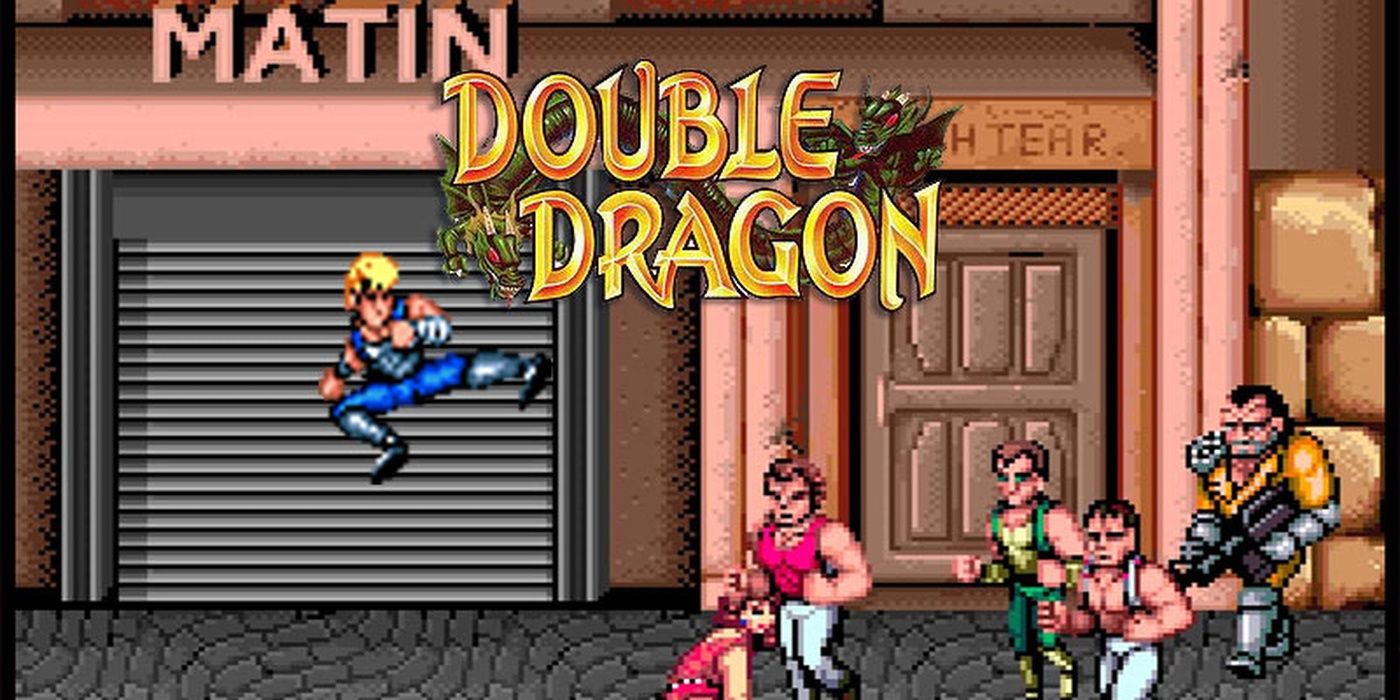
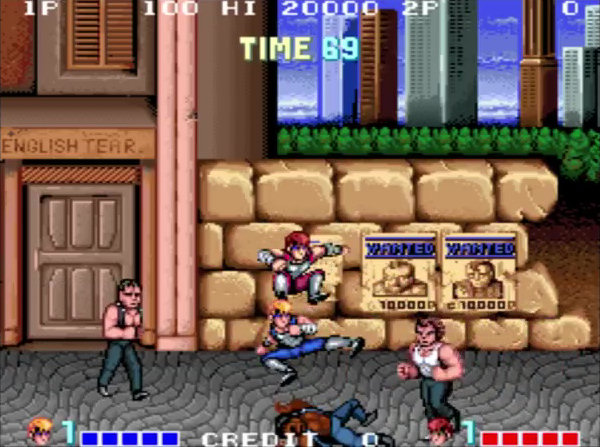
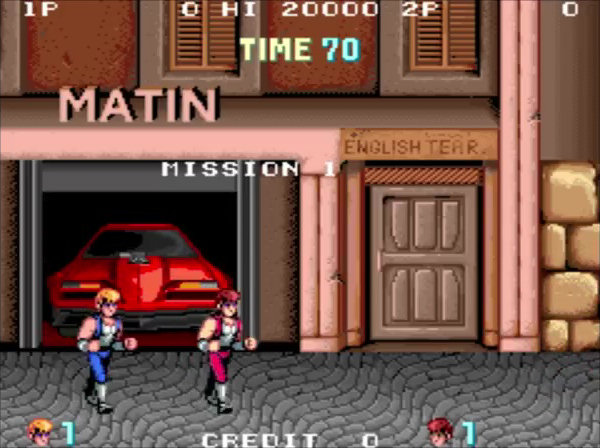
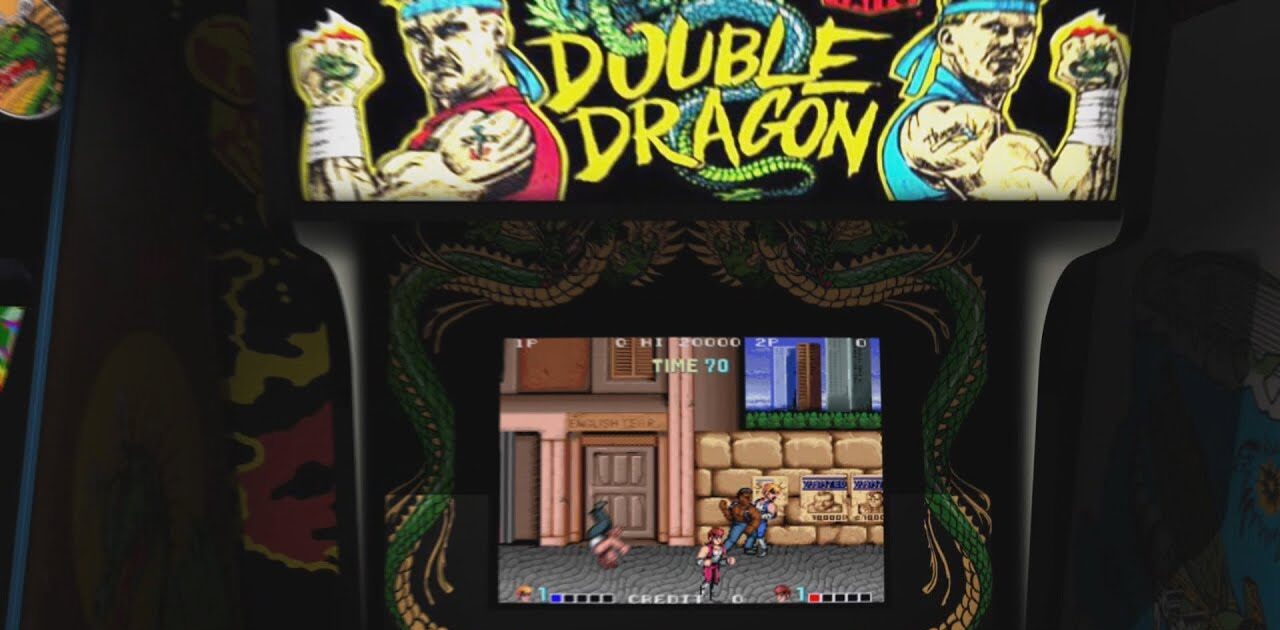
But Kishimoto was not done. With the success of Renegade, he and the team at Technōs began work on a project that would expand the idea to cinematic levels. That project became Double Dragon. Released to arcades in July 1987, it told the story of brothers Billy and Jimmy Lee as they battled the Black Warriors gang to rescue Billy’s kidnapped girlfriend Marian. While the plot was simple, it had a cinematic hook that mirrored the martial arts movies of the era. More importantly, it added innovations that pushed the genre forward: usable weapons, a wide array of moves, side-scrolling levels with verticality, and most importantly, two-player cooperative play. As writer Jason Gross recalled, “In my teenage mind, it quickly became THE popular game to play with a friend” (UnderScoopFire).
Technos logo
The small Technōs staff who built the game deserve equal recognition. Kishimoto provided the vision, but programmer Muneki Ebinuma helped implement the dual-player mechanics that defined the experience. The sprite art that gave thugs their cocky struts and Billy and Jimmy their iconic martial arts poses was crafted by Koji Ogata. And perhaps most famously, the pounding, energetic score came from Kazunaka Yamane, whose music is still instantly recognizable to arcade fans. “I wanted players to feel like they were in a movie scene,” Kishimoto said in interviews, and Yamane’s soundtrack ensured the game never lost momentum.
I could smell DD all over this game.
Double Dragon was more than a hit, it was a phenomenon. It allowed friends to share an adventure, to high-five after smashing through an alleyway full of enemies, and even to fight one another at the very end for Marian’s affection. It was part movie, part playground fantasy, and it established Technōs Japan as a force in the global industry. As Johnny Undaunted noted, the game was such a success that it allowed the company to finally move out of its tiny office and into a proper headquarters, cementing its place as a top developer of the era (Double Dragon Timeline).
The Arcade Original (1987)
When Double Dragon (my review of this here) arrived in arcades in July 1987, it was more than just another quarter-muncher. It was a culmination of ideas, influences, and raw creative energy from a small team at Technōs Japan. At the center was Yoshihisa Kishimoto, the designer whose earlier work on Renegade had laid the foundation. Kishimoto admitted that much of his work was autobiographical. Growing up in Tokyo, he often found himself in fights with local delinquents and biker gangs, experiences that filtered directly into his game design. In an interview with Polygon, Kishimoto explained that Double Dragon was conceived after Technōs senior staff asked him to make a two-player follow-up to Renegade, since co-op play would attract more quarters in arcades.
The decision to embrace two-player simultaneous play was revolutionary. Beat ’em ups until that point were largely solo affairs, with players taking on waves of enemies one by one. Double Dragon changed that by letting friends battle side by side, sharing the screen and their triumphs. Kishimoto described his inspiration as a mix of Hollywood martial arts cinema and post-apocalyptic imagery. Movies like Enter the Dragon, Fist of the North Star, and Mad Max were key references, and their influence showed in everything from the gritty urban stages to the exaggerated martial arts poses (Polygon).
The full development staff of Double Dragon was unusually rich for a game of the era. According to surviving credits, the designers included Kishimoto alongside Koji Kai and Shinichi Saito. Programmers Hiroshi Satoh, Tomoyasu Koga, Nari Nishimura, and Hideki Kaneda made the ambitious two-player system run smoothly on limited arcade hardware. Artists Kumiko Mukai, Mizuho Yama, Akemi Tasaki, Misae Nakaya, and Masato Shiroto created the diverse roster of enemies and allies, from Mohawked punks to massive bosses. And at the heart of it all was Kazunaka Yamane, the composer whose pulsing soundtrack became one of the most iconic in arcade history (Wikipedia).
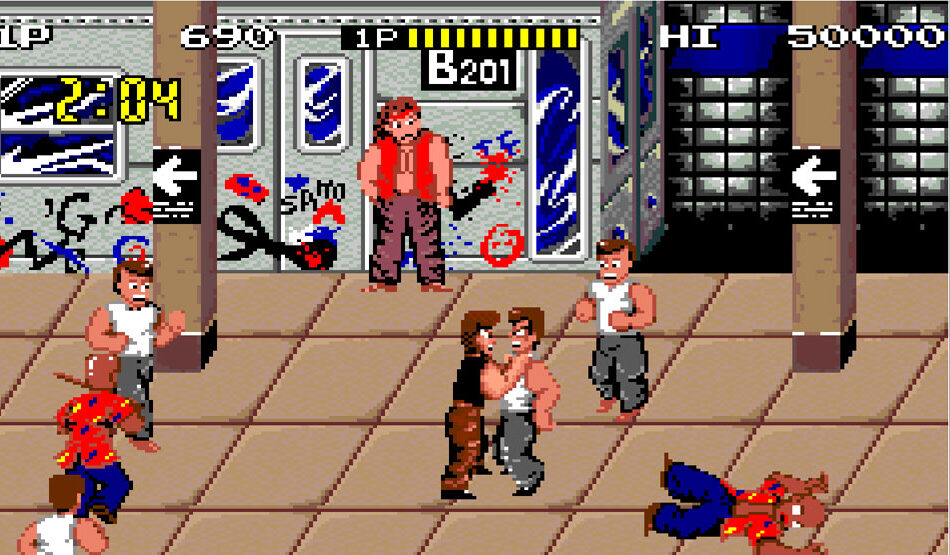
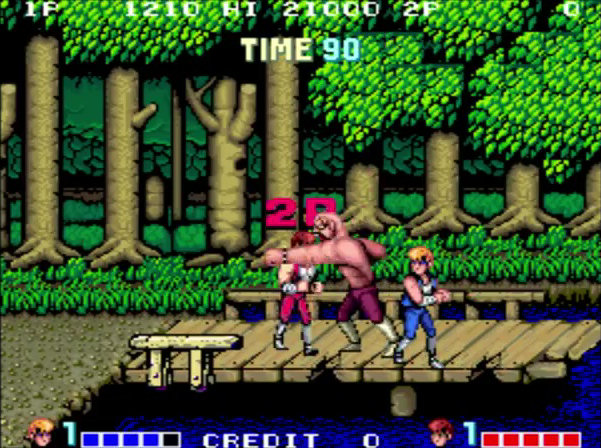
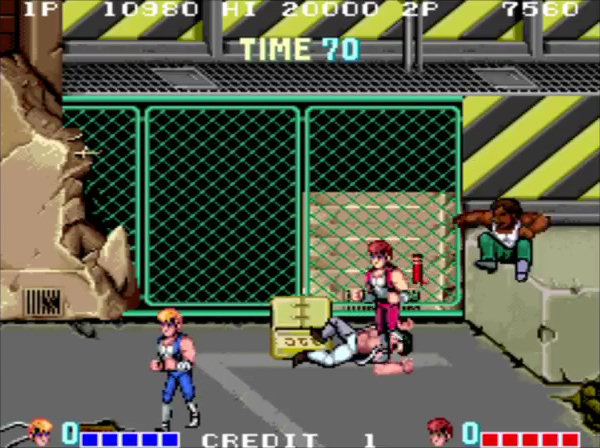
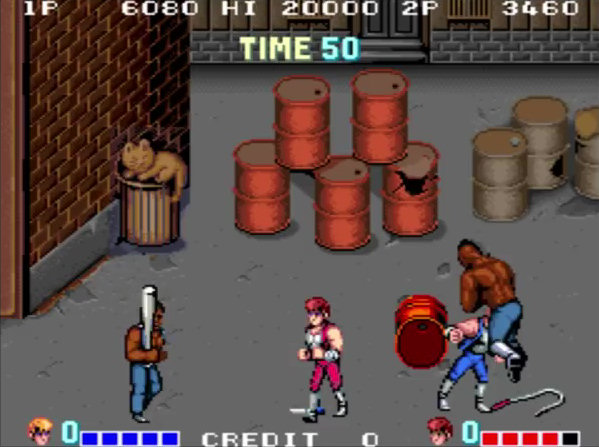
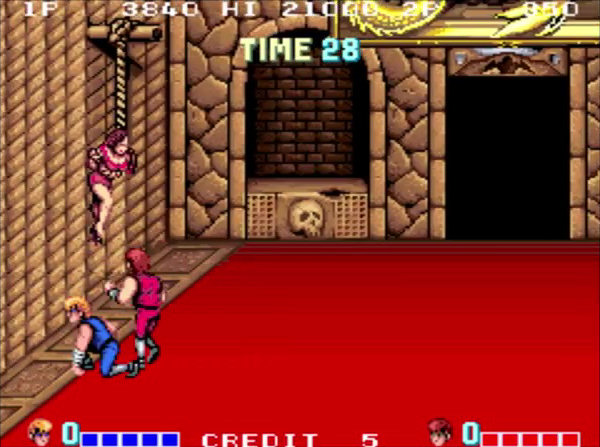
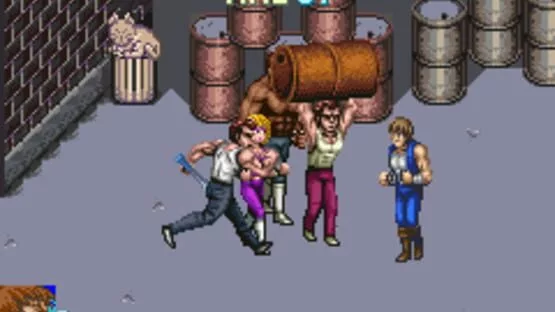
The mechanics themselves were a revelation. Players could punch, kick, elbow, jump, and even grapple enemies for throws. Weapons could be snatched from opponents and turned against them, whether baseball bats, whips, knives, or dynamite. The levels scrolled horizontally but also allowed for vertical movement, giving the impression of fighting across streets, alleys, and industrial complexes. Each enemy type had its own quirks, from the chain-wielding Linda to the massive Abobo, who became an enduring mascot of the franchise. The final twist was perhaps the most memorable: after defeating the Black Warriors’ leader, the two players had to fight one another for Marian’s affection, a brutal reminder that brotherhood could collapse into rivalry.
Reception was immediate and overwhelming. Double Dragon was a smash hit worldwide, filling arcades with duos of friends eager to test their skills. It quickly became one of the highest-grossing arcade games of 1987, helping Technōs Japan rise from a small studio to a global player. Industry veterans later recalled how lines would form in front of the machine, with kids placing their quarters along the bezel to reserve their spot. The combination of cinematic plot, cooperative play, and raw street-fighting appeal was unlike anything that had come before. As one player remembered in Electronic Gaming Monthly, “It was like being in your own action movie, except you could bring your best friend along.”
From a technical perspective, Double Dragon also showed how Japanese developers were thinking globally. While Kunio-kun (Renegade) leaned heavily on Japanese high school culture, Kishimoto and his team knew that Double Dragon had to resonate overseas. The characters, settings, and music were designed with an international audience in mind, and the gamble paid off. As Kishimoto put it years later, he wanted players everywhere to feel “the chaos of a real street fight, the danger, and the thrill of standing shoulder to shoulder with someone you trust.”
The arcade original was lightning in a bottle, a game that managed to balance depth with accessibility, cinematic flair with brutal simplicity. It was not just the birth of Billy and Jimmy Lee, but also the template for decades of beat ’em ups that followed. From Final Fight to Streets of Rage, every co-op brawler owed a debt to this small team at Technōs who decided that the streets were better fought in pairs.
The Console Ports and Home Adaptations
If the arcade version of Double Dragon was where legends were born, it was the home versions that spread the myth to bedrooms, living rooms, and schoolyards around the world. For many players, their first encounter with Billy and Jimmy Lee was not in the smoky din of an arcade, but on a Nintendo Entertainment System or Sega Master System tucked under a television. Porting the game was not just a technical challenge, it was a cultural event. Each version reflected the limitations and ambitions of the hardware, and together they made Double Dragon one of the most recognizable names of the late eighties.
The NES port was a huge hit.
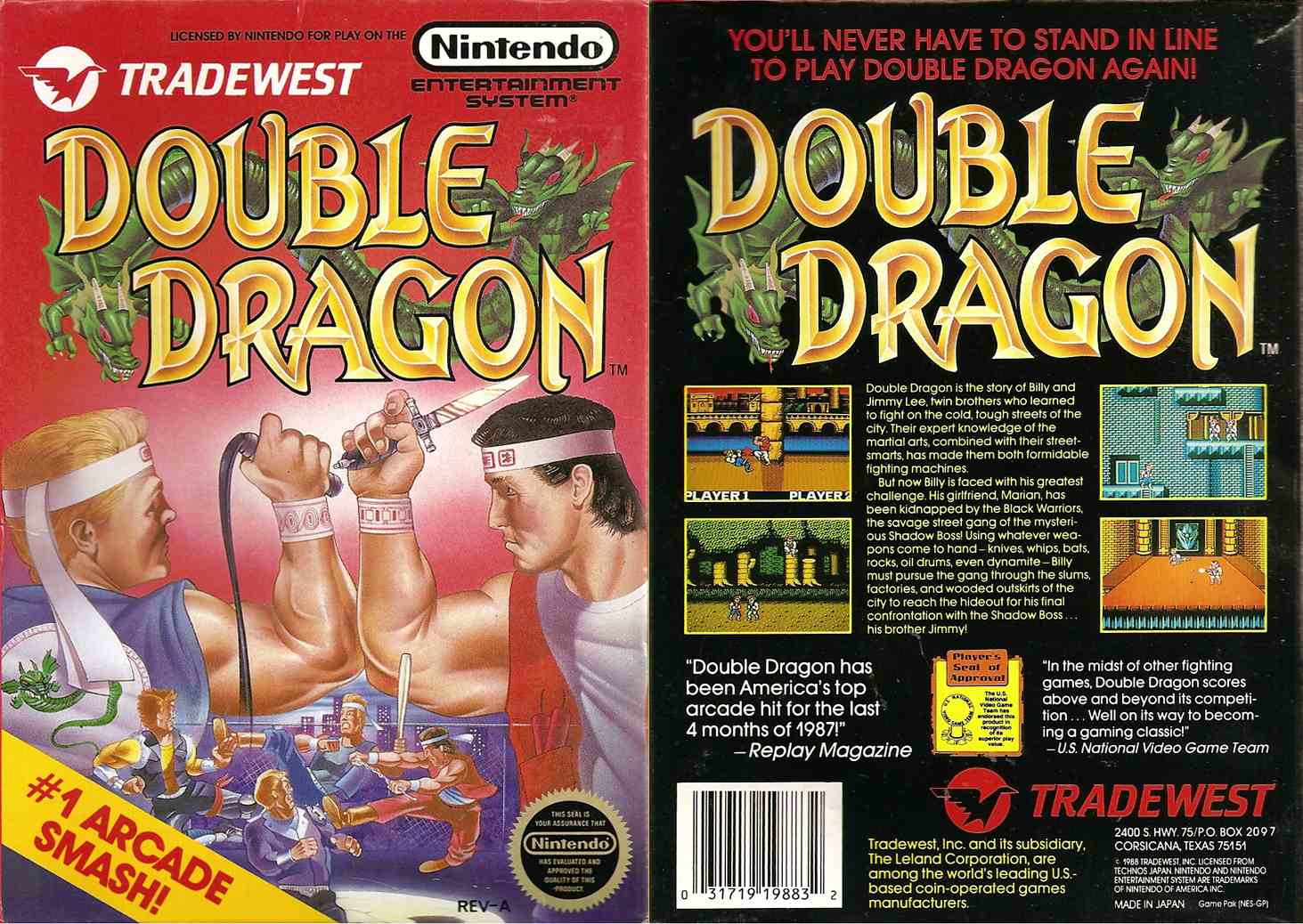
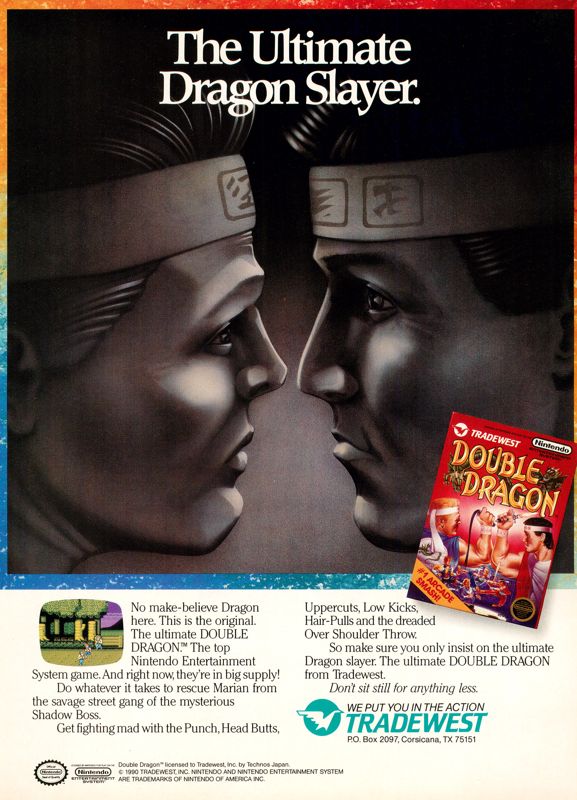
The most famous home adaptation was the NES version, released in 1988 by Tradewest in North America. Technōs Japan, at this point not yet licensed by Nintendo of America to publish directly, had partnered with Tradewest to handle publishing duties. The NES port was ambitious, but it diverged significantly from its arcade inspiration. Most notably, the two-player cooperative mode was missing, replaced with a competitive versus mode where players fought head-to-head in small arenas. This omission was due to technical limitations and cartridge space, but it changed the very soul of the game for kids who had fallen in love with the arcade experience. “It wasn’t really comparable to the arcade version,” recalled Jason Gross, “the missing ingredients were the two player co-op gameplay and the full arsenal of moves” (UnderScoopFire).
Still, the NES version had its own magic. It introduced a role-playing-style progression system where players unlocked new moves as they advanced through the game. Elbow smashes, jump kicks, and headbutts became rewards for perseverance, giving a sense of growth that appealed to younger audiences. The graphics were simplified, but the urban grit remained intact, and the chiptune soundtrack gave Kazunaka Yamane’s compositions a new, nostalgic voice. For many, this was the definitive Double Dragon, a Saturday morning ritual that became etched into memory. The game was even spotlighted in the very first issue of Nintendo Power, proof of its status as a tentpole release.
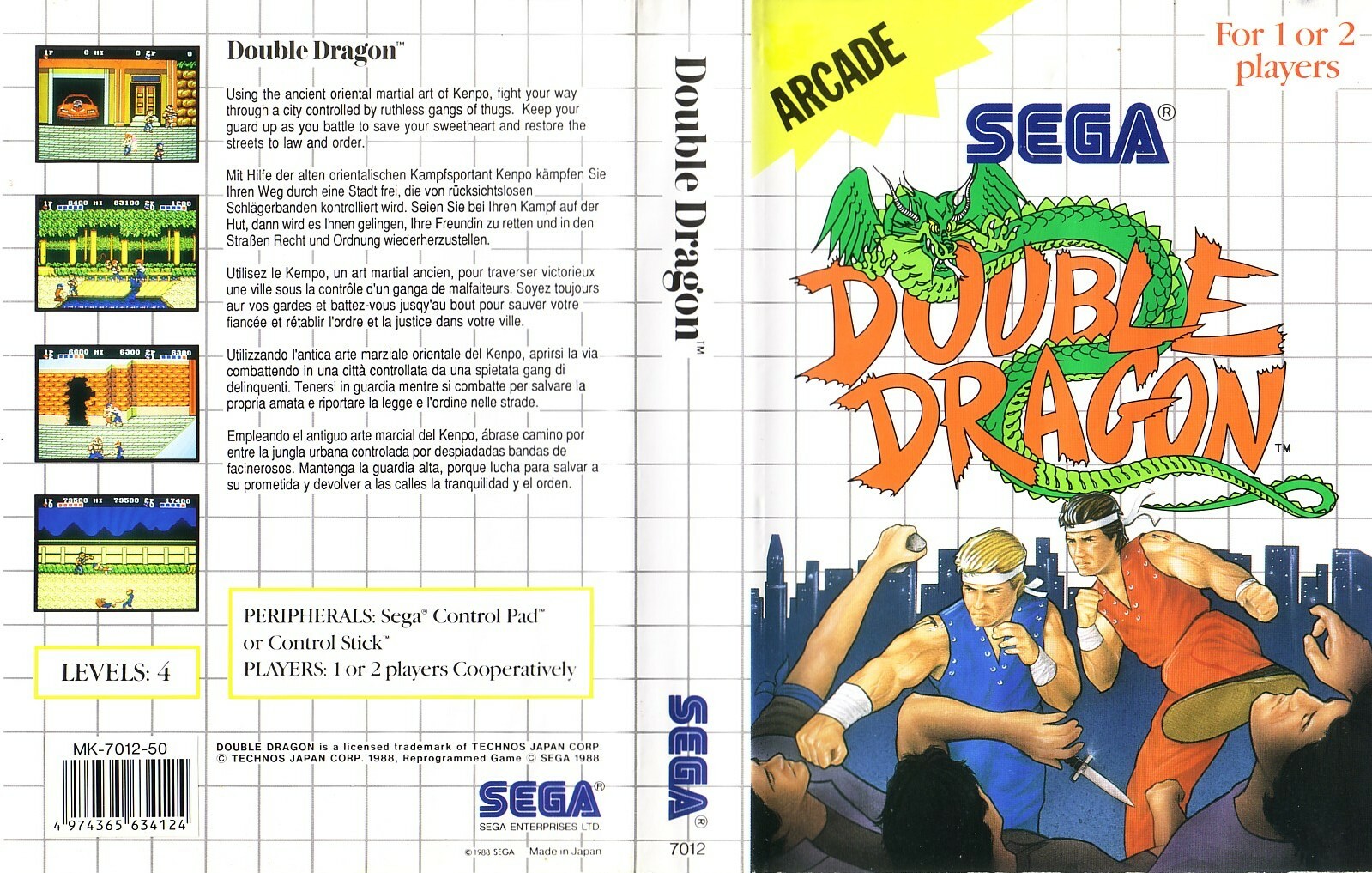
Sega’s Master System port, released in October 1988, came closer to capturing the spirit of the arcade. Published by Sega themselves, it restored the two-player mode and preserved more of the level design, though it still had its own quirks. The sprites were larger but less detailed, and the controls felt a bit looser, yet fans who had been disappointed by the NES’s missing co-op found this version to be a revelation. It became a favorite in Europe and Brazil, regions where the Master System had a stronger presence. Magazines of the time praised its faithfulness, with Computer and Video Games noting that “at last, the arcade thrill comes home.”
Not all ports fared so well. In 1989, Double Dragon made its way to home computers through Melbourne House under Tradewest’s licensing deal. Versions appeared on the Amiga, Commodore 64, Amstrad, Atari ST, ZX Spectrum, and IBM PC. Unfortunately, quality control was spotty. Many of these ports suffered from choppy animation, poor collision detection, and downgraded music. The charm of the arcade game was difficult to translate to such varied hardware, and while some versions like the Amiga held a degree of polish, others were notorious for their roughness. Still, they sold respectably thanks to the game’s name recognition, proving how powerful the Double Dragon brand had become.
There are those that prefer the SMS version over the NES. (Box Art)
In an odd twist, Activision even brought Double Dragon to the Atari 2600 in 1989, a system that had long been considered obsolete by then. The port was stripped down to its bones, with blocky graphics and rudimentary controls, yet for collectors and diehard Atari fans it was a curiosity worth owning. The Atari 7800 received its own version as well, which fared slightly better but still lacked the fluidity of the arcade. These ports demonstrated the wide net Double Dragon cast, reaching systems that had little business running such a complex brawler.
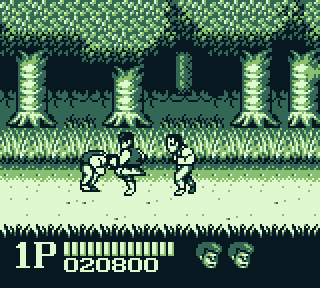
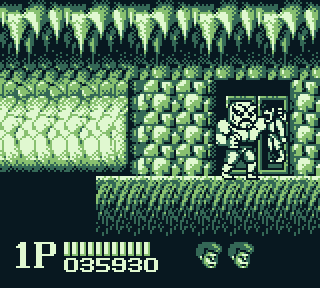
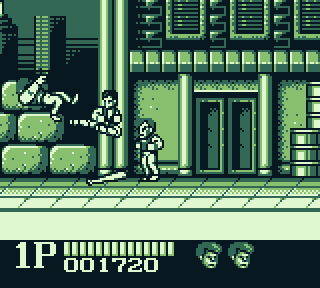
Portable gaming also got its share of the action. The Game Boy version, released in 1990 in Japan by Technōs and in North America by Tradewest, adapted the NES blueprint for the handheld screen. It kept the single-player progression system, but pared down the levels and simplified the visuals even further. Despite this, the portable novelty of taking Double Dragon on the go made it a minor hit, especially in playgrounds where trading cartridges and showing off new games was a rite of passage.
These adaptations collectively broadened the audience for Double Dragon far beyond arcades. While none of them captured the arcade original perfectly, they each carved out their own identity. The NES version was remembered for its progression system, the Master System version for its faithful co-op, the computer versions for their uneven charm, and the handhelds for their portability. Together they created a tapestry of shared experiences, ensuring that whether you grew up in Tokyo, New York, or London, the name Double Dragon was one you knew.
Sequels and Expanding the Legacy (Double Dragon II and III)
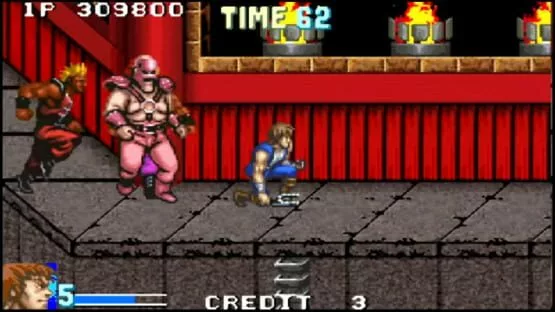
The success of Double Dragon in 1987 was so explosive that a sequel was inevitable. Technōs Japan wasted little time, and by December 1988 players were crowding around arcade cabinets for Double Dragon II: The Revenge. This time the stakes were higher, and the tone darker. The opening cutscene showed Marian, the damsel from the first game, gunned down in cold blood by the Black Warriors. It was a shocking and even bleak opening for an arcade game in the late eighties, signaling that the series was ready to lean into cinematic drama. For designer Yoshihisa Kishimoto, this was a deliberate choice. He wanted to give players a stronger emotional reason to fight, drawing once again from the gritty realism of street life he had experienced in his youth (Polygon).
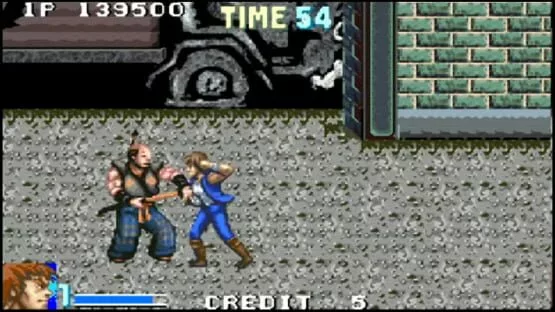
Mechanically, Double Dragon II both expanded and shifted the formula. Instead of the universal punch and kick buttons of the first game, it adopted the directional attack system from Renegade. One button attacked to the left, the other to the right, while pressing both together allowed for jump kicks and new techniques like the devastating cyclone spin kick. Players could still wield weapons and grab enemies, but the controls required more precision. It was a bold move that divided some players. Hardcore fans appreciated the nuance, while casual players sometimes struggled with the reversed controls in the heat of battle. Despite this, the game was a success in the arcades, offering new stages, weather effects like windswept rooftops, and a roster of enemies that felt larger and meaner.
At home, however, Double Dragon II became even more iconic. The NES version, released in 1989 in Japan and 1990 in the United States, was not a straight port of the arcade game but a reimagining by Technōs themselves. This version restored two-player co-op, something sorely missed from the first NES release, and added nine unique stages with scripted cutscenes between levels. It even introduced branching endings based on difficulty settings, a rare feature at the time. Critics and fans hailed it as one of the best beat ’em ups on the NES, and its combination of fast action, memorable music, and co-op fun made it a staple in countless households. Many who grew up in the era remember this version as the definitive Double Dragon II. Acclaim handled publishing duties in North America, having secured exclusive console rights after Tradewest’s earlier involvement.
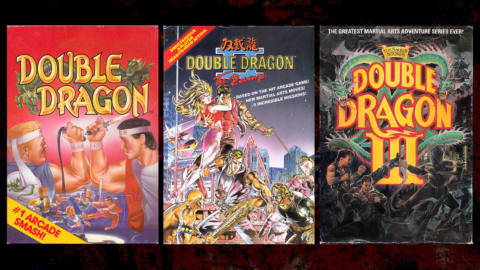
The triple threat.
While Double Dragon II cemented the franchise as a household name, the follow-up, Double Dragon III: The Rosetta Stone, revealed the challenges of sustaining momentum. Released in arcades in 1990, this sequel was developed not by the original Technōs team but by an outsourced group at East Technology (Wikipedia). The game shifted away from the urban grit of its predecessors and into a globetrotting plot about mystical artifacts and even Cleopatra. The most infamous change was the introduction of an in-game shop system where players could spend real quarters to purchase new moves, weapons, or even extra characters. This proto–microtransaction mechanic was ahead of its time, but it was seen as cynical and unfair by players. The gameplay itself lacked the tight balance of the first two games, and reception was lukewarm at best.
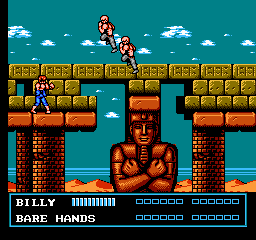
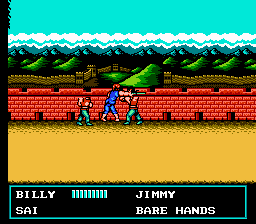
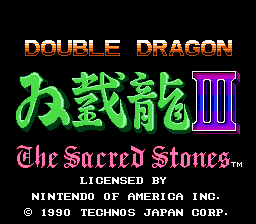
The console versions of Double Dragon III told a more complex story. The NES version, retitled Double Dragon III: The Sacred Stones and released in 1991, was developed in-house at Technōs Japan rather than by East Technology. It shared the same overarching premise of collecting stones, but the mechanics were heavily reworked. Instead of the controversial shop system, players could recruit defeated bosses to fight alongside the Lee brothers, switching between characters mid-battle. Each fighter had unique abilities and weapons, adding variety to the action. While difficult, this NES entry found more favor than its arcade counterpart, and many fans consider it a better true successor. Acclaim once again handled publishing in North America, cementing their role as the main console partner for the franchise.
Reception of Double Dragon III overall was mixed, and it marked the beginning of the series’ decline. The arcade version damaged the brand’s reputation, while the NES version, though stronger, could not recapture the magic of its predecessor. Critics pointed out that the genre itself was evolving, with Capcom’s Final Fight and later Sega’s Streets of Rage pushing brawlers into new territory with larger sprites, smoother animations, and flashier special moves. Technōs Japan was still innovating, but the industry was beginning to move past them.
Double Dragon III for NES
Double Dragon III for NES
Double Dragon III for NES
Still, Double Dragon II and III ensured that Billy and Jimmy Lee remained household names. For kids who played them in the late eighties and early nineties, these sequels were more than just games—they were rites of passage. Whether it was shouting with joy after landing a cyclone spin kick in The Revenge or cursing the brutal difficulty of The Sacred Stones, players carried those memories with them. The sequels may not have matched the raw impact of the first game, but they kept the legend alive and prepared the way for stranger experiments in the years to come.
Crossovers and Spin-offs (Battletoads, Super Double Dragon, and Beyond)
By the early 1990s, the beat ’em up genre was exploding with competition. Capcom’s Final Fight (1989) had set new standards in arcade presentation, while Sega was preparing to launch its Streets of Rage series on the Genesis. Technōs Japan, still riding the name recognition of Double Dragon, experimented with new directions for the Lee brothers. These experiments produced some of the strangest and most memorable spin-offs of the era, from a crossover with amphibian brawlers to an ambitious but unfinished Super Nintendo title.
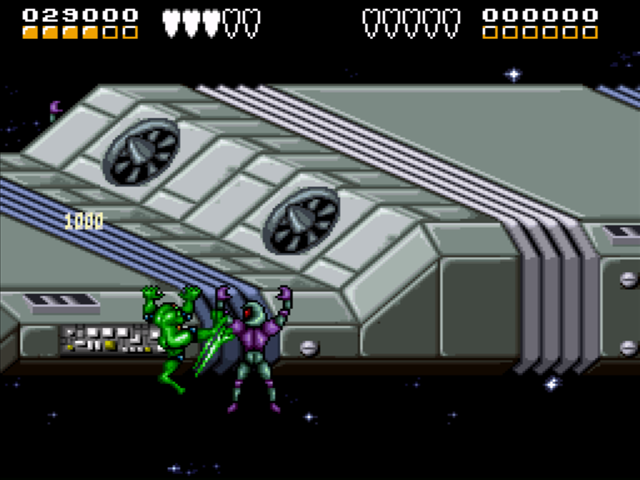
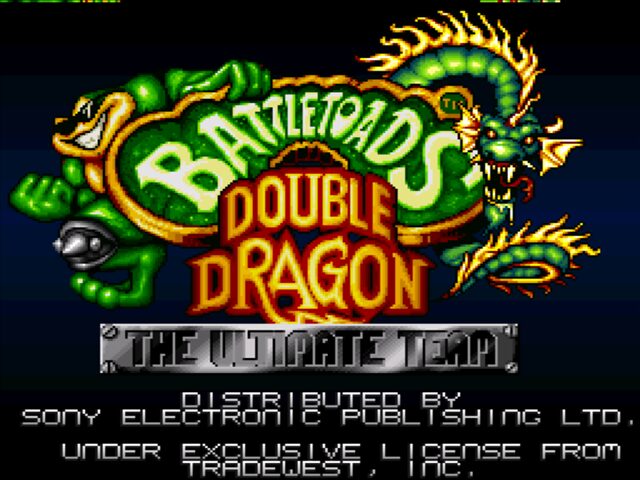
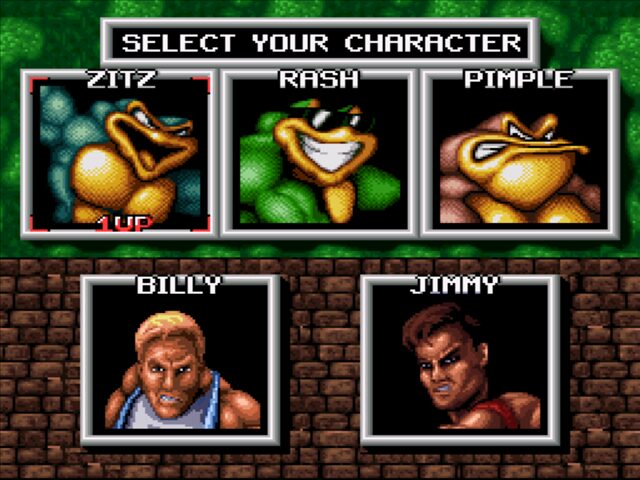
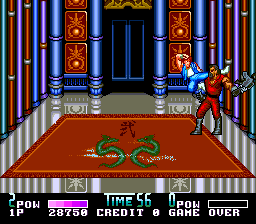
The most unusual collaboration came in 1993 with Battletoads & Double Dragon: The Ultimate Team, developed by Rare and published by Tradewest. On paper it sounded bizarre, but in practice it was a dream for kids who loved over-the-top action. The game paired Billy and Jimmy Lee with Rash, Zitz, and Pimple from Rare’s Battletoads series. Together they fought through a mix of space levels, alien spacecraft, and street brawls to take on the Dark Queen and her minions. The game played more like a Battletoads title than a Double Dragon one, but it gave the Lee brothers a fresh context and introduced them to a younger audience raised on cartoonish mascots. Versions appeared on the NES, SNES, Genesis, and Game Boy, and while reviews were mixed, the crossover was celebrated as a novelty. For many players, this was the first time they encountered Billy and Jimmy, which speaks to the cultural cachet Double Dragon still carried.
A year earlier, Technōs had tried to bring the brothers into the 16-bit era with Super Double Dragon for the Super Nintendo. Known as Return of Double Dragon in Japan, the game was developed internally at Technōs Japan but released in a rushed and unfinished state. Designer notes and later interviews suggest that features were cut late in development, leaving the game with unpolished balance and a somewhat abrupt ending. Even so, Super Double Dragon introduced several interesting mechanics.
Players could now block attacks, grab enemies in mid-air, and charge up a special Dragon Power meter to unleash enhanced techniques. Weapons had more nuanced animations, and for the first time Billy and Jimmy controlled differently, giving the game a hint of character variety. The Japanese version included additional features such as an options menu and an extra stage, making it more complete than its Western counterpart. Despite these upgrades, reception was muted compared to the excitement generated by Final Fight and Streets of Rage. Critics felt Super Double Dragon was solid but unspectacular, and its lack of polish limited its long-term impact.
Other spin-offs pushed the brand in strange directions. The PC Engine version of Double Dragon II, released by Naxat Soft in 1993, was a hybrid of the Famicom game and the arcade version, complete with new animated cutscenes and voice acting. It was a cult favorite in Japan, showcasing how versatile the license had become. The brothers also made cameo appearances in other Technōs games, such as Super Spike V’Ball and even the wrestling title WWF Superstars, where Billy was spotted cheering in the crowd. These Easter eggs kept the characters visible even when the main series faltered.
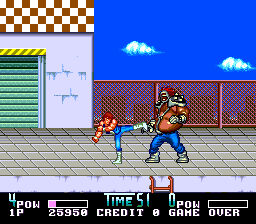
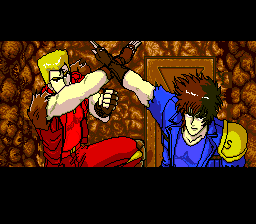
DOUBLE DRAGON II PC ENGINE
DOUBLE DRAGON II PC ENGINE
DOUBLE DRAGON II PC ENGINE
Yet the experimentation came with risks. By spreading the brand across so many platforms and styles, Technōs and its partners sometimes diluted the core identity of Double Dragon. Fans who fell in love with the raw street-fighting grit of the 1987 arcade game were not always satisfied with globetrotting mysticism, crossovers with cartoon toads, or half-finished SNES entries. Meanwhile, competitors were refining the genre, producing beat ’em ups with larger sprites, better controls, and cinematic flair. The Lee brothers were still in the fight, but they were starting to feel like veterans in a battlefield that had moved on.
Despite its uneven output, this era showed that Double Dragon was more than just one game—it was a flexible brand. It could be reimagined in crossovers, adapted into new hardware, and even stretched into hybrid mechanics like blocking and charge moves. If nothing else, it proved that Billy and Jimmy Lee were icons who could survive strange experiments and still come out swinging.
The 1990s Multimedia Boom: Cartoon, Movie, and Merchandising
By the early 1990s, Double Dragon had achieved the kind of brand recognition that most game studios could only dream of. Billy and Jimmy Lee were no longer just arcade heroes, they were icons of an era. In an industry where games were increasingly being spun into broader media empires—Super Mario Bros. had its animated shows, Street Fighter was on its way to an animated movie and live-action film, and Teenage Mutant Ninja Turtles dominated Saturday morning cartoons—it seemed inevitable that Double Dragon would make the leap. What followed was a wave of adaptations and merchandise that tried to turn the series into a multimedia empire. The results, however, were uneven at best.
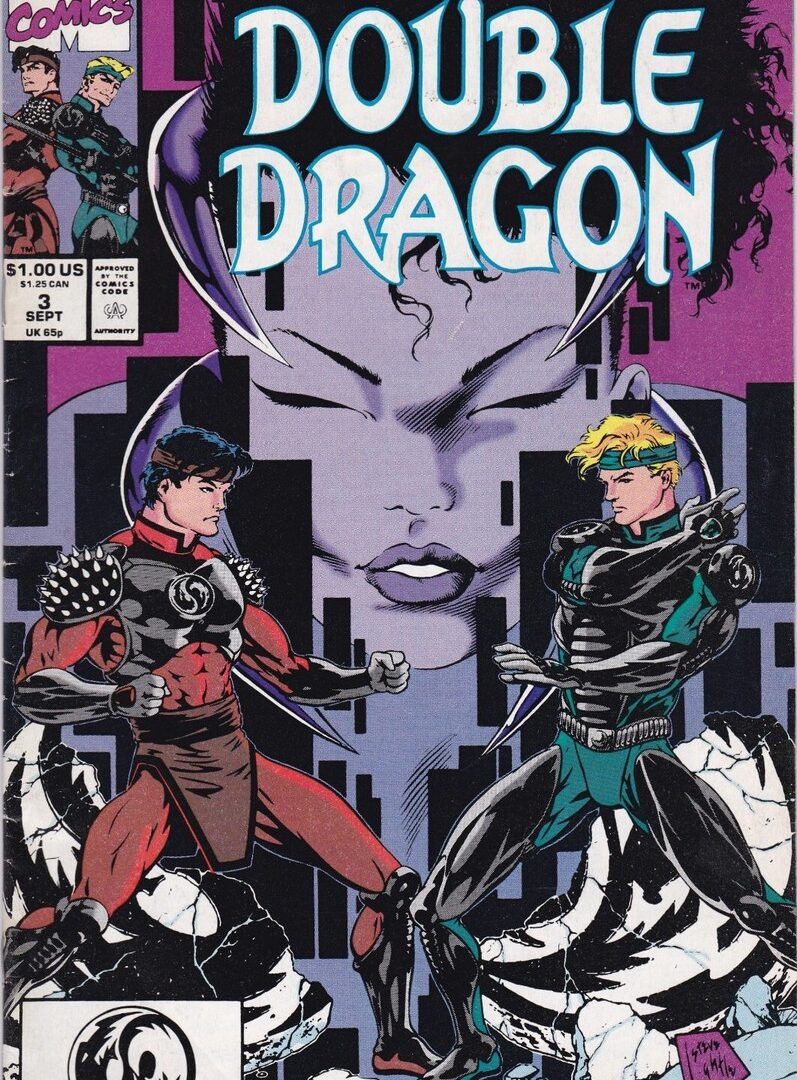
The first step into new territory came in 1991 with Marvel Comics, which published a six-issue Double Dragon miniseries. Running from July to December, it bore little resemblance to the games aside from the names of Billy and Jimmy. Plots leaned into exaggerated comic book tropes rather than the gritty street fighting that had defined the franchise. While it generated some curiosity, it was hardly a critical success and is remembered today more as a curiosity than a meaningful extension of the franchise. Still, it set the stage for further expansions into Western media.
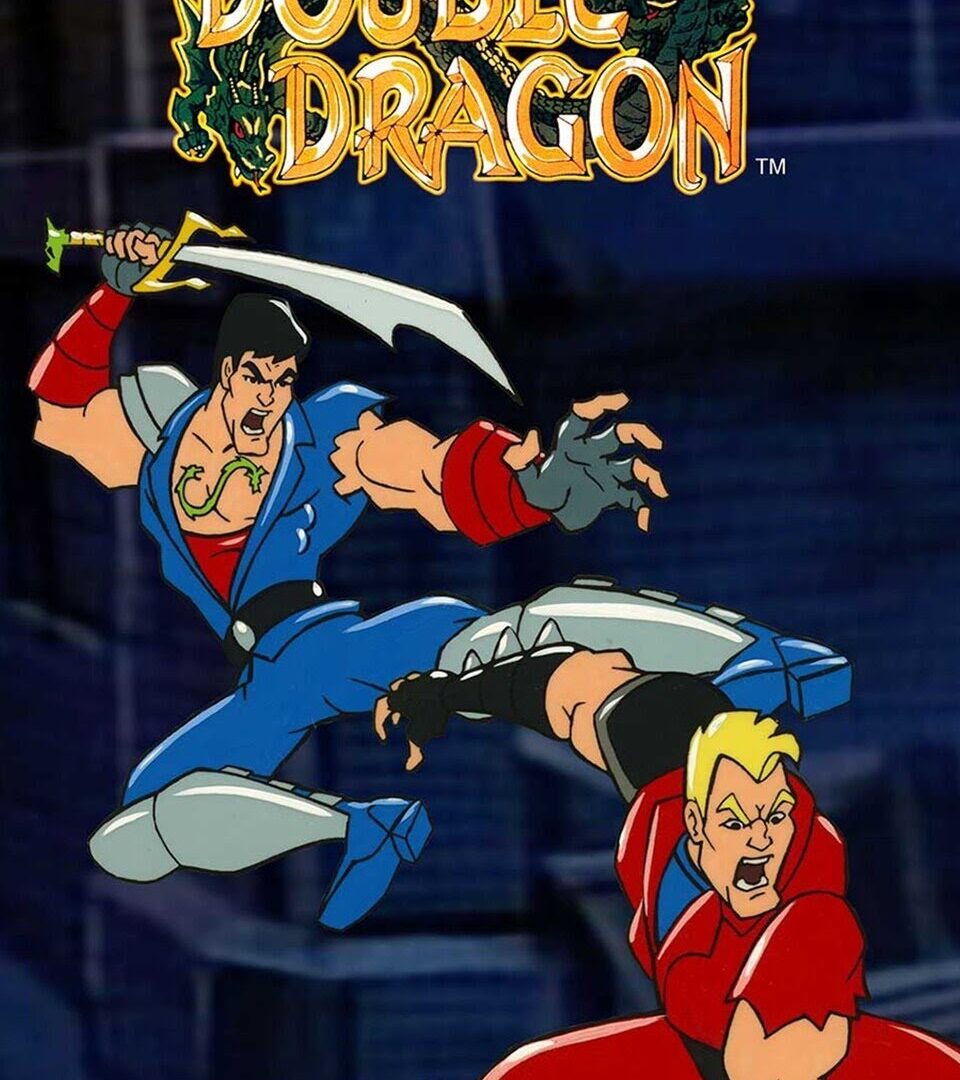
The most visible leap came with the Double Dragon animated series, produced by DiC Entertainment in 1993. Running for 26 episodes over two seasons, it radically reimagined the Lee brothers. Instead of being simple martial artists from the streets, they were portrayed as twin brothers separated at birth, each trained by opposing ninja masters. They eventually reunited to fight the evil Shadow Master, wielding magical swords and supernatural powers. It bore almost no resemblance to the games beyond the names and the concept of brotherhood. Kids who were fans of the show sometimes came to the games expecting similar fantastical elements, only to find a very different world. Critics at the time were unimpressed, with many dismissing it as a generic cartoon cash-in. Still, for children who caught it during its original run, the theme song and imagery remain a nostalgic memory.
DOUBLE DRAGON MOVIE
DOUBLE DRAGON COMIC
DOUBLE DRAGON CARTOON
The most infamous adaptation was undoubtedly the 1994 live-action film, produced by Gramercy Pictures and directed by James Yukich. Starring Scott Wolf as Billy, Mark Dacascos as Jimmy, Alyssa Milano as Marian, and Robert Patrick as the villain Koga Shuko, it reimagined Double Dragon as a campy post-apocalyptic action comedy. Set in a ruined Los Angeles of the future, the movie featured magical medallions, slapstick humor, and outlandish villains. Fans of the games were bewildered, and critics savaged it. The film grossed only $2.3 million at the U.S. box office and quickly faded, although it later became a cult curiosity for its sheer camp value. Today, it is often remembered alongside the Super Mario Bros. movie as an example of early Hollywood’s struggle to adapt video games into film.
Merchandising followed in the wake of these adaptations. Action figures, trading cards, and branded accessories appeared, largely tied to the cartoon. These items enjoyed brief popularity, but unlike Ninja Turtles or Power Rangers, the Double Dragon line never achieved lasting momentum. The brand was strong enough to justify the attempts but not consistent enough to support a long-term merchandise empire.
Looking back, the 1990s multimedia boom was both a blessing and a curse for Double Dragon. On one hand, it expanded the franchise’s cultural footprint beyond the arcade and console, embedding Billy and Jimmy Lee into the larger landscape of early 90s pop culture. On the other, it diluted the identity of the series, stretching it into cartoons about magic swords and movies about mystical medallions, far from the street-level fights that had defined its origins. For kids, these projects were another doorway into the brand. For long-time fans, they were often a painful reminder of how quickly commercial ambition could warp a beloved game.
Double Dragon in the 2000s: Dormancy and Revival Attempts
By the late 1990s, Double Dragon had lost much of its cultural momentum. The arcade scene was shrinking, 3D graphics were dominating home consoles, and beat ’em ups as a genre were considered outdated compared to the rise of one-on-one fighters like Tekken and expansive RPGs like Final Fantasy VII. When Technōs Japan filed for bankruptcy in 1996, the future of Billy and Jimmy Lee seemed uncertain. Their creators had scattered, and the intellectual property rights passed through different hands, leaving the series without a clear steward. For the first time in a decade, the Lee brothers were no longer fixtures of the gaming landscape.
Yet the brand never completely disappeared. In the early 2000s, nostalgia for the 8-bit and 16-bit eras began to resurface, and small projects attempted to bring Double Dragon back. The most notable was Double Dragon Advance in 2003, developed by Million Co., Ltd., a studio formed by former Technōs staff. Published by Atlus in Japan and by Atlus USA in North America, this Game Boy Advance remake was more than a simple port. It combined the core levels of the 1987 arcade game with content drawn from across the series, including moves and enemies from Double Dragon II and III. It even introduced brand new stages and refined mechanics, such as smoother controls and more dynamic combos. Fans hailed it as the definitive version of the game, with some calling it the true spiritual successor to the series. Even today, many retro enthusiasts recommend Double Dragon Advance as the best way to experience the franchise’s roots.
DOUBLE DRAGON ADVANCE GBA SCREENSHOT
DOUBLE DRAGON ADVANCE GBA SCREENSHOT
DOUBLE DRAGON ADVANCE GBA SCREENSHOT
Other revival attempts were less successful. In 2007, Empire Interactive released a port of the NES version of Double Dragon on Xbox Live Arcade for the Xbox 360. Developed by Digital Eclipse, this version retained the quirks of the NES original but added online leaderboards and achievements. While it was a novelty for fans to revisit the game digitally, critics noted that the graphics and mechanics felt archaic compared to modern titles, limiting its appeal beyond the nostalgic core audience. Still, it marked the beginning of digital re-releases that would become more common in the years ahead.
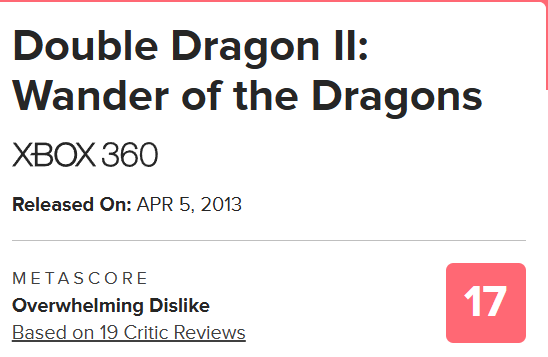
The darkest mark on this era came in 2012 with Double Dragon II: Wander of the Dragons, developed by Korean studio Gravity Co., Ltd. and released on Xbox Live Arcade. Intended as a 3D remake of Double Dragon II: The Revenge, it was plagued with technical issues, clunky controls, and uninspired design. Reviewers panned it mercilessly, with Metacritic recording a score of just 17/100, making it one of the worst-rated games on the platform. Fans considered it an embarrassment to the franchise’s legacy, and it served as a reminder of how fragile nostalgic revivals could be when handled poorly.
Ouch!
Despite these ups and downs, the early 2000s proved that Double Dragon still had loyal fans who longed for a proper return. Websites and forums dedicated to retro gaming buzzed with discussions, longplays, and fan hacks. Emulators made it possible for a new generation to discover the arcade and console originals, while YouTube introduced playthroughs and remixes of Kazunaka Yamane’s unforgettable soundtrack. In this way, even when the official releases stumbled, the community itself kept the brothers alive.
The 2000s were not the triumphant years of the arcade golden age, but they were a bridge. They showed that Double Dragon could endure in the shadows, biding its time, waiting for a moment to step back into the light. And that moment came in the next decade, with a neon-soaked reimagining that would remind the world why Billy and Jimmy mattered in the first place.
Double Dragon Neon and Modern Resurgence
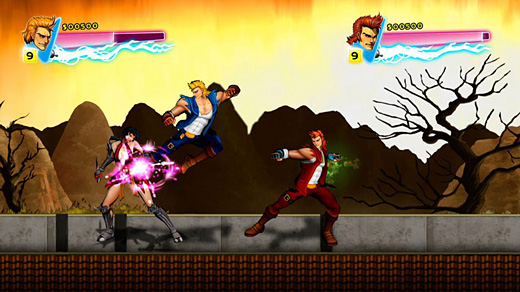
By the early 2010s, retro nostalgia had transformed from a niche interest into a full-blown movement. Classic game compilations, remakes, and retro-inspired indies were filling digital storefronts. It was the perfect climate for Double Dragon to make a comeback, and the project that finally restored some dignity to the brand was Double Dragon Neon, developed by WayForward Technologies and released digitally for PlayStation 3 and Xbox 360 in 2012.
Double Dragon Neon Screen
WayForward approached the revival with a mix of reverence and parody. Instead of attempting to modernize Double Dragon into a realistic 3D fighter, they leaned into the exaggerated neon-soaked culture of the 1980s that had originally birthed the series. Billy and Jimmy were recast as over-the-top action heroes, complete with big hair, cheesy one-liners, and a soundtrack that paid tribute to glam rock and synthwave. The game included classic side-scrolling brawler mechanics but layered in a light RPG system with collectible mixtapes that granted buffs and new abilities. Enemies were flamboyant caricatures, and the final showdown with Skullmageddon—a campy skeleton villain straight out of Saturday morning cartoons—felt like both a joke and a love letter to the series’ roots.
Critically, Double Dragon Neon was received far better than most previous revival attempts. Reviewers praised its humor, its vibrant art direction, and its willingness to poke fun at itself. While some critics noted that the combat could feel repetitive, many agreed that it captured the spirit of the franchise while also refreshing it for a modern audience. Fans embraced it as a cult classic, especially for its unforgettable soundtrack composed by Jake Kaufman, whose tracks combined 80s rock riffs with tongue-in-cheek lyrics that celebrated everything cheesy about the era. Kaufman’s reimagining of Kazunaka Yamane’s original arcade themes showed just how deeply the revival was rooted in nostalgia.
Daniel Weissenberger of Game Critics had this to say:
Beautiful design work, humourous absurdity, legitimately great music, all working to support the great core gameplay. Neon is probably the best Double Dragon game yet, and it contains enough great elements it to warrant a sequel or two. Who knows? I wouldn’t be surprised if this version of the franchise wound up outlasting the original. Rating: 8.5 out of 10.
Double Dragon Neon Screen
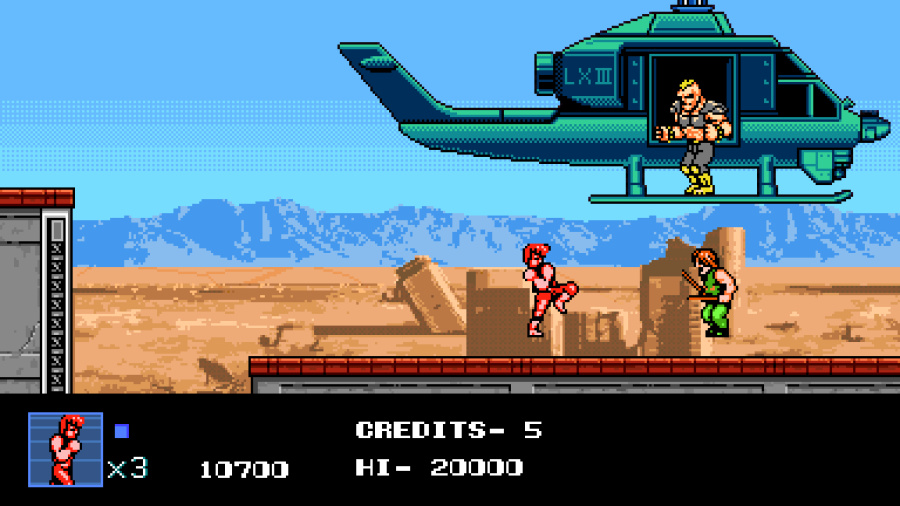
The success of Neon proved that there was still life in the franchise, and it paved the way for a new era of stewardship. In 2015, Arc System Works, best known for fighting series like Guilty Gear and BlazBlue, acquired the rights to Double Dragon. This move gave fans hope that the series would be handled with care by developers who respected its fighting heritage. Their first major step was Double Dragon IV, released in 2017 for PlayStation 4 and PC. Unlike Neon, this game aimed to replicate the style of the original NES entries, right down to the 8-bit sprites and chiptune soundtrack. Developed with the help of former Technōs staff, it was essentially a direct continuation of the NES trilogy rather than the arcade storyline (GameDeveloper).
Reception of Double Dragon IV was mixed. Some praised its authenticity, appreciating how it looked and played like a lost NES cartridge from 1991. Others criticized it for failing to modernize the series in meaningful ways, calling it more of a nostalgia piece than a true new entry. Yet for purists, the game was significant—it showed that the creators themselves still had a hand in shaping Billy and Jimmy’s adventures, and it honored the legacy in a way that more cynical revivals had not.
Double Dragon 4 plays the nostalgia card harder than most, but its narrow-sighted reliance on this has left it feeling like a relic that perhaps shouldn’t have been disturbed. The combat can be simplistic fun but is ruined by cheap AI, and the trio of modes don’t offer much to stick around for. The presentation is a cool look back at the 80s school of design, but once the novelty wears off, you’re left with a frustrating beat-em-up that inadvertently highlights the leaps in gameplay, animation, and visuals that games have made over the last three decades.
At the end of the day, Double Dragon IV feeds off the nostalgia of those who spent their youth playing the NES classic titles. While some may argue that the arcade version of the game was a better version of Double Dragon, there is a certain charm to the 8-bit NES visuals and sound effects. If online multiplayer had been added to Double Dragon IV, it might have helped alleviate the lack of replay value the game suffers from.
Beyond these official releases, Double Dragon has remained part of the modern retro landscape through collections, re-releases, and ongoing fan enthusiasm. Digital storefronts like Nintendo’s eShop, PlayStation Network, and Steam have made the classic arcade games and console ports accessible to a new generation. Meanwhile, emulation communities continue to keep the series alive, with speedruns, ROM hacks, and fan-made mods offering fresh spins on the familiar streets. Events like Games Done Quick have even featured speedruns of Double Dragon II, showing how the game still commands respect among competitive players.
Taken together, Double Dragon Neon and Double Dragon IV represent two sides of the modern resurgence. One embraced humor and reinvention, the other leaned hard into authenticity and nostalgia. Both proved that the brothers still had fight left in them, and that even decades after their debut, players still cared enough to throw a quarter—or download code—into the machine and hit the streets again.
Fan Community, ROM Hacks, and Emulation
If official revivals kept Double Dragon breathing in spurts, it was the fans who ensured the heart never stopped beating. Long after Technōs Japan went bankrupt and long after the arcade cabinets were retired to basements or junkyards, the community kept the Lee brothers alive through emulation, ROM hacking, mods, and passionate online spaces. These unofficial projects did more than preserve the past, they reinvented it, often filling the gaps left by developers who had moved on.
Emulation was the first great lifeline. In the late 1990s and early 2000s, as programs like MAME (Multiple Arcade Machine Emulator) spread across the internet, players rediscovered the 1987 arcade original and its sequels. For many, this was the first chance to play the authentic version after years of knowing only the NES or Master System adaptations. Enthusiasts documented every difference: the sharper sprites, the full co-op experience, the infamous slowdown during heavy battles. Online communities swapped stories about their first time revisiting Abobo or grappling with the awkward directional controls of Double Dragon II. For a generation raised on cartridge ports, emulation felt like opening a time capsule, and it gave the franchise a new digital afterlife.
ROM hacks and fan projects soon followed. Some were small tweaks, like difficulty adjustments or graphic overhauls. Others were ambitious reimaginings. One fan project recreated Double Dragon Advance for PC, ensuring that the beloved Game Boy Advance title could be preserved and shared more widely. Hackers inserted new moves, swapped out enemies, and even remixed levels to make the games feel fresh. In communities like ROMhacking.net, players traded patches that turned old cartridges into new adventures. These efforts kept the brothers relevant in a way that no official release could have matched. They weren’t just replaying the games, they were reshaping them. Check out some of the ROM hacks here, on ROMhacking.net.
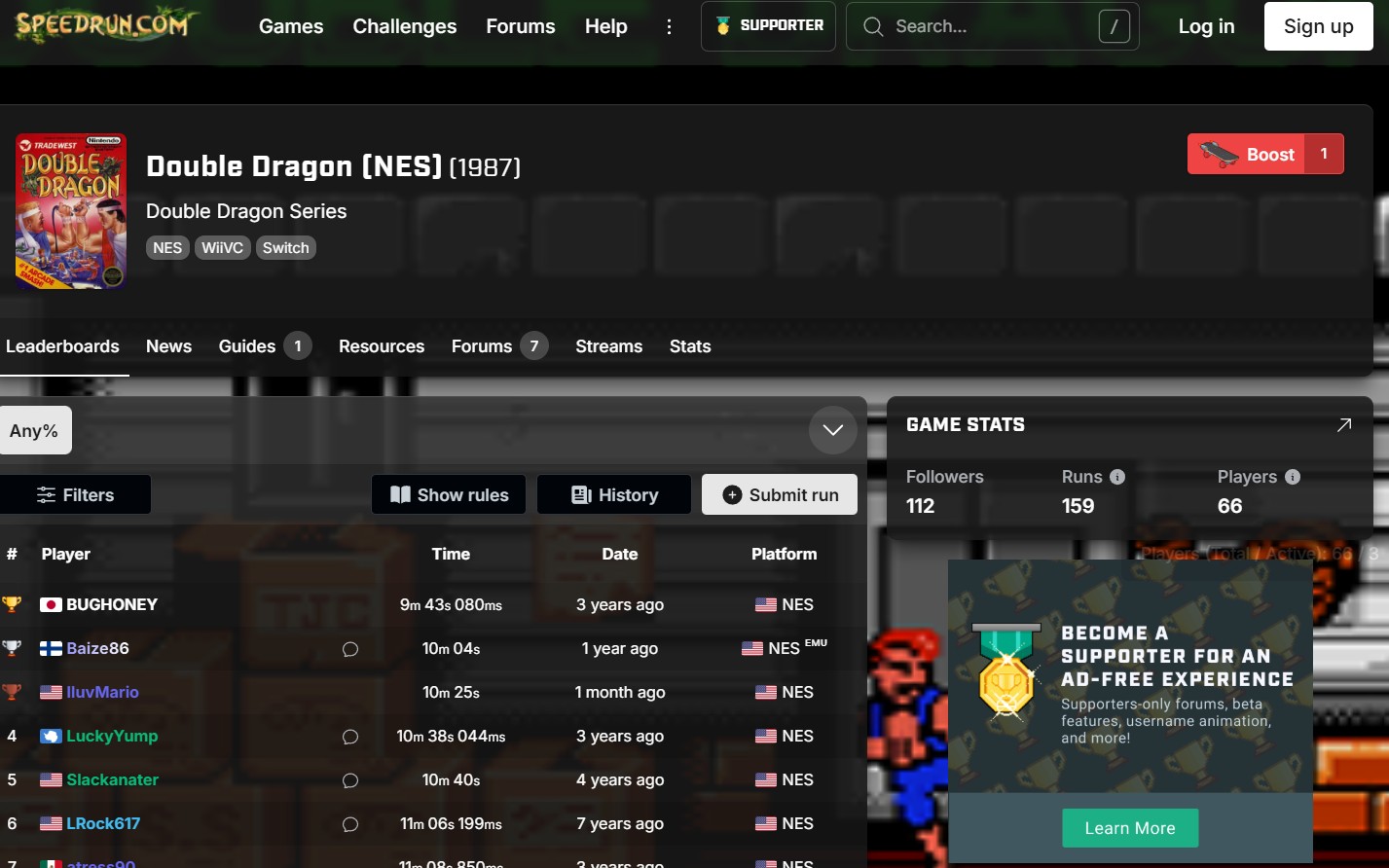
The speedrunning community also embraced Double Dragon. Games Done Quick and other charity marathons have featured runs of both the NES and arcade versions, showcasing not just nostalgia but technical mastery. Watching players exploit glitches to finish the NES Double Dragon II in under 10 minutes is both awe-inspiring and hilarious, a testament to how thoroughly fans have dissected the code. These runs introduced the series to younger viewers who may never have seen a physical cabinet, passing the torch from the 1980s arcade crowd to the Twitch and YouTube generation.
Fan preservation efforts extended beyond gameplay. Websites like DoubleDragonDojo and Kontek’s Double Dragon timeline (source) have meticulously archived box art, magazine scans, developer interviews, and fan fiction. Community forums buzzed with debates about which version of the game was definitive, or whether Double Dragon II on NES outshone the arcade sequel. The very existence of these archives shows the depth of passion surrounding the franchise. Even as other brawlers faded into obscurity, Double Dragon retained a dedicated fanbase determined to keep the flame alive.
The emulation and hacking scene also gave rise to crossover creativity. Fans mashed Double Dragon with other franchises, imagining what it would be like to pit Billy and Jimmy against the cast of Streets of Rage or to reskin the game with modern sprites. Some projects took the form of MUGEN fighting game mods, where the Lee brothers duked it out with characters from entirely different universes. While unofficial, these experiments reflected the same spirit of playful reinvention that had driven Rare’s Battletoads & Double Dragon decades earlier.
Ultimately, the fan community has been the lifeblood of Double Dragon. When developers moved on, when publishers lost interest, and when the brand risked fading into memory, it was the fans who kept it alive. Through emulation, ROM hacks, longplays, speedruns, and online archives, they ensured that Billy and Jimmy Lee would always have a home on the digital streets. It’s a reminder that gaming history is not just written by companies but by the people who carry the memories forward, refusing to let them die.
From its humble beginnings in a cramped Tokyo office to its reign in arcades, from Saturday morning cartoons to bargain-bin VHS movies, Double Dragon has traveled a long and winding road. Few franchises embody both the heights of 1980s arcade glory and the pitfalls of overexposure quite like Billy and Jimmy Lee’s saga. At its peak, the series redefined what cooperative play could be, giving kids around the world the thrill of standing shoulder to shoulder and taking on the streets together. At its lowest points, it became a symbol of how quickly commercial ambition could dilute an idea, leaving behind missteps like the ill-fated live-action film or the disastrous Wander of the Dragons.
And yet, the resilience of Double Dragon is undeniable. For every failed revival, there has been a reminder of why the series mattered in the first place. Double Dragon Advance showed how timeless the formula could be when handled with care. Double Dragon Neon proved that parody and homage could coexist, recapturing the absurd joy of the 1980s while introducing new players to the franchise. Double Dragon IV demonstrated that even decades later, the developers themselves still cared enough to return to their roots. Through it all, the sound of Yamane’s pounding soundtrack, the crunch of an elbow smash, and the sight of Abobo barreling onto the screen remain etched into the memories of players everywhere.
Perhaps the most enduring part of the Double Dragon story is the community that kept it alive. Emulators, fan hacks, speedruns, and lovingly curated archives have turned the franchise into more than just a relic of its time. They have transformed it into a living history, one that can be revisited, reshaped, and rediscovered by every new generation. The Lee brothers may have been fictional martial artists, but their resilience mirrors that of the fans who refuse to let them fade away.
Double Dragon is not just a series of games. It is a shared memory of quarters lined up on arcade bezels, of siblings huddled around a television unlocking new moves, of laughter and frustration in equal measure. It is proof that even the simplest of stories—a kidnapped girlfriend, a pair of brothers, and a gang of enemies—can become immortal when wrapped in the right mix of gameplay, music, and heart. As long as players keep picking up controllers, Billy and Jimmy Lee will never stop answering the call of the streets.
If you enjoyed this deep dive into Double Dragon, be sure to check out our other entries in the series. We’ve covered the grisly arcade mayhem of Splatterhouse, the futuristic brutality of Death Duel, and the unforgettable JRPG magic of Lunar: Silver Star and Eternal Blue. Each article captures a different slice of gaming history, and together they tell the story of how these classics shaped the eras they came from.
Loved DD1 (it was one of the only games I had back in the day). I got the others a few years later, but I spend so much time on the first. I can still hear the music!
 Retro Replay Retro Replay gaming reviews, news, emulation, geek stuff and more!






Loved DD1 (it was one of the only games I had back in the day). I got the others a few years later, but I spend so much time on the first. I can still hear the music!
I think you should be auto approved for posting now!? Yes John, DD1 was a classic. 2 was near perfect. I never cared for 3 much!