 Retro Replay Retro Replay gaming reviews, news, emulation, geek stuff and more!
Retro Replay Review
Gameplay
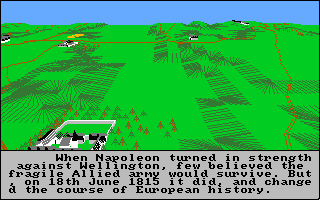
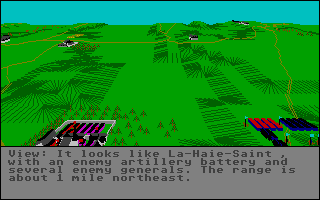
Waterloo’s gameplay shines in its dedication to historical authenticity, placing you directly in the boots of either Napoleon or Wellington. Unlike many wargames that offer a broad strategic overview, Waterloo restricts your vision to the same vantage point as real commanders on the field. This limited sightline forces you to make decisions under uncertainty, mirroring the “fog of war” that generals of 1815 would have faced.
(HEY YOU!! We hope you enjoy! We try not to run ads. So basically, this is a very expensive hobby running this site. Please consider joining us for updates, forums, and more. Network w/ us to make some cash or friends while retro gaming, and you can win some free retro games for posting. Okay, carry on 👍)
The game’s command system revolves around pre-radio communication, requiring you to draft orders via a text parser. As you issue commands, you must contend with the inherent delays of messengers traversing the battlefield. A message sent to a brigade might be intercepted, delayed, or even ignored based on local conditions and the temperament of the officer on duty. This mechanic adds a palpable tension to every decision: will your directive arrive in time to turn the tide, or will crucial moments slip by while you wait?
Adding another layer of realism, subordinate officers bring different levels of competence and courage to the fight. Even a perfectly timed order can be called off if your chosen commander lacks the backbone or situational awareness to carry it out. You’ll find yourself weighing the risks of ordering a bold flanking maneuver against the possibility that it’ll be executed halfheartedly—or not at all. These variables transform Waterloo from a simple tactical simulation into a living, unpredictable battlefield.
Graphics
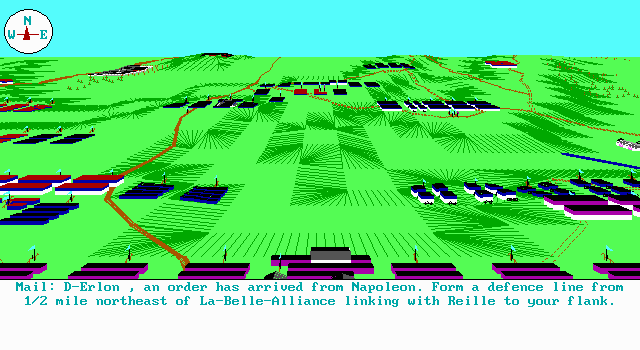
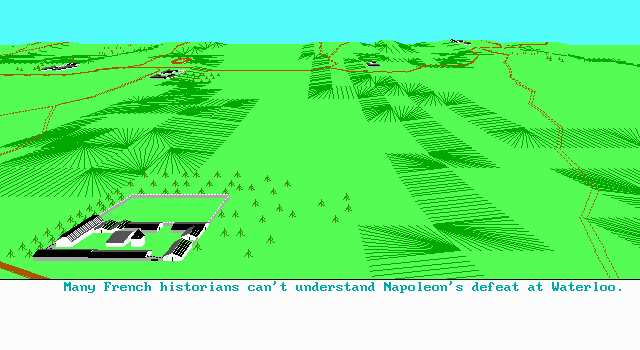
While Waterloo was released during an era when pixel art and vector graphics were the norm, it still impresses with a clean, functional presentation. The battlefield map is rendered in muted earth tones, faithfully representing the rolling fields, ridges, and wooded areas where the real battle unfolded. Each unit is depicted by simple icons that convey troop type and strength at a glance.
The user interface complements the visuals by remaining unobtrusive. Information panels pop up only when needed, allowing you to study the terrain and your unit dispositions without clutter. Although modern gamers may find the lack of high-resolution textures or flashy animations a drawback, the minimalistic approach serves the game’s emphasis on realism and strategy rather than spectacle.
Subtle visual cues, such as the sway of flag icons or the brief smoke plumes where artillery units fire, add to the immersion without drawing you out of the command-focused experience. When messengers scurry across the map to carry your orders, you’ll appreciate how even these small animations reinforce the sense of an active, living battlefield.
Story
Waterloo doesn’t feature a traditional narrative with cutscenes or character arcs; instead, its story emerges organically from the historical scenario. You arrive on June 18, 1815, aware that Napoleon’s fate and Europe’s political landscape hang in the balance. The absence of a scripted storyline allows the tension and drama to build naturally as the battle progresses.
Contextual information is provided through briefings before each playthrough. You’ll learn about troop dispositions, morale factors, and the strategic objectives of both sides. This historical grounding enriches every decision, whether you’re ordering a grand assault against Wellington’s center or directing Prussian reinforcements to stem a French flanking push. Every choice feels consequential because you know the real stakes.
As the day wears on and the clock ticks toward 9:30 pm, you’ll experience genuine suspense. The knowledge that the battle will conclude at a set time adds a narrative heartbeat to your tactics. Will you commit reserves early to break the Allied line, or hold them back in anticipation of Prussian arrivals? These moments of decision craft a unique story on each playthrough, one shaped by your leadership and the capriciousness of war.
Overall Experience
Waterloo offers a singular tactical wargaming experience that prioritizes authenticity over user-friendly conveniences. The steep learning curve may deter casual players, but those who embrace the challenge will find it deeply rewarding. The game’s emphasis on messenger delays, officer reliability, and limited sightlines creates a level of immersion rarely seen in strategy titles.
While the graphics and interface may feel dated by contemporary standards, they remain perfectly serviceable and in service of the core simulation. The game’s sole focus on single-player campaigns ensures that every battle is a personal test of your command skills, free from the unpredictability of human opponents but rich with historical detail and AI-driven realism.
Ultimately, Waterloo is best suited for history enthusiasts and strategy purists who crave an accurate recreation of one of history’s most famous engagements. If you’re looking for quick skirmishes or flashy visuals, you may find it austere. But if you’re drawn to the intellectual rigor of commanding troops under real-world constraints, Waterloo delivers an engrossing, educational, and unforgettable battlefield experience.


Reviews
There are no reviews yet.