 Retro Replay Retro Replay gaming reviews, news, emulation, geek stuff and more!


Retro Replay Review
Gameplay
Cadaver’s gameplay is a masterclass in blending arcade action with thoughtful puzzle-solving. Players guide Karadoc, a nimble thief, through the five levels of Castle Wulf using a combination of joystick movements and keyboard commands. The controls are intuitive yet deep: walking, jumping, and climbing stairs feel responsive, while combat against monsters demands timely blocks and well-placed strikes. Quick reflexes can mean the difference between life and a swift respawn.
(HEY YOU!! We hope you enjoy! We try not to run ads. So basically, this is a very expensive hobby running this site. Please consider joining us for updates, forums, and more. Network w/ us to make some cash or friends while retro gaming, and you can win some free retro games for posting. Okay, carry on 👍)
Beyond basic movement, Cadaver introduces an innovative interaction system. Karadoc carries a rucksack, accessible via an icon-driven menu, which allows the player to pick up, examine, and combine objects found in the dungeons. Success hinges on correctly using items—whether it’s tossing a lit torch into a pool of oil to clear a passage or employing a mystical gem to reveal hidden runes. This icon-based interface keeps inventory management engaging without bogging down the action.
Puzzles and spells further enrich the experience. The gods who dwell in Wulf present a series of tasks that reward clever thinking over brute force—unlocking secret doors, deactivating traps, or deciphering cryptic inscriptions. Spells are learned gradually, and mastering them requires experimenting with different gestures and incantations. This layered approach ensures that players are constantly challenged to adapt both their mind and their reflexes as they inch closer to the necromancer Dianos.
Graphics
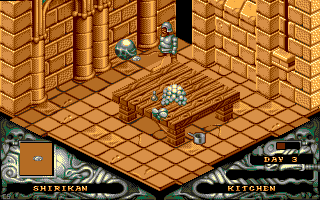
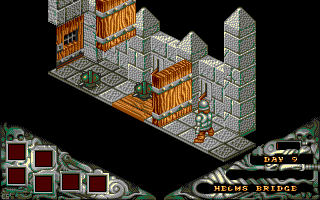
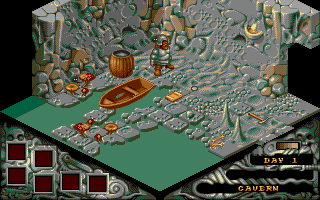
Visually, Cadaver employs an isometric 3D viewpoint that creates a strong sense of depth in each castle chamber. Textures are neatly rendered, with stone walls, flickering torches, and creeping vines all contributing to a richly atmospheric environment. Despite its retro pedigree, the game’s art direction remains evocative, making every room feel distinct and laden with potential danger.
Character animations are fluid for their era, giving Karadoc a convincing gait and nimble jumps. Enemies—from skeletal guardians to slithering beasts—move with enough jitter to keep the player on edge, yet their designs are clear enough to telegraph incoming attacks. The palette shifts subtly as you descend into lower levels, swapping warm castle hues for damp greens and shadowy blues that mirror the rising peril.
While lacking modern-day shaders and high-resolution textures, Cadaver’s graphics excel through clever use of perspective and lighting. Flickering torches cast dynamic shadows that dance across walls, and environmental details—like dripping water in the dungeons or ancient tapestries in the upper halls—immerse players in Castle Wulf’s lore. For its time, the game was a graphical showcase, and today it retains a timeless charm.
Story
At its core, Cadaver tells the tale of Karadoc, a daring thief drawn by rumors of untold riches hidden within Castle Wulf. The narrative unfolds organically as you progress—each level reveals more of the castle’s dark history and the malicious presence of its master, Dianos the necromancer. Though the story is not lavishly told through cutscenes, environmental storytelling fills in the blanks, from crumbling murals to discarded journals.
Legends say that those who enter the castle seeking treasure will face not only traps and monsters but also challenges set by capricious gods. Indeed, the divinities of Wulf intercede, sending cryptic messages or summoning riddles that test Karadoc’s wit. This mythic layer elevates the gameplay, transforming every puzzle into part of a larger destiny—one that culminates in a final confrontation against Dianos himself.
The sparse narrative style rewards close observation. A torch left burning in a secluded corner or a skeletal remains clutching a mysterious key both serve as clues to the castle’s secrets. By relying on indirect storytelling, Cadaver encourages players to piece together the lore themselves, creating a more personal and immersive experience that resonates long after the controller is set down.
Overall Experience
Cadaver offers a rare blend of arcade thrills and cerebral puzzles that still feels fresh decades after its initial release. The progression through Castle Wulf’s five floors is paced expertly, steadily ramping up challenges while introducing new mechanics just when you think you’ve mastered the previous ones. Every victory—over a cunning trap or a tough monster—brings a genuine sense of accomplishment.
The game’s balance of action, exploration, and puzzle-solving caters to a wide range of players. Those who relish lightning-fast combat will find plenty of monster encounters that demand precise timing, while puzzle enthusiasts will delight in uncovering hidden secrets and combining oddball items in creative ways. Even if you hit a stumbling block, the lack of harsh penalties for failure encourages experimentation rather than frustration.
Though modern titles may boast photorealistic graphics and sprawling open worlds, Cadaver remains a testament to focused, skillful design. Its atmospheric castle, memorable challenges, and clever use of inventory-based puzzles make it a standout title in the isometric adventure genre. For fans of classic action-adventures and anyone looking for a thoughtfully crafted dungeon romp, Cadaver is an essential journey into a perilous, treasure-filled fortress.


Reviews
There are no reviews yet.