 Retro Replay Retro Gaming History, Reviews & Emulation
Retro Replay Review
Gameplay
Computer Baseball starts with a refreshingly direct proposition: pick a team, set the available roster, and manage a game pitch by pitch. You are not here to swing a bat yourself. You are here to make the calls that make baseball management fun to argue about—pinch-hit or stick with the matchup, move the infield, alter the outfield, hold runners closer, or change the way a batter approaches an at-bat.
That focus gives the game more tension than its plain setup initially suggests. Defensive choices cover positioning, pitcher changes, substitutions, runner coverage, and pitching approach, while the offense asks you to direct base running, pinch hitting, and hitting strategy. Many choices open into further selections, so the game does not reduce managing to one blunt command at a time. Once you settle into its rhythm, each plate appearance feels like a small problem with consequences.
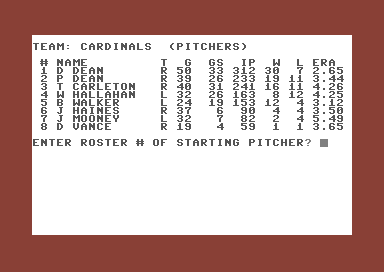
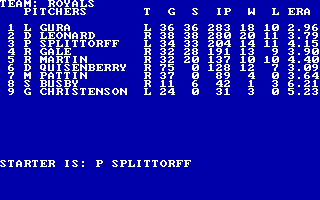
The pitching staff is where the simulation earns its stripes. Leave a pitcher in too long and fatigue catches up with him; call on a reliever before he is properly warmed up and his effectiveness drops. That forces you to plan ahead instead of treating the bullpen as an emergency button. Injuries and ejections add another source of disruption, demanding substitutions and occasionally wrecking the clean plan you brought into the game.
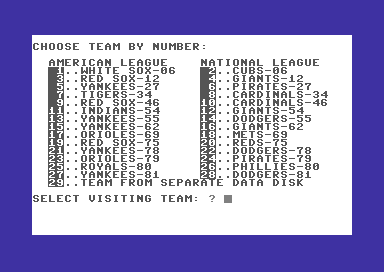
There are 28 major-league teams to choose from, and the ability to enter new team data gives the game a useful tinkering streak. It also supports both computer opponents and two-player games, which is important: a human opponent can make every intentional-looking decision feel like a challenge. The major limitation is that results and statistics cannot be saved. That makes Computer Baseball much stronger as a self-contained afternoon matchup than as the foundation for a season you want to track.

Graphics
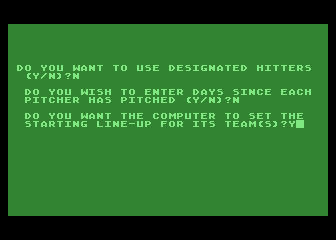
The screen is built around function: a scoreboard, batter and pitcher information, a simple representation of the field, and an input area along the bottom. You can see the state of the game and make your calls without hunting through separate displays, which suits a strategy-first baseball game.
Story
There is no authored story here. The narrative is the baseball game you manage: a starter beginning to tire, a bench player suddenly needed after an injury, or an ejection forcing an unwanted adjustment.
That may sound slight, but sports strategy games can create their own drama when the rules give setbacks weight. Computer Baseball does this best when a decision you made several innings earlier—such as delaying a pitching change—comes back to demand an answer at the worst possible moment.
The team-data tools add a more personal angle. Building or editing a roster lets you bring your own baseball ideas to the table, then see how they hold up under the pressures of a game. Without saved results, though, these stories end when the final out is recorded rather than accumulating into a larger history.
Overall Experience
Computer Baseball is a thoughtful early baseball management game that understands where much of the sport’s real intrigue lives: not in reflexes, but in preparation, matchups, and second-guessing. The first hour can feel clinical if you want arcade action, yet it becomes engaging once you start treating fatigue, substitutions, and positioning as connected decisions rather than isolated menu picks.
Its lack of persistent statistics and game-result saves is the biggest frustration. You can set up a compelling contest and make meaningful choices throughout it, but the game does not preserve that accomplishment for a continuing season. That narrows its long-term pull considerably.
Still, if you enjoy old-school sports simulations and want to manage the chess match around baseball rather than control the athletes directly, this is worth your time. Go in looking for a one-game managerial puzzle, preferably against another person, and Computer Baseball has enough tactical wrinkles to justify its 7.1 score.


Reviews
There are no reviews yet.