 Retro Replay Retro Gaming History, Reviews & Emulation
Retro Replay Review
Gameplay
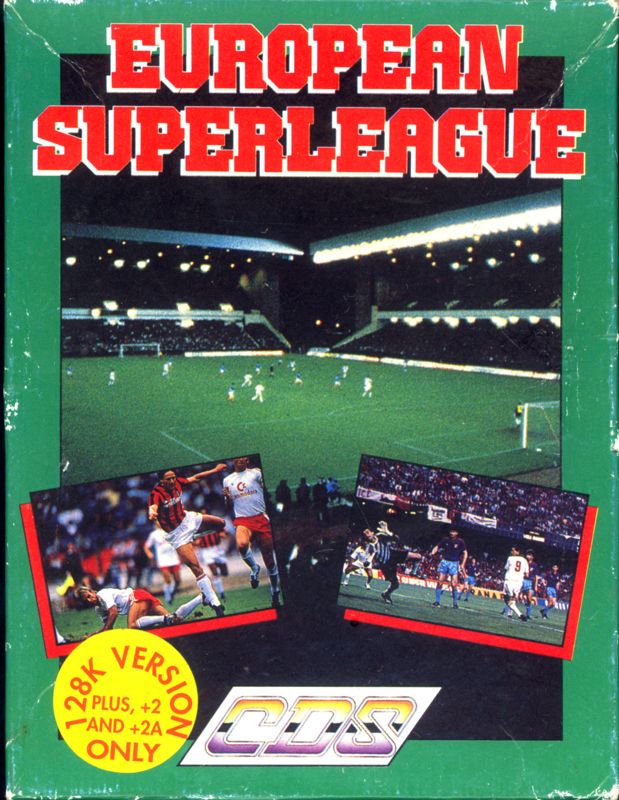
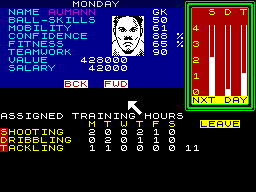
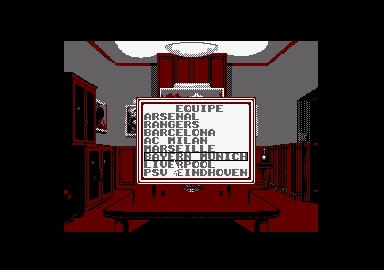
The first hour of European Superleague is pleasantly direct. You choose from PSV Eindhoven, Glasgow Rangers, Liverpool, Arsenal, Real Madrid, Olympique de Marseilles, AC Milan, or Bayern Munich, and get down to the business that matters: selecting a side, setting tactics, training athletes, and making transfer decisions. There is no fog of endless leagues or an enormous database to sift through. It is a concentrated management game built around eight famous clubs and the expectation that you will make yours succeed both on the pitch and financially.
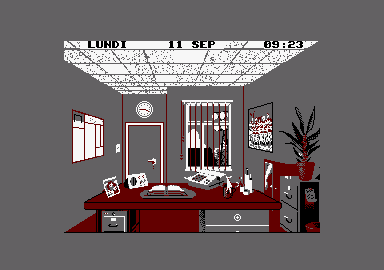
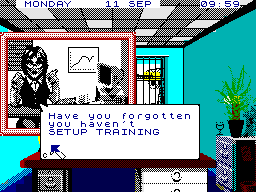
The weekly board meeting is the game’s strongest bit of character. A chairman offering an opinion on the team’s current standing puts a recurring deadline on your decisions. You are not merely arranging names in a lineup and hoping the results work out; you are managing under scrutiny. That is a small touch, but it gives the season a useful rhythm and makes a poor run feel more personal.
Where the game asks for patience is in its distance from the action. Matches have no graphical representation, so you never get the immediate satisfaction of seeing a tactical change play out on the field. Each club has 20 athletes whose abilities affect match performance, and you have to trust those ratings, your choices, and the results. If you enjoy football management as a numbers-and-judgment exercise, that stripped-down approach can be absorbing. If your favorite part is watching a plan unfold in a match engine, frustration will arrive quickly.
The smaller scale is a mixed blessing. It keeps the core loop focused, and the usual pillars—tactics, lineups, transfers, and training—are all present. But it also means the experience depends heavily on whether those routine decisions hold your attention. European Superleague has the bones of a proper manager rather than the breadth or match-day drama that can make the genre feel alive for months.
Graphics
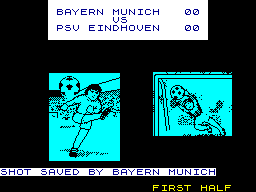
There are no on-field graphics during matches. You spend your time in menus, moving through sub-menus from a main screen whose look varies by platform: some versions use a graphical main menu, while others use a text-based one. That makes this a functional interface-first game, not one to revisit for football imagery.
Story
There is no authored football tale here, and that is fine: the story is the one you make from league position, finances, transfers, and the chairman’s weekly reaction. A winning run can turn those meetings into reassurance; poor results give them the sting of a manager being judged in real time.
The eight-club setup gives your campaign an immediate fantasy of European elite competition. Taking charge of a recognizable giant means you begin with expectations already attached, even before you have made your first selection. Success is not framed as a surprise underdog run; it is about proving you can carry a major club’s demands.
That narrow focus also limits the drama. Because the game centers on management decisions rather than a scripted narrative, its memorable moments will come from outcomes you create: a transfer paying off, a lineup call working, or the board turning impatient. For release and game-history context, the European Superleague entry is a useful companion.
Overall Experience
European Superleague is a modest, old-fashioned manager with a clear loop and one genuinely helpful pressure valve in the weekly board meeting. It knows what it wants you to do: run a club, make football and financial calls, and answer for them. That clarity is its main virtue.
The payoff depends on your tolerance for abstraction. Without a graphical match view, every result is a verdict delivered through statistics and player abilities rather than a sequence you can watch and dissect. For some gamers, that is pure management: make the calls, accept the consequences. For others, it will feel like the game skips the most exciting part of football.
At 5.9, it lands as a serviceable historical football-management diversion rather than an essential genre great. Give it a chance if you want a compact, menu-heavy challenge built around elite European clubs and you enjoy being second-guessed by a board. Skip it if you need animated match action or a deep, sprawling management sandbox to stay invested.


Reviews
There are no reviews yet.