 Retro Replay Retro Gaming History, Reviews & Emulation
Retro Replay Review
Gameplay
The first hour has a strong survival-game tension, even though the action is mostly administrative. You command a huge colony ship carrying three million frozen settlers, but its limited supplies leave it vulnerable. Before grand exploration can feel exciting, you have to solve the immediate problem of making useful smaller ships and weapons without wasting the resources needed to build a future.
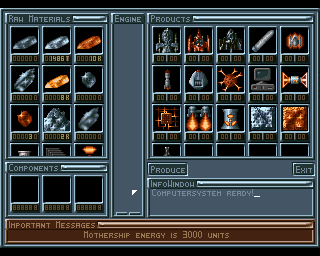
Gathering materials from meteors is the spine of that loop. You send ships out, bring back what you can, and decide what to manufacture next. Experimentation adds a welcome edge: combining the materials at hand can uncover new producible items, but a bad attempt can result in an unhealthy bang. That risk makes discovery feel less like ticking entries off a list and more like gambling part of humanity’s last reserve.
The settlers give the strategy layer more weight than a simple fleet-builder. Small ships need people to pilot them, and each pilot must first be thawed and trained. Their individual statistics affect missions and combat, so you cannot treat the human cargo as an abstract resource forever. It is a deliberate, management-heavy game, and that is where frustration can set in if you want constant action; the satisfaction comes from seeing cautious preparation turn an underpowered ship into a more capable expedition.
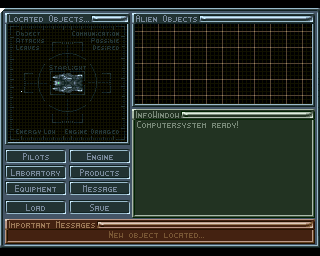
Encounters with other spacecraft prevent travel from becoming entirely routine. You can attack, but you can also enter a multiple-choice conversation, making each meeting a decision rather than an automatic fight. If you want a more hands-on break from the menus, the optional missions and battles put you in a smaller ship from a first-person view, with controls described as similar to Elite. That shift is ambitious: it gives you a chance to participate directly instead of only issuing orders from the colony ship.

Graphics
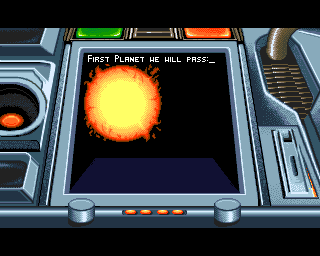
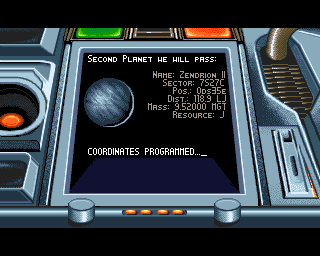
Most of Exodus 3010 is seen through its menu-driven strategy interface, fitting a game concerned with resources, ship production, settlers, and expedition decisions. When you take direct control during optional missions or fights, the view switches to first person from a spacecraft, providing a clear contrast with the command-focused bulk of the game.
Story
The story hook is blunt and effective: it is 3010, Earth is about to be lost to humanity, and your ship is searching for a new home planet. There is no comfortable empire to inherit. You begin with an enormous responsibility and very little practical power, which makes every resource decision feel tied to the colony’s survival.
The frozen settlers are more than a dramatic number. They are the people you need to wake, train, and place in the smaller ships that keep the expedition moving. That connection gives the management game a human stake: building a craft is only half the job when you also need a capable person to fly it.
Other ships add uncertainty to the journey. Since contact can lead either to combat or a conversation with multiple possible responses, the voyage is not framed as a simple march through hostile space. You are trying to preserve a population, locate a world, and decide how much danger or diplomacy that goal demands.
Overall Experience
Exodus 3010: The First Chapter is most rewarding when you enjoy strategy games that make progress feel earned. Its central rhythm is cautious accumulation: mine meteors, test combinations, build hardware, train pilots, then risk a mission or contact. The game asks for patience, but that patience suits the premise of safeguarding a nearly helpless colony ship.
The mix of menu-based management and optional first-person spacecraft segments is its most memorable idea. You can stay focused on the larger plan, or step into the cockpit when a mission or battle calls for direct involvement. Not every player will want both modes, and the transition can make the game feel less streamlined than a pure strategy title, but it gives the journey more variety.
At 6.3, it lands as a solid curiosity rather than an essential space-strategy classic. Give it a chance if the idea of nursing a vulnerable generation ship through resource shortages, personnel decisions, experimentation, and uncertain encounters sounds more compelling than immediate conquest. If you need fast feedback and nonstop action, its menu-heavy pace may wear thin before its larger colonization goal pays off.


Reviews
There are no reviews yet.