 Retro Replay Retro Replay gaming reviews, news, emulation, geek stuff and more!


Retro Replay Review
Gameplay
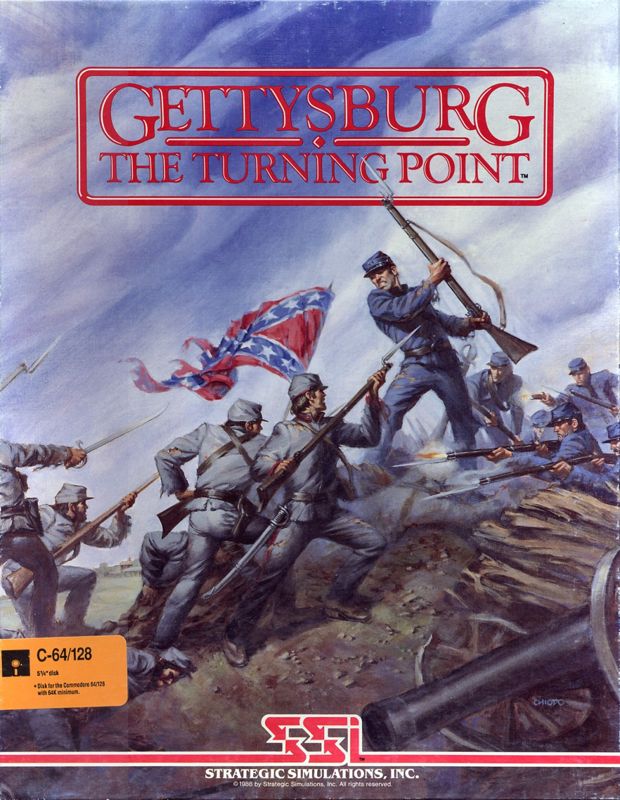
Gettysburg: The Turning Point delivers an intricate and deeply strategic experience, faithfully simulating one of the Civil War’s most decisive battles. Each of the 42 turns represents an hour of time over the three-day conflict, challenging players to think several moves ahead. Maneuver brigades, manage supplies, and seize terrain as you attempt to outwit your opponent, whether it’s another human or the computer-controlled AI.
(HEY YOU!! We hope you enjoy! We try not to run ads. So basically, this is a very expensive hobby running this site. Please consider joining us for updates, forums, and more. Network w/ us to make some cash or friends while retro gaming, and you can win some free retro games for posting. Okay, carry on 👍)
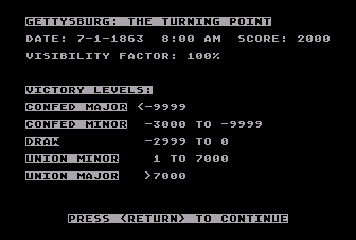
The game uses a refined iteration of SSI’s Antietam system, blending familiar mechanics with more nuanced command and control rules. Casualty calculations and territorial objectives both play a pivotal role in determining success, and after each turn the game tallies points to reflect the ebb and flow of battle. This constant scoring feedback keeps tension high and rewards decisive, well-timed maneuvers.
Flexibility is a strong suit here: you can choose from Basic, Intermediate, or Advanced rules, each offering five difficulty levels. Beginners can start with simpler mechanics and work their way up, while veteran strategists will find the advanced options richly rewarding. With single-player and head-to-head multiplayer modes, Gettysburg: The Turning Point caters to both solo war-gamers and competitive friends.
Graphics
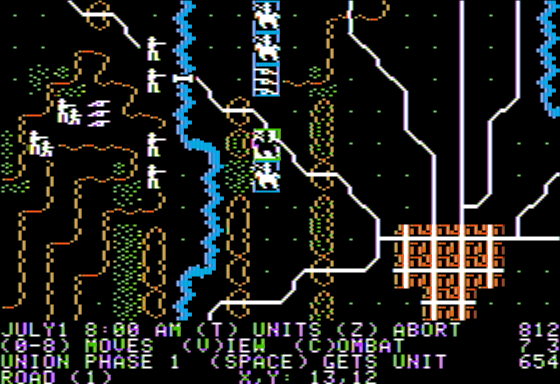
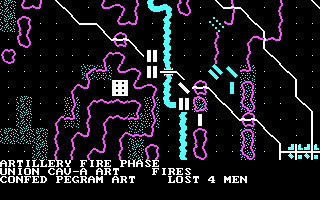
Although by modern standards Gettysburg’s visuals may seem dated, the game’s map and unit icons remain clear and functional. The top-down hex map vividly outlines the rolling hills, woods, and ridges around Gettysburg, ensuring that terrain considerations are immediately apparent. This clarity is essential when planning flanking movements or defensive stands.
Unit counters feature simple but distinctive symbols and color schemes, allowing you to quickly distinguish between Union and Confederate brigades as well as their current strength. Animations are minimal, but the crisp redraws when units move or engage in combat provide just enough visual feedback to keep immersion intact.
The user interface, though utilitarian, is intuitive for anyone familiar with classic wargames. Menus for issuing orders, reviewing unit stats, and toggling rule options are laid out logically. In an era well before flashy 3D engines, Gettysburg: The Turning Point proves that a polished 2D presentation can still foster a tense, strategic atmosphere.
Story
While Gettysburg: The Turning Point doesn’t unfold like a scripted narrative, its historical authenticity shines through in every scenario and event. From the initial clash at McPherson’s Ridge to the fateful charge on July 3rd, players feel the weight of decisions made by real commanders. The battlefield evolves turn by turn, creating an emergent story shaped by your strategic choices.
Primary sources and detailed order-of-battle data underpin the game’s scenarios, ensuring that unit compositions and positions reflect the historical record. Whether you’re defending Seminary Ridge or pushing against entrenched Union lines, the ebb and flow of combat evokes the grinding intensity experienced by soldiers in 1863.
The lack of a linear campaign mode is offset by immense replay value—each playthrough yields different challenges. Adjusting the difficulty or rule set can dramatically alter how events unfold, birthing countless “what-if” scenarios. In doing so, the game invites players to write their own version of history on its meticulously crafted map.
Overall Experience
Gettysburg: The Turning Point stands as a testament to the depth and complexity possible in computerized wargames of its era. Its enduring appeal lies in the blend of historical accuracy and strategic freedom, offering both newcomers and veterans an absorbing playground for tactical experimentation. If you crave a thoughtful, methodical challenge, this title delivers in spades.
Learning curves can be steep, particularly at higher difficulty levels or under the advanced rules. However, the tiered rule sets ease players in gradually, and the AI opponent provides a credible stand-in until you find a worthy human adversary. The point-based victory system ensures that no inch of territory feels trivial—every decision counts.
Despite its age, Gettysburg: The Turning Point remains highly recommendable for fans of grand tactical simulations. It may lack modern bells and whistles, but its robust gameplay and historical fidelity ensure that each three-day reenactment of the Battle of Gettysburg feels both authentic and thrilling. For anyone seeking a rich wargaming experience, this title remains a turning point worth experiencing.


Reviews
There are no reviews yet.